💡 About Amsterdam
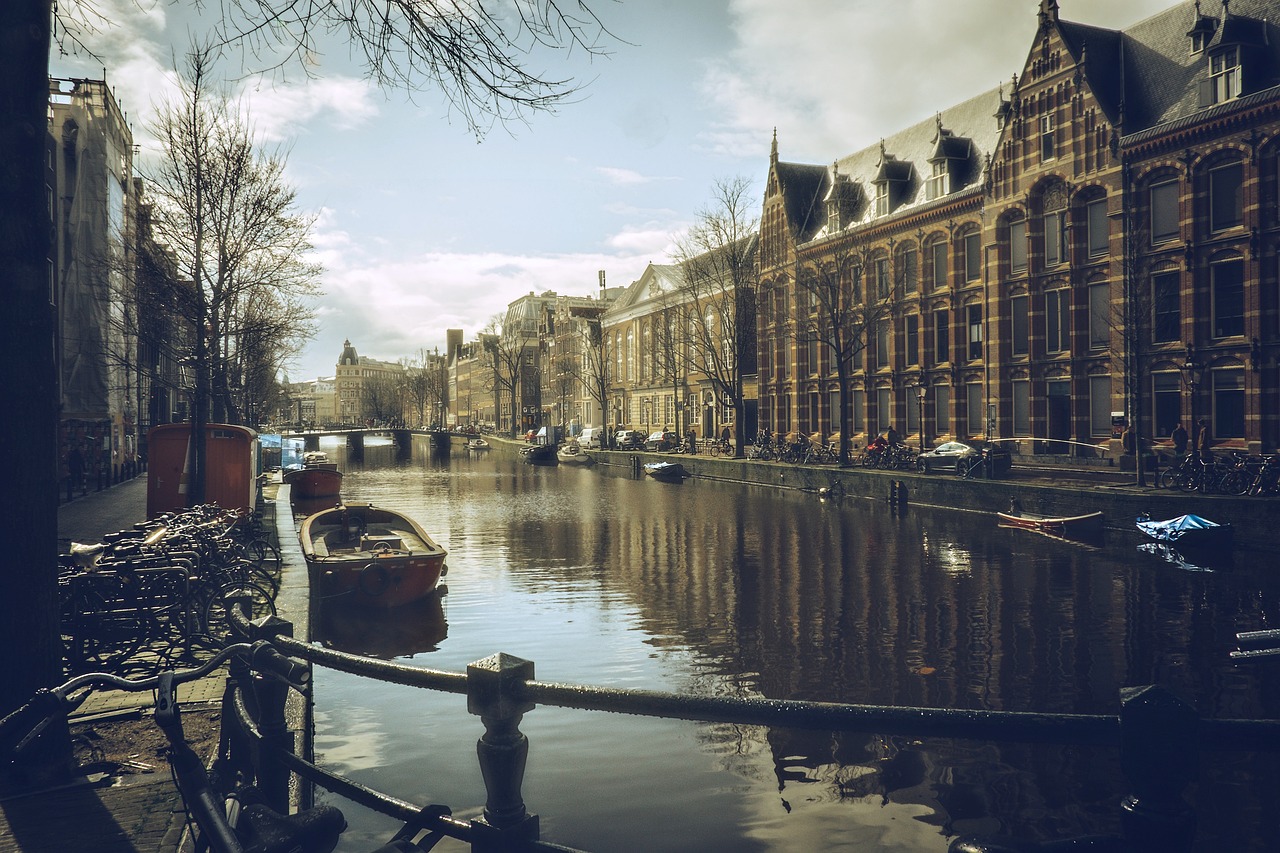
Amsterdam, the Venice of the North, is threaded with over 165 canals stretching more than 100 kilometres, crossed by 1,753 bridges — a figure that exceeds the bridge count of any other European city — and its concentric ring of 17th-century canals (the grachtengordel) has been inscribed as a UNESCO World Heritage Site in recognition of its extraordinary state of preservation and its significance as a planned urban landscape. The city's historic centre rests on a foundation of millions of wooden piles driven through the soft, waterlogged peat and into the sand and clay beneath; the Royal Palace on Dam Square, constructed between 1648 and 1665 when Amsterdam was the wealthiest city in the world, stands on 13,659 such piles, and many of the iconic 17th-century merchant's houses that line the canals lean slightly forward — both to facilitate the hoisting of goods through the external hoist-beams visible on the facades, and because their foundations have subtly shifted over the centuries. During the Dutch Golden Age of the 17th century, Amsterdam was not merely wealthy but was the undisputed commercial capital of the known world: the Dutch East India Company (VOC), founded in Amsterdam in 1602, was effectively the world's first multinational corporation and the first to issue publicly traded shares on the Amsterdam Stock Exchange — also the world's first — accumulating a trading empire that stretched from Indonesia to Japan, from South Africa to Brazil.
The Rijksmuseum, redesigned and reopened in 2013 after a decade-long renovation, houses the world's greatest collection of Dutch Golden Age painting, including Rembrandt's The Night Watch (1642) — measuring 3.63 × 4.37 metres and considered one of the most celebrated paintings in Western art — as well as Vermeer's luminous domestic interiors, Hals's boisterous group portraits and thousands of other masterpieces created during the extraordinary flowering of Dutch artistic talent in the 17th century. The Anne Frank House at Prinsengracht 263 is among the most emotionally powerful museums in the world: visitors move through the hidden annex where Anne Frank, her family and four others hid from Nazi persecution for 761 days between 1942 and 1944, before being betrayed and deported to concentration camps; only Anne's father Otto survived, and he arranged the publication of the diary she had kept throughout their hiding, which has since been translated into over 70 languages and sold over 30 million copies. Amsterdam's bicycle culture is the most developed in the world: there are approximately 900,000 bicycles in the city for a population of about 900,000 people, bicycle theft is so common it has become a dark joke (the city recovers around 15,000 bicycles from the canals each year), and the 800-kilometre network of dedicated cycle paths means that the bicycle is the fastest and most practical way to travel almost anywhere in the city.
The city's relationship with the concept of tolerance — the Dutch word gedogen, meaning a policy of looking the other way — has made Amsterdam famous for its licensed cannabis cafés, its red-light district (De Wallen), and its historically early adoption of progressive social policies including the world's first legal same-sex marriages in 2001 and one of the world's earliest drug harm-reduction programmes. The spring tulip season, when the bulb fields of North Holland and the spectacular Keukenhof gardens (90 minutes by bus) bloom with seven million flowering bulbs in geometric patterns of extraordinary colour, represents the commercial triumph of the Dutch horticultural industry, which exports over 60% of all cut flowers traded globally.
⭐ Traveller Ratings & Tips
🏆 City Rankings →Rate Amsterdam
⭐ Known For
🏛️ Top Attractions
- Rijksmuseum
- Anne Frank House
- Van Gogh Museum
- Canal ring cruise
- Keukenhof Gardens (spring)
- Vondelpark
- Heineken Experience
🍽️ Local Food
- Stroopwafel
- Haring (raw herring)
- Bitterballen
- Stamppot
- Poffertjes
- Dutch cheese (Gouda/Edam)
- Jenever (Dutch gin)
🍽️ Where to Eat in Amsterdam
See all 4 →Amsterdam's largest street market — grab a fresh-pressed stroopwafel and a herring.
📍 View on MapsA hip indoor food hall in a former tram depot, with dozens of stalls and bars.
📍 View on MapsA corner café famous across the city for its towering slices of appeltaart.
📍 View on MapsA cosy, long-running spot beloved for its enormous racks of ribs.
📍 View on Maps