💡 About Beijing
Beijing, capital of the People's Republic of China and seat of one of the world's oldest continuous civilisations, has served as the political capital of China almost without interruption since 1264, when Kublai Khan established his court here — making it one of the longest-serving capital cities in human history, and the repository of an imperial legacy of staggering scale and magnificence. The Forbidden City (Zijin Cheng), built between 1406 and 1420 during the reign of the Yongle Emperor of the Ming dynasty, is the largest palace complex ever constructed anywhere on Earth: its 72 hectares contain 980 surviving buildings with an estimated 9,999 rooms (just one short of the mythological 10,000 rooms of the Heavenly Palace, which the emperor as Son of Heaven was permitted to approach but not equal), arranged along a central axis that runs north-south through the entire historic city. The Great Wall of China, which reaches its most spectacular and visitor-accessible sections at Badaling, Mutianyu and Jinshanling north of Beijing, was not a single construction but the cumulative product of 2,000 years of defensive building by successive dynasties; the sections most commonly visited today date from the Ming dynasty (1368–1644) and, contrary to popular belief, is not visible from space with the naked eye — a myth that has persisted despite being definitively disproved by Chinese astronauts.
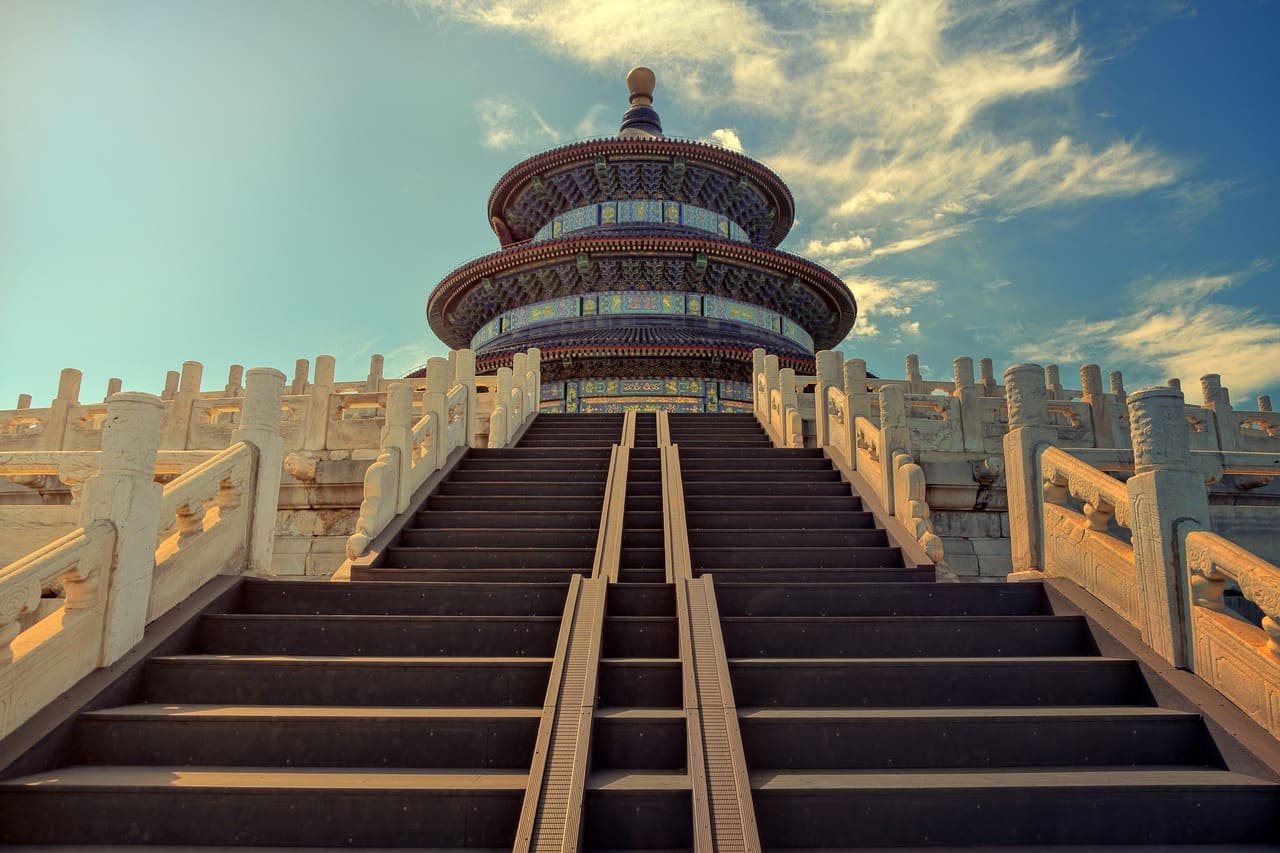
Beijing hosted the 2008 Summer Olympics — the "Bird's Nest Games" — in a ceremony of extraordinary scale and artistry that showcased China's re-emergence as a global superpower; the National Stadium (Bird's Nest), designed by Swiss architects Herzog & de Meuron with artistic input from Ai Weiwei, and the National Aquatics Centre (Water Cube/Ice Cube) are among the most distinctive pieces of architecture built for any Olympic Games. Beijing's traditional hutong alleyways — the narrow lanes flanked by grey-brick single-storey courtyard houses (siheyuan) that were the residential fabric of the city for 700 years — have been demolished at a catastrophic rate during the city's rapid modernisation since the 1990s; those that survive in the Dongcheng and Xicheng districts around the Drum Tower and Bell Tower offer a deeply atmospheric glimpse of a pre-communist Beijing of courtyards, street vendors, bicycle repair shops and informal neighbourhood life that is steadily disappearing. The Temple of Heaven (Tiantan), built between 1406 and 1420 and expanded during the Qing dynasty, is where the emperors of China performed elaborate annual rituals to pray for good harvests, believing themselves to be the intermediaries between Heaven and Earth; its Hall of Prayer for Good Harvests — a triple-gabled circular hall built entirely of wood without a single nail — is one of the most perfect and recognised architectural achievements in Chinese history.
Peking Duck, the dish most associated with Beijing's culinary identity, requires a specially bred duck to be air-dried, glazed with maltose syrup and roasted in a hung oven fuelled by date, pear or peach wood until the skin is lacquered to a deep mahogany and cracks like a thin wafer; it is eaten rolled in thin pancakes with spring onions, cucumber and hoisin sauce in a ritual shared by emperors and street vendors alike for over 600 years. The 798 Art District, a cluster of former Bauhaus-influenced factory buildings in the Chaoyang district built with assistance from East Germany in the 1950s, has been transformed since the early 2000s into Beijing's premier contemporary art hub, with galleries, studios, cafés and design businesses occupying the industrial spaces in a conversion that rivals those of New York's SoHo or Berlin's Mitte as a model of urban cultural regeneration.
⭐ Traveller Ratings & Tips
🏆 City Rankings →Rate Beijing
⭐ Known For
🏛️ Top Attractions
- Forbidden City
- Great Wall (Mutianyu/Badaling)
- Temple of Heaven
- Summer Palace
- Tiananmen Square
- Lama Temple
- Hutong neighbourhood tours
🍽️ Local Food
- Peking Duck
- Jiaozi (dumplings)
- Zhajiangmian noodles
- Hot pot
- Jianbing (breakfast crepe)
- Tanghulu (candied fruit)
- Baozi (steamed buns)