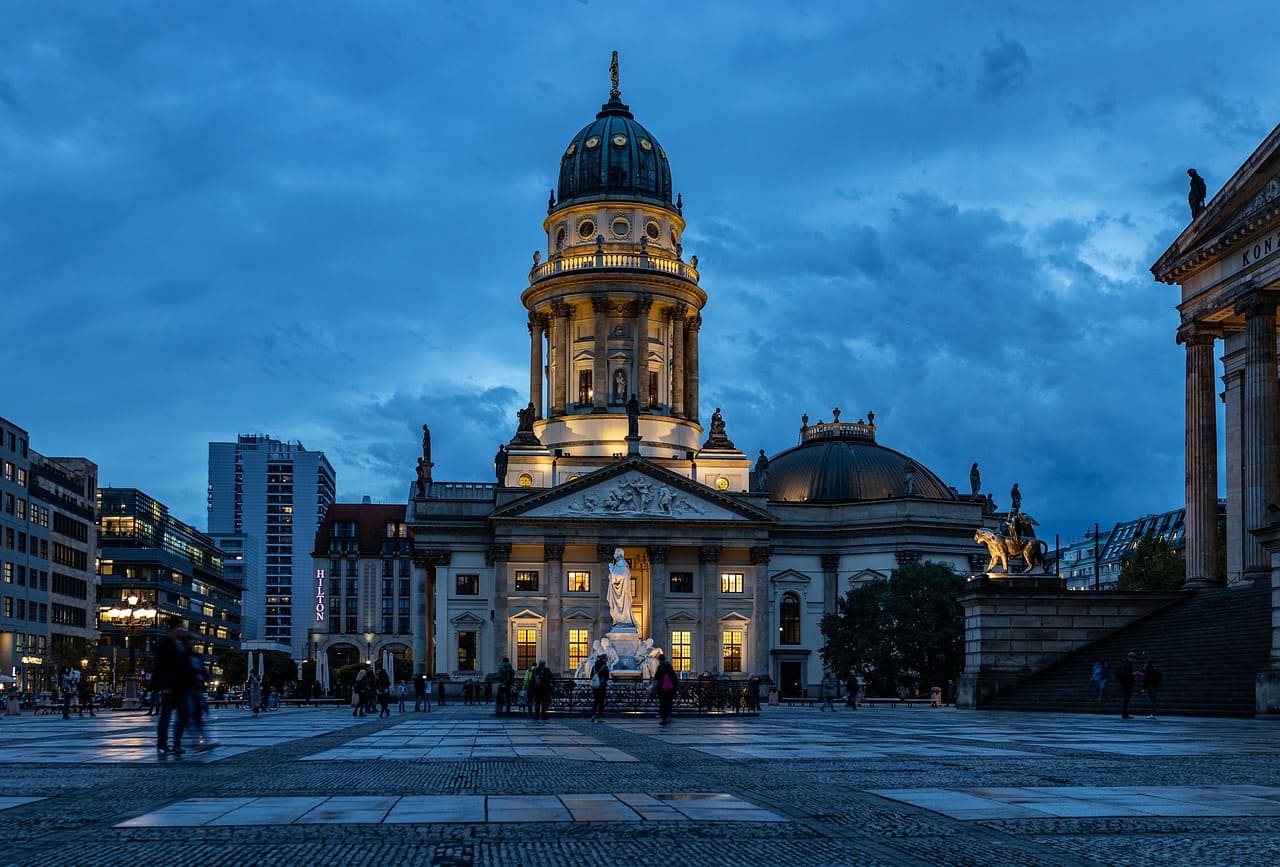
💡 About Berlin
Berlin is a city of extraordinary reinvention and resilience — bombed to rubble in 1945, then divided for 28 years by the most heavily fortified border in history, it has transformed itself since reunification in 1990 into one of Europe's most dynamic, creative and culturally vital capitals. The Berlin Wall, built overnight on 13 August 1961 by the East German government to stop the haemorrhage of citizens fleeing to the West, ultimately stretched 155 kilometres around West Berlin; when it fell on the night of 9 November 1989 following a miscommunicated press conference, jubilant crowds attacked it with hammers and pickaxes in one of the most extraordinary moments in modern history. The surviving 1.3-kilometre section known as the East Side Gallery has been transformed into the world's longest open-air gallery, painted by 118 international artists in 1990 with murals including the iconic image of Brezhnev and Honecker's fraternal kiss and the Trabant car bursting through the wall.
Berlin's museum landscape is extraordinarily rich: the city has over 170 museums, and Museum Island in the Spree River — a UNESCO World Heritage Site — houses five of the world's great collections within walking distance, including the Pergamon Museum with its reconstructed ancient Greek altar and the Ishtar Gate of Babylon. The city's club culture, which emerged from the abandoned warehouses, power stations and industrial ruins of reunified Berlin, has become one of the most influential in the world — Berghain, housed in a former GDR power plant, has been described as the world's greatest club, and Berlin's techno scene is officially recognised as cultural heritage by the city government. Berlin's street food scene reflects its history as a migration hub: the döner kebab as eaten in Germany was invented in West Berlin in the 1970s by Turkish immigrants, and the city today has the largest Turkish community outside Turkey itself.
The city's Jewish history is commemorated with extraordinary sensitivity at the Holocaust Memorial — 2,711 concrete slabs of varying heights covering 19,000 square metres near the Brandenburg Gate — and the Jewish Museum Berlin, whose architecture by Daniel Libeskind physically embodies the disorientation and rupture of Jewish history. Berlin is currently undergoing one of the most ambitious urban transformations in Europe: the new Berlin Brandenburg Airport, the reconstruction of the Berlin Palace, and vast new residential and commercial developments are reshaping a city that still bears the physical scars of its divided past in the form of the "death strip," now a green ribbon threading through the city.
⭐ Traveller Ratings & Tips
🏆 City Rankings →Rate Berlin
⭐ Known For
🏛️ Top Attractions
- Brandenburg Gate
- East Side Gallery
- Reichstag Building
- Museum Island
- Checkpoint Charlie
- Tiergarten
- Berlin Cathedral
🍽️ Local Food
- Döner kebab
- Currywurst
- Berliner Pfannkuchen
- Schnitzel
- Sauerkraut
- Pretzels
- Eisbein