💡 About Cape Town
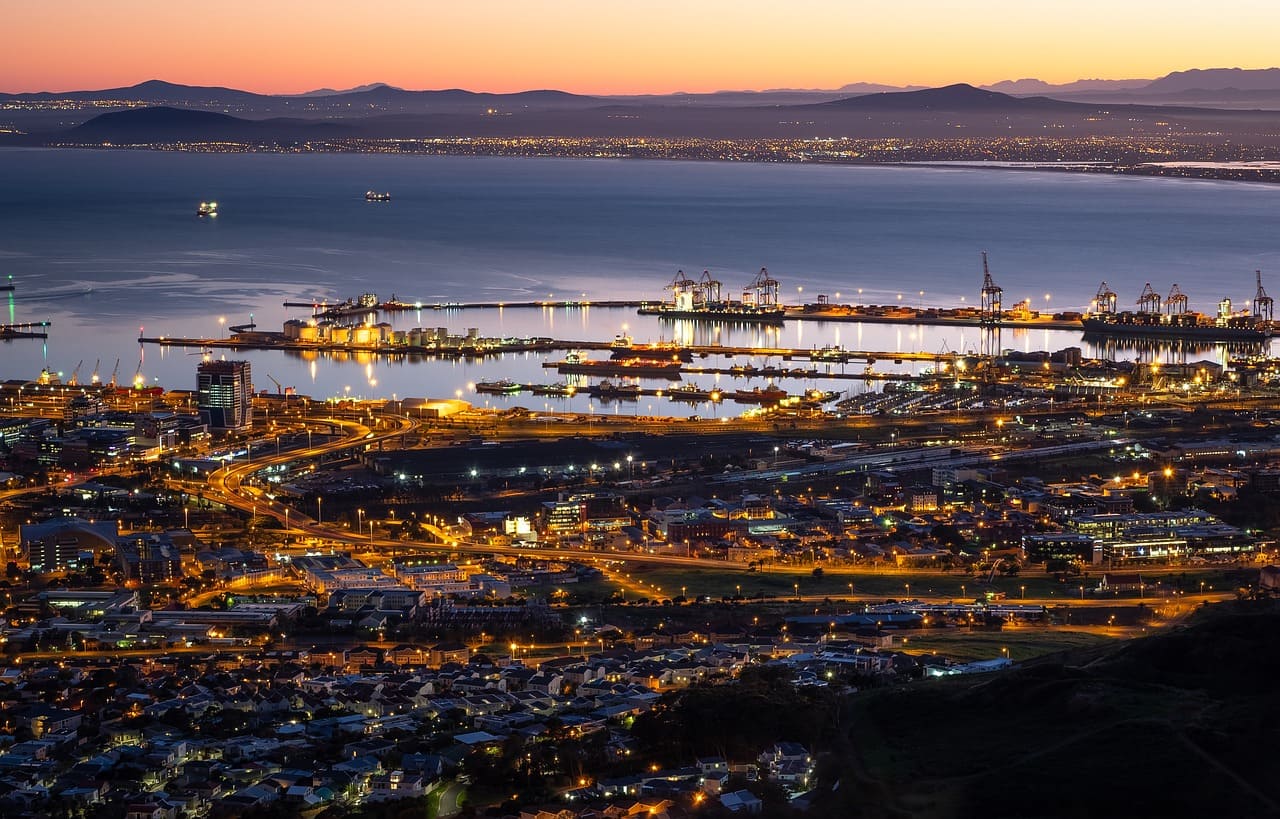
Cape Town, nestled between the iconic flat summit of Table Mountain and the meeting point of two oceans — the cold Benguela Current of the Atlantic to the west and the warmer Indian Ocean to the east — occupies one of the most spectacularly beautiful natural settings of any city on Earth, and the view from the cable car on the mountain's summit, 1,086 metres above sea level, is one of the great panoramas of the world. Table Mountain is estimated to be between 600 million and 700 million years old, making it one of the oldest exposed rock surfaces on Earth; its summit plateau hosts an extraordinary floral kingdom known as fynbos, containing approximately 2,200 plant species — more than are found in the entire United Kingdom — many of which exist nowhere else on the planet. The Cape of Good Hope, 60 kilometres south of the city along the Cape Peninsula, was rounded by the Portuguese navigator Bartolomeu Dias in 1488 in one of the most significant moments of the Age of Exploration, opening a sea route between Europe and Asia that would reshape world trade for centuries; despite popular belief, it is not Africa's southernmost point (that honour goes to Cape Agulhas, 150 kilometres to the east), but it is where the Atlantic coast bends definitively northward.
Cape Town's Boulders Beach, near Simon's Town on the eastern shore of the Cape Peninsula, is home to a colony of over 3,000 African penguins — a species found only on the southern African coast — that have made their home in the shade of the enormous granite boulders, waddling through the beach houses of the neighbourhood and providing one of the most delightful wildlife encounters available anywhere in an urban setting. Robben Island, the low-lying island visible from the Waterfront across 12 kilometres of open water, was for 400 years a place of exile, isolation and incarceration; it is most famous as the prison where Nelson Mandela spent 18 of his 27 years of imprisonment, working in the limestone quarry that permanently damaged his eyesight, and where he developed the extraordinary capacity for reconciliation that would guide South Africa's transition to democracy. The Cape Winelands, just 45 minutes' drive inland through mountains of extraordinary drama, produce some of the finest wines in the Southern Hemisphere on estates whose history stretches back to the Dutch East India Company's settlement in 1652; the town of Franschhoek, established by Huguenot refugees fleeing religious persecution in France in the 1680s, is today considered one of Africa's finest culinary destinations.
Cape Town's history of racial segregation under apartheid — the forced removal of communities from the "Coloured" District Six in the 1970s, the violence of the struggle years, and the negotiations that led to South Africa's first democratic elections in 1994 — is documented in powerful museums and memorials that ensure this history is neither forgotten nor sanitised. The city's Waterfront development, built on the historic Victorian harbour infrastructure, is one of the most visited tourist destinations in Africa and remains a working harbour where fishing boats and container ships operate alongside restaurants, galleries and the embarkation point for Robben Island ferries.
⭐ Traveller Ratings & Tips
🏆 City Rankings →Rate Cape Town
⭐ Known For
🏛️ Top Attractions
- Table Mountain
- Cape of Good Hope
- Boulders Beach (Penguins)
- V&A Waterfront
- Robben Island
- Kirstenbosch Gardens
- Cape Winelands
🍽️ Local Food
- Braai (South African BBQ)
- Bobotie
- Bunny chow
- Biltong
- Malva pudding
- Cape Malay curry
- Boerewors