💡 About Copenhagen
Copenhagen has reinvented itself in the 21st century as perhaps the world's most progressive capital, pioneering models of sustainable urban living, New Nordic cuisine, and a quality of life so high that Denmark consistently tops global happiness surveys — a distinction the Danes attribute to their concept of hygge, an untranslatable word that encompasses the warmth of candlelit gatherings, the pleasure of simple domestic comforts, and the security that comes from living in one of the world's most equal societies. The New Nordic culinary movement, launched from Copenhagen in the early 2000s by chefs including René Redzepi of Noma and Claus Meyer, has been the most influential development in global cuisine of the 21st century: its insistence on seasonality, locality, fermentation and foraged ingredients — reimagining the traditional flavours of Scandinavia through the techniques of high gastronomy — transformed the way chefs and food writers around the world thought about what food could be, and Copenhagen's restaurant scene (with more Michelin stars per capita than almost any other European city) is now a global destination for food tourism. The city's commitment to cycling is absolute: Copenhagen has over 450 kilometres of dedicated cycle lanes, and the "Cycling Snake" (Cykelslangen) bridge — an elevated orange cycle path that swoops above the harbour — is both a piece of striking engineering and a symbol of a city that has organised its infrastructure around the bicycle rather than the car; on a rainy October morning, suited professionals, schoolchildren and elderly ladies on cargo bikes outnumber car drivers on the city's main arteries.
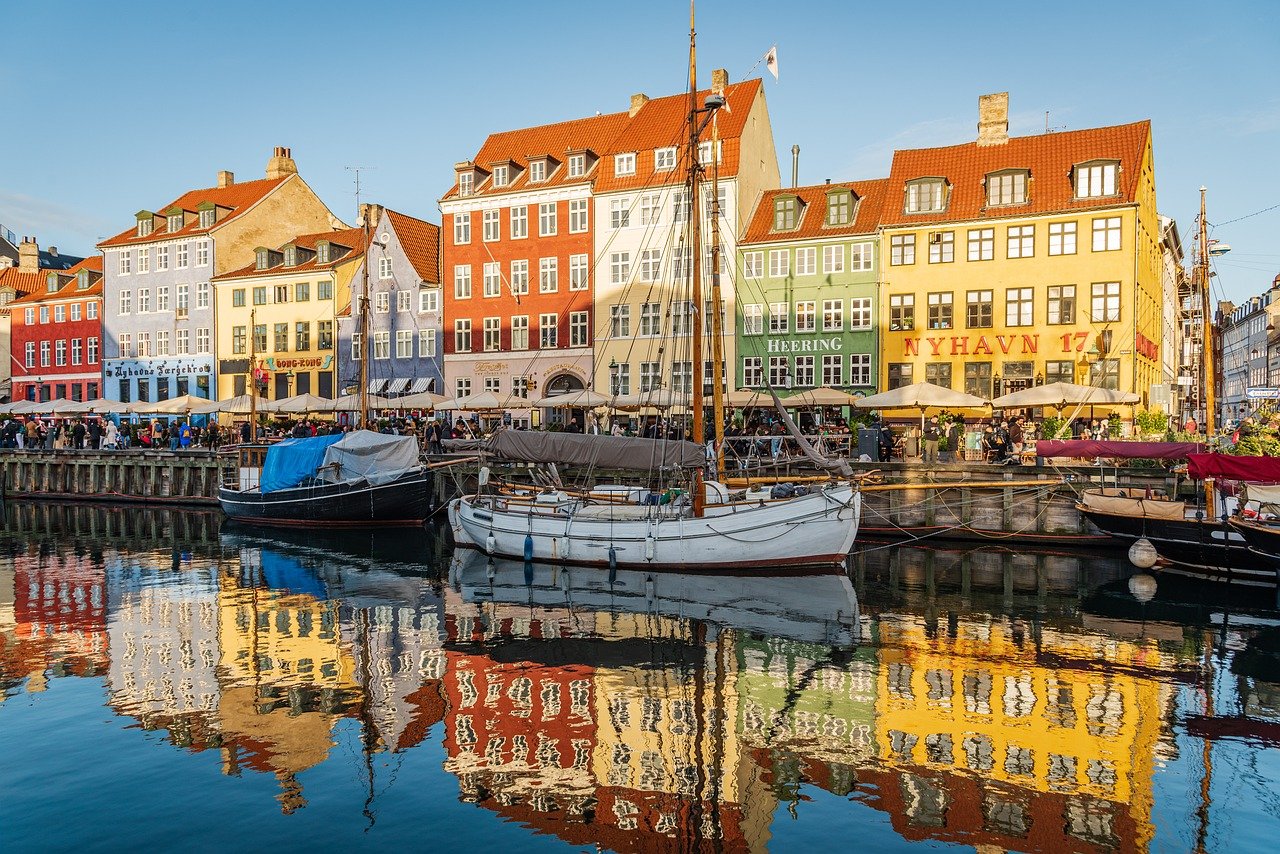
Tivoli Gardens, which opened in 1843 on the site of the old city fortifications and which Walt Disney visited in 1950 (the visit reportedly inspiring Disneyland), is one of the world's oldest continuously operating amusement parks; unlike its imitators, it has maintained a European garden aesthetic — illuminated at night by over 100,000 coloured lights — and a programme that mixes roller coasters with ballet performances, pantomime theatre and classical concerts; Hans Christian Andersen, who lived nearby, was reportedly a frequent and grateful visitor. Nyhavn ("New Harbour"), the 17th-century waterfront canal lined with brightly coloured townhouses in red, yellow and ochre that are now occupied entirely by restaurants and bars, was built as a commercial harbour in 1671 and remained a working port and sailors' quarter for three centuries; Hans Christian Andersen lived at numbers 18, 20 and 67 at different periods of his life, writing The Tinderbox, Little Claus and Big Claus and The Princess and the Pea in these houses; today it is the most photographed street scene in Scandinavia. The Little Mermaid bronze statue, cast in 1913 after ballerina Ellen Price inspired brewer Carl Jacobsen to commission it as a tribute to Andersen's story, sits on a rock in the harbour at Langelinie and measures just 1.25 metres from the tip of her tail to the top of her head — making her arguably the world's most visited attraction relative to its physical size, attracting well over a million visitors annually despite being considerably smaller than many expect.
Christiansborg Palace, seat of the Danish Parliament, Supreme Court and offices of the Prime Minister, is built on the same foundations where the first Copenhagen castle was constructed in the 12th century by Bishop Absalon — making it the site of over 800 years of continuous royal and governmental use, through three palace buildings, multiple fires and one extraordinary architectural history. Copenhagen's ambition to become the world's first carbon-neutral capital by 2025 — a goal pursued through an aggressive combination of offshore wind power, district heating from waste incineration, building insulation mandates and transport electrification — reflects a Danish political culture in which long-term planning and collective action on climate are genuinely cross-party values rather than points of political controversy.
⭐ Traveller Ratings & Tips
🏆 City Rankings →Rate Copenhagen
⭐ Known For
🏛️ Top Attractions
- Tivoli Gardens
- Nyhavn harbour
- The Little Mermaid
- Christiansborg Palace
- Rosenborg Castle
- The National Museum
- Freetown Christiania
🍽️ Local Food
- Smørrebrød (open sandwiches)
- Frikadeller (meatballs)
- Æbleskiver
- Danish pastries (wienerbrød)
- New Nordic tasting menus
- Carlsberg beer
- Rødgrød med fløde