💡 About Edinburgh
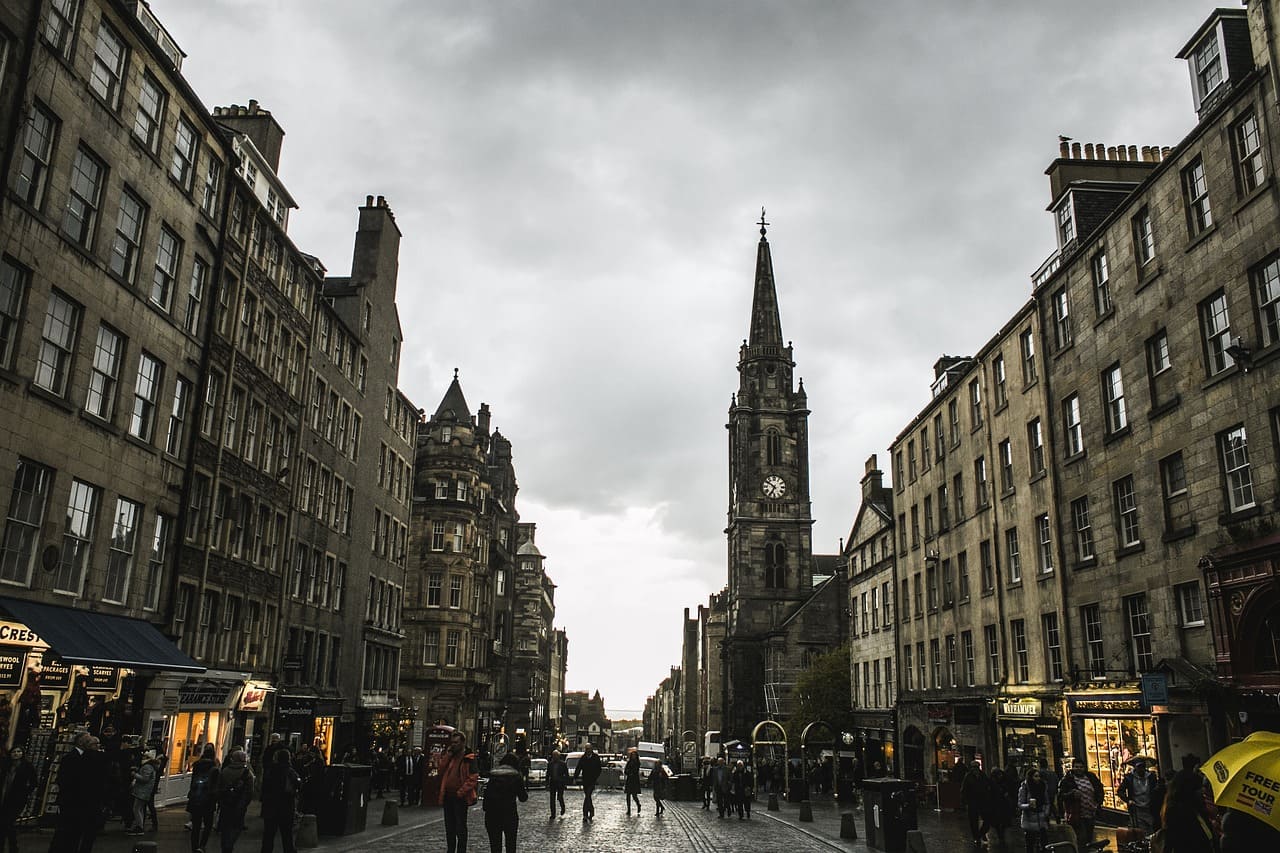
Edinburgh, Scotland's magnificent and dramatically situated capital, occupies a landscape of volcanic drama that sets it apart from any other European city: the medieval Old Town tumbles down the spine of an ancient volcanic plug from the Castle Rock to the Palace of Holyroodhouse against the backdrop of Arthur's Seat, an extinct volcano of such geological age (350 million years) and such scenic perfection (its summit at 251 metres commands views from the Highlands to the North Sea) that it seems almost impossible for an urban capital to contain within its boundaries. Edinburgh Castle, which sits on the summit of a plug of hard dolerite rock that has resisted erosion while the softer surrounding lava has been worn away by ice and wind over millions of years, has been occupied as a defensive position since at least the 2nd century AD and possibly much earlier; it houses the Honours of Scotland — the Scottish Crown Jewels comprising the Crown of Scotland, the Sceptre and the Sword of State — which are the oldest surviving Crown Jewels in the British Isles (predating the English ones, which were melted down by Cromwell in 1649), as well as the Stone of Destiny (returned from Westminster Abbey in 1996), on which Scottish monarchs were crowned for centuries. The Royal Mile, the medieval backbone of the Old Town that connects Edinburgh Castle at its summit to the Palace of Holyroodhouse at its foot, is not actually a mile but 1.6 kilometres of ancient streets, closes (alleyways), courts and wynds lined with six and seven-storey tenements (known as "lands") that were among the world's first high-rise buildings, constructed because the rock on which the city stands allowed no outward expansion and therefore forced Edinburgh's population to build upward — earning the city the description "a great beehive" from 18th-century visitors.
The Scottish Enlightenment of the 18th century, concentrated in Edinburgh's university, debating societies (including the Select Society and the Poker Club) and coffeehouses, produced an intellectual flowering of such density and originality that it genuinely changed the modern world: David Hume's empiricist philosophy challenged every certainty of religion and knowledge; Adam Smith's The Wealth of Nations (1776) invented modern economics; James Hutton's Theory of the Earth (1788) founded geology and established the vast age of the Earth; Joseph Black discovered carbon dioxide and invented the concept of latent heat; and James Watt, working with Glasgow's university but deeply connected to Edinburgh's intellectual culture, improved the steam engine in ways that powered the Industrial Revolution. The Edinburgh Festival Fringe, created in 1947 as an informal parallel to the Edinburgh International Festival, has grown into the world's largest arts festival by any measure: in 2023 it featured over 3,800 shows across 300 venues in a three-week period spanning every form of performance from stand-up comedy to experimental theatre, international circus to chamber music — the city's population of 540,000 is joined by half a million additional visitors who pack every hotel, B&B and spare bedroom in the region, transforming Edinburgh in August into a dense, exhilarating and occasionally overwhelming carnival of human creativity. Arthur's Seat, the volcano in Holyrood Park that rises from the city's edge to 251 metres, is one of the most rewarding short walks in any European capital: the ascent takes roughly an hour from the park entrance and rewards climbers with views that on a clear day extend to the Bass Rock, the Lomond Hills in Fife, the Pentland Hills to the south and, on rare days of exceptional visibility, the mountains of the Cairngorms to the north.
Scotch whisky, distilled in Scotland (primarily in the Highlands, Speyside, Islay and Campbeltown regions) for at least 600 years and now the world's most exported spirit, is so integral to Scottish identity that the Edinburgh Whisky Experience on the Royal Mile has become one of the city's most visited attractions, walking visitors through the production process and offering tastings of malts from every region; Scotland's 130-plus distilleries produce whisky of extraordinary diversity — from the heavily peated and sea-salted Islay malts to the delicate fruit-and-honey expressions of Speyside — that makes whisky appreciation a lifelong pursuit.
⭐ Traveller Ratings & Tips
🏆 City Rankings →Rate Edinburgh
⭐ Known For
🏛️ Top Attractions
- Edinburgh Castle
- Royal Mile
- Arthur's Seat hike
- Palace of Holyroodhouse
- National Museum of Scotland
- Scottish National Gallery
- Whisky Experience
🍽️ Local Food
- Haggis, neeps & tatties
- Cullen skink
- Cranachan
- Smoked salmon
- Scotch pie
- Tablet (Scottish fudge)
- Single malt Scotch whisky