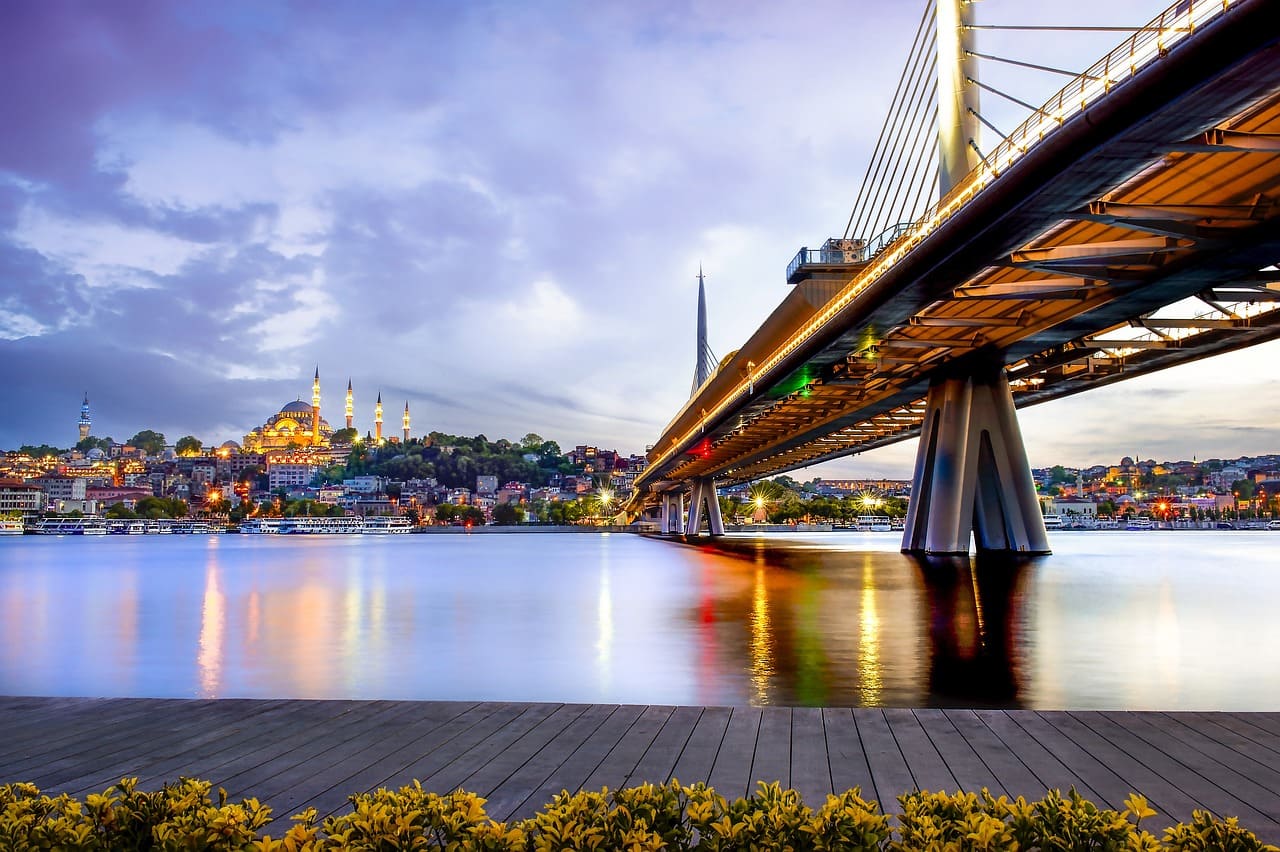
💡 About Istanbul
Istanbul occupies a geographical position of such extraordinary strategic importance — spanning two continents on either side of the Bosphorus strait, at the point where Europe and Asia are separated by just 700 metres of rushing water — that it has been one of the most fought-over cities in human history, serving successively as the capital of the Roman Empire (as Constantinople, founded in 330 AD by Emperor Constantine I), the Byzantine Empire, and the Ottoman Empire, a sequence of three major civilisations that makes it unique among world cities. The Hagia Sophia, completed in 537 AD by Emperor Justinian I and dedicated as the world's largest cathedral, remained the greatest ecclesiastical building in Christendom for nearly 1,000 years; its vast central dome, 31 metres in diameter and 55 metres above the floor, appears to float without visible support — an illusion created by the ring of 40 windows at its base that flood the interior with golden light — and inspired the design of every significant domed building from St Peter's Basilica in Rome to the US Capitol. The Ottoman conquest of Constantinople on 29 May 1453, when the 21-year-old Sultan Mehmed II led his forces through a breach in the ancient Theodosian Walls, ended the Byzantine Empire after 1,123 years and definitively shifted the balance of power between Christianity and Islam in the Mediterranean world; Mehmed converted the Hagia Sophia to a mosque and set about transforming Constantinople (which he renamed Istanbul) into the imperial capital of a new world power.
Topkapi Palace, built by Mehmed II on the promontory above the confluence of the Bosphorus and the Golden Horn between 1459 and 1465, served as the administrative centre of the Ottoman Empire for over 400 years — housing not only the Sultan's throne room and treasury (which contains the Topkapi Dagger, the Spoonmaker's Diamond and a collection of Islamic relics including the mantle and sword of the Prophet Muhammad) but also a harem of up to 700 women, an elite army barracks for the Janissaries and a staff of thousands. The Grand Bazaar (Kapalıçarşı), established by Mehmed II in 1455 and continuously expanded until it reached its present size in the late 19th century, is one of the world's oldest and largest covered markets: its 61 streets and 4,000 shops covering 30,700 square metres are visited by an estimated 250,000 to 400,000 people daily, making it one of the most visited tourist attractions on Earth; within its labyrinthine passages you can find Turkish carpets, gold jewellery, leather goods, ceramics, spices and counterfeit designer goods in quantities that overwhelm the senses. The Bosphorus strait, just 31 kilometres long and between 700 metres and 3.7 kilometres wide, is one of the world's most strategically critical waterways: over 50,000 vessels transit it annually, including supertankers carrying Russian and Caspian oil to world markets, and the channel's fierce southward current and frequent fog and crosswinds make navigation genuinely treacherous; the 1936 Montreux Convention gives Turkey the right to regulate commercial traffic through the strait and to close it to military vessels of non-Black Sea nations in wartime.
Istanbul's cuisine reflects its position at the crossroads of cultures: the meze tradition (dozens of small dishes shared communally) comes from the Ottoman imperial kitchen, the fish sandwich (balık ekmek) sold by rocking boats moored at the Galata Bridge is pure Istanbul street food, baklava (layers of filo pastry, nuts and syrup) was perfected in the Topkapi kitchens, and Turkish tea — served in small tulip-shaped glasses throughout the day in every tea house (çay evi) — fuels the city's endless sociability.
⭐ Traveller Ratings & Tips
🏆 City Rankings →Rate Istanbul
⭐ Known For
🏛️ Top Attractions
- Hagia Sophia
- Blue Mosque
- Topkapi Palace
- Grand Bazaar
- Bosphorus cruise
- Spice Bazaar
- Dolmabahçe Palace
🍽️ Local Food
- Döner kebab
- Baklava
- Menemen (eggs & tomatoes)
- Balık ekmek (fish sandwich)
- Meze platters
- Turkish tea (çay)
- Simit (sesame bread ring)
🍽️ Where to Eat in Istanbul
See all 5 →A fragrant 17th-century covered market piled high with spices, lokum and dried fruit.
📍 View on MapsGrilled mackerel sandwiches sold from bobbing boats by the Galata Bridge — a true Istanbul bite.
📍 View on MapsA celebrated Kadıköy restaurant reviving rare regional recipes from across Anatolia.
📍 View on MapsA famed baklava house by the water — buy it by weight, still warm.
📍 View on Maps