💡 About Venice
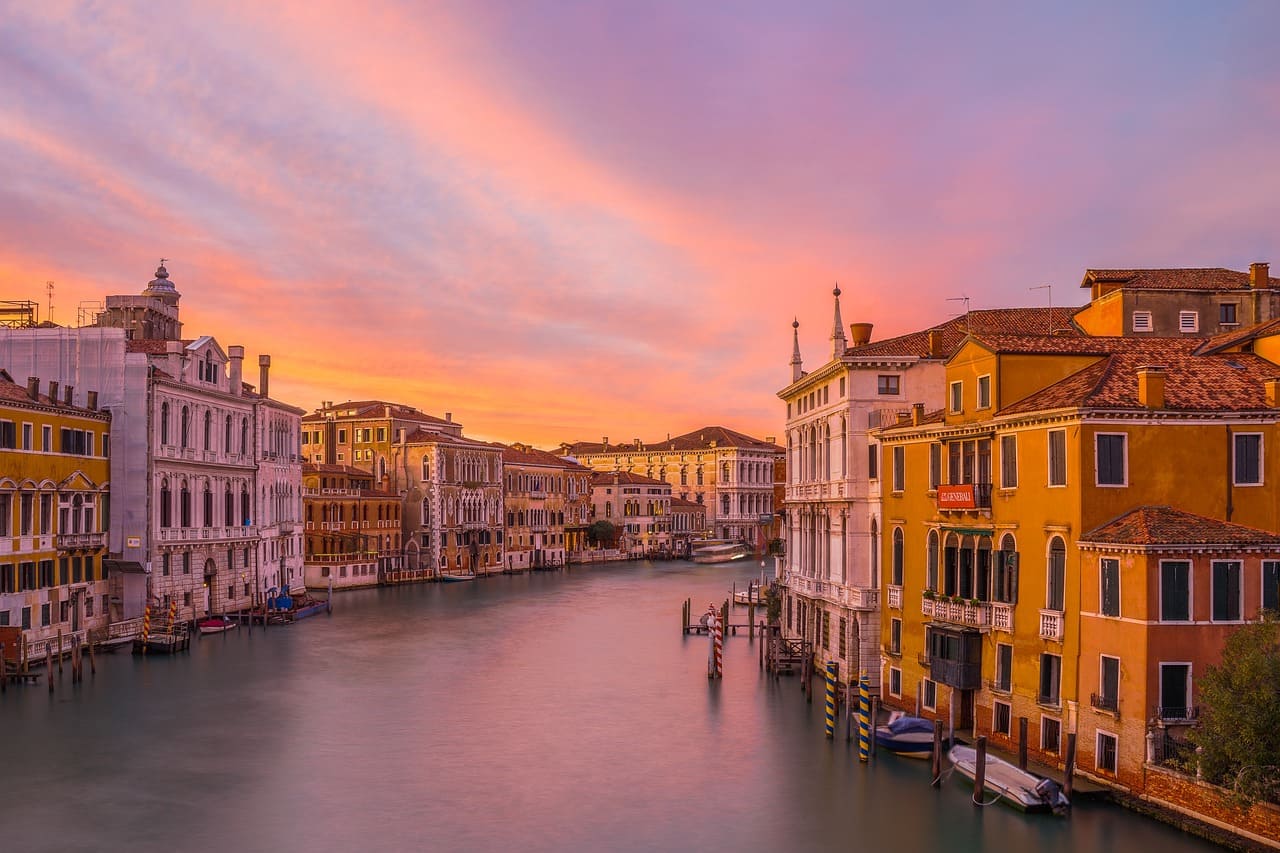
Venice, the serene republic built upon the waters of a tidal lagoon on the northern Adriatic coast, is perhaps the most astonishing feat of urban construction in human history — a city of 118 small islands, connected by 400 bridges crossing 177 canals, where the sound of motorboat engines has replaced the sound of horses' hooves and where the concept of a "street" is entirely waterborne. The city was founded by refugees fleeing the invasions of Attila the Hun and the Lombards in the 5th and 6th centuries AD, who chose the inhospitable mudflats of the lagoon precisely because they were undesirable to mainland invaders; what began as a desperate refuge became, by the 13th century, the most powerful maritime trading republic in the Mediterranean, controlling sea routes from Alexandria to Constantinople and accumulating wealth that funded the most extraordinary artistic patronage of the medieval world. The foundations of the city rest on millions of wooden piles — alder, oak and larch — driven into the marshy subsoil and sealed from oxygen by the water and mud above; this anaerobic environment has preserved the ancient timber for over a millennium, and structural engineers have calculated that these foundations could last several centuries more.
Venice is slowly sinking into its lagoon at a rate of approximately 1–2 millimetres per year due to a combination of natural sediment compaction and the effects of deep-well water extraction in the 20th century, while the Adriatic Sea itself is rising due to climate change — a combination that causes the flooding phenomenon known as acqua alta, when the Piazza San Marco and low-lying streets flood during storm surges; the €5.5 billion MOSE flood barrier system, decades in construction and beset by corruption scandals, was finally activated in 2020 and has prevented dozens of flooding events since. The Venetian Republic — La Serenissima, "The Most Serene" — was one of the longest-lasting political entities in European history, maintaining its independence for over 1,100 years (697–1797) before Napoleon Bonaparte dissolved it; during that time it produced extraordinary innovations in banking, commerce, diplomacy, publishing and warfare that shaped the development of European civilisation. St Mark's Basilica, begun in 829 AD as a mausoleum for the body of St Mark the Evangelist — whose remains were smuggled out of Alexandria hidden beneath pork and cabbages to confound Muslim customs officials — is covered in over 8,000 square metres of Byzantine-style gold mosaics that took 500 years to complete and shimmer like a supernatural vision when the light falls on them at certain hours.
The Venice Carnival, which dates back to the 12th century and was suppressed by Napoleon before being revived in 1979, is one of the world's most spectacular festivals — for two weeks before Lent, the city fills with extraordinary handmade masks and costumes, and the anonymity provided by the mask has historically allowed all social classes to mingle freely in a city otherwise rigidly stratified by birth.
⭐ Traveller Ratings & Tips
🏆 City Rankings →Rate Venice
⭐ Known For
🏛️ Top Attractions
- St. Mark's Basilica
- Doge's Palace
- Grand Canal gondola ride
- Bridge of Sighs
- Murano island
- Rialto Bridge
- Peggy Guggenheim Collection
🍽️ Local Food
- Cicchetti (Venetian tapas)
- Risotto al nero di seppia
- Sarde in saor
- Baccalà mantecato
- Fritto misto
- Tiramisu
- Aperol Spritz
🍽️ Where to Eat in Venice
See all 4 →Venice's historic market by the Grand Canal — a fish market and produce stalls best seen early.
📍 View on MapsA canal-side wine bar famous for its inventive cicchetti (Venetian tapas).
📍 View on MapsA tiny, much-loved bacaro near the Rialto market serving top-notch cicchetti.
📍 View on MapsReputedly the world's oldest café (1720), with orchestras on Piazza San Marco.
📍 View on Maps