Daily Challenge #680
Wednesday, 11 November 2026
Players who missed it most often picked Thessaloniki (100%) .
About Athens
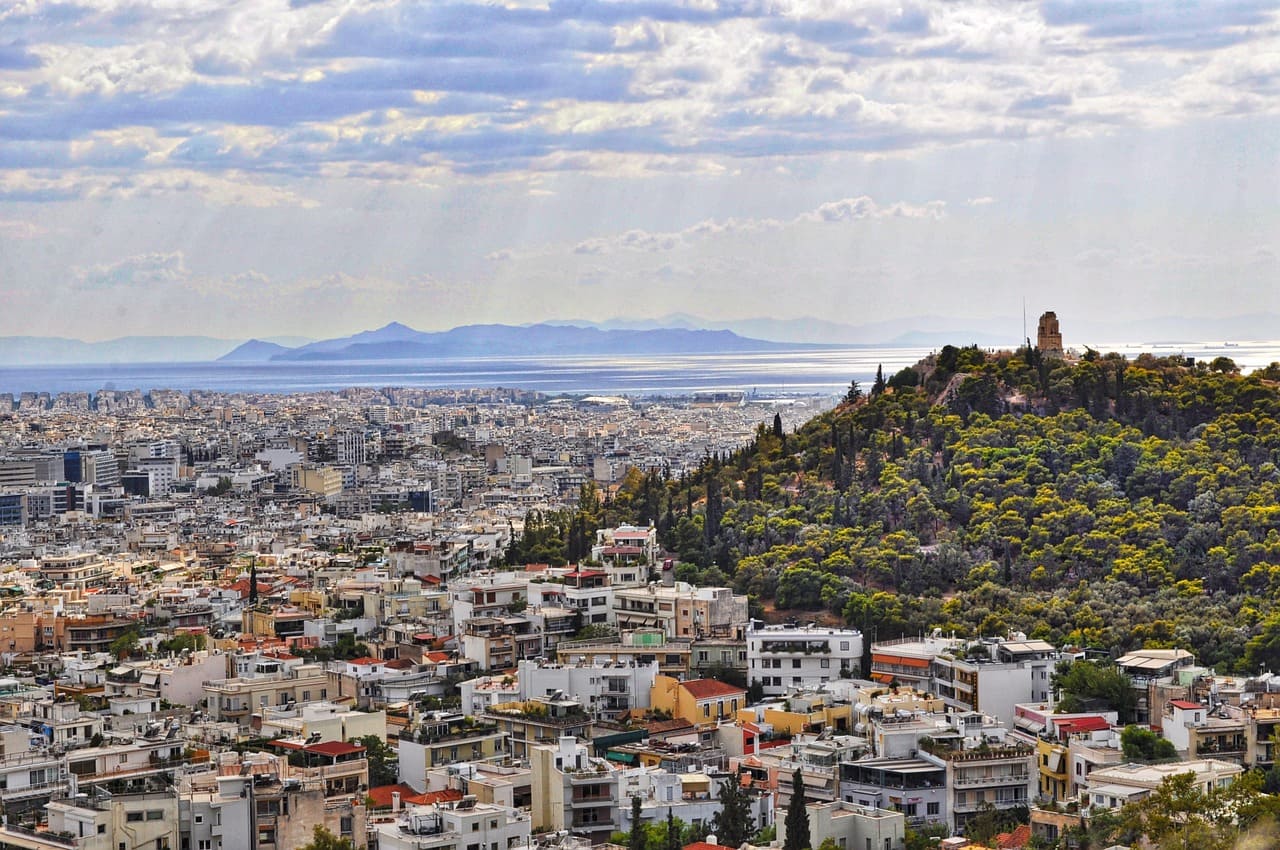
Athens is not merely an old city — it is the city from which Western civilisation springs, the place where democracy was invented (imperfect and exclusionary by modern standards, but a revolutionary concept in its time), where Socrates drank hemlock rather than renounce his philosophy, where Pericles commissioned the Parthenon, where Sophocles, Euripides and Aristophanes wrote the dramatic forms that still govern theatre 2,500 years later, where Plato founded the Academy — often called the first institution of higher learning in the Western world — and where Aristotle, who studied there, later tutored a young Macedonian prince named Alexander who would go on to conquer the known world. The Acropolis, a flat-topped limestone outcrop rising 156 metres above the city and inhabited since the Neolithic period (at least 7,000 years ago), was chosen as the site for Athens' greatest religious monuments precisely because of its commanding position visible from every part of the city and from the sea — the Parthenon, the Erechtheion with its Caryatid porch, the Propylaea gateway and the Temple of Athena Nike together constitute the most important architectural ensemble in Western history. The Parthenon, designed by the architects Ictinus and Callicrates under the artistic direction of the sculptor Phidias and completed in 432 BC, was built with deliberate optical illusions to counteract the distortions of human perspective — its columns taper slightly inward, its base curves imperceptibly upward, its columns lean slightly inward — so that from a distance the entire structure appears to be composed of perfectly straight lines, a mathematical sophistication that modern architects still study with awe. Modern Athens is a city that has undergone radical transformation: under Ottoman rule for nearly 400 years (1458–1833), it had declined to a village of perhaps 4,000 people by the time Greek independence was won; the 20th century saw explosive growth driven by the exchange of populations with Turkey in 1923 and the rural-urban migration of the post-WWII decades, until the city today houses more than a third of Greece's population in a sprawling metropolitan area of 3.7 million. The city was transformed again by the 2004 Summer Olympics, which acted as a catalyst for the construction of a world-class metro system, the restoration of major archaeological sites, the creation of a new airport, and major improvements to road infrastructure — investments that left Athens a genuinely easier city to navigate than it had been for decades. Athens' rooftop bar scene, which has proliferated across the neighbourhoods of Monastiraki, Thissio, Koukaki and Psyrri in recent years, offers one of the great urban experiences of contemporary Europe: sitting at dusk with a glass of retsina or tsipouro as the Acropolis is illuminated above, watching the city's lights spread across the Attic plain to the sea, is an experience that connects the immediate present to three millennia of continuous human habitation. The city's food culture, built around the Mediterranean diet of olive oil, legumes, vegetables, seafood and lamb, is one of the world's healthiest and most pleasurable — the taverna tradition of sharing multiple mezedes (small dishes) over hours of conversation is the Greek embodiment of the good life, and the neighbourhood markets (laïkí agorá) held in every district weekly overflow with produce of extraordinary freshness and quality.
Known for: Acropolis & Parthenon, Ancient ruins, Democracy birthplace, Mediterranean food, Philosophy
Best time to visit: April–June, September–October
A new city every day. Can you get today's?
🎯 Play today's challenge