Berlin Travel Guide: Sights, Neighbourhoods & Tips for 2026
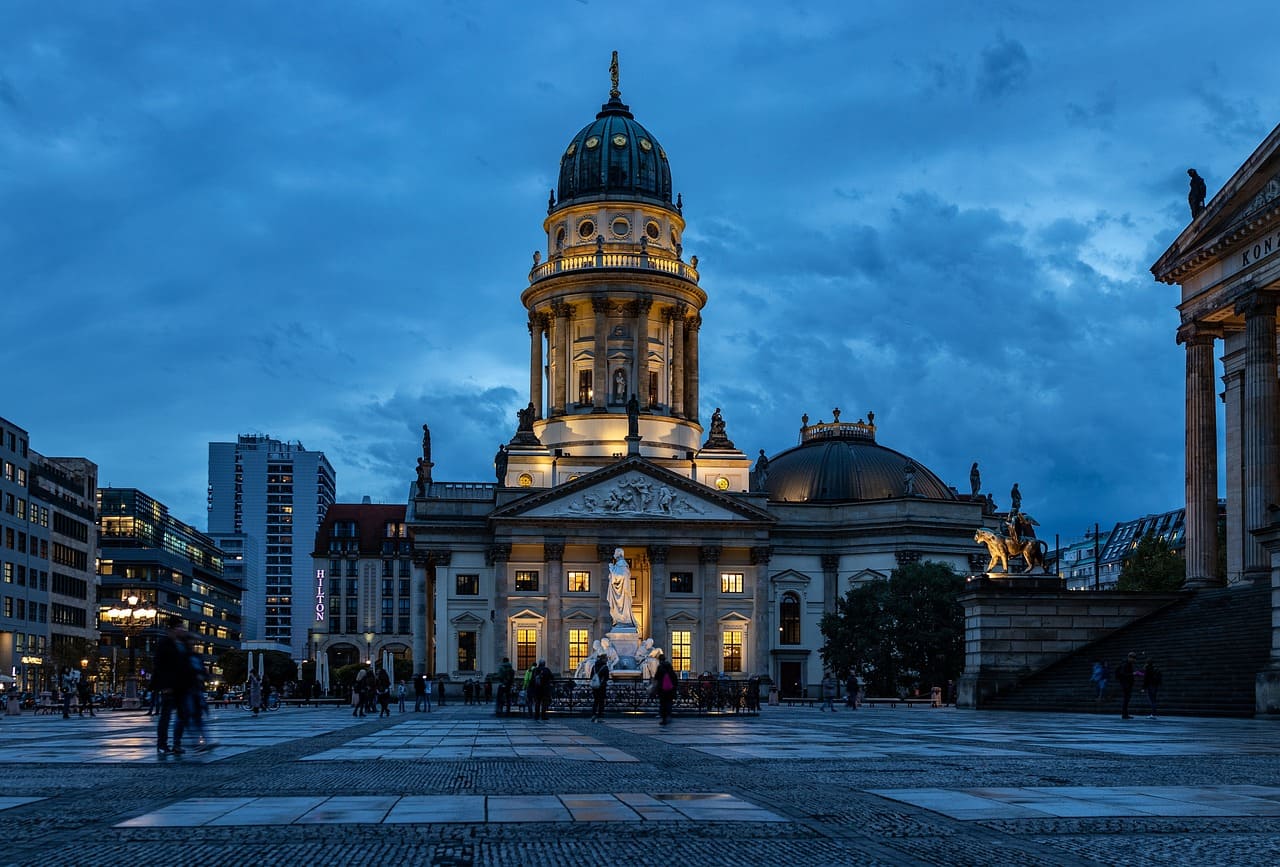
Berlin is a city where twentieth-century history is visible on ordinary streets. A line of cobblestones marks where the Wall once ran, a former airport has become a vast public park and museums occupy bunkers, breweries and railway stations. This Berlin travel guide organises a first visit around the historic centre, the memorials, the museum island and the neighbourhoods that give the city its creative reputation.
Berlin is large and decentralised, without a single obvious centre. Mitte holds most of the classic sights, while Kreuzberg, Neukölln, Prenzlauer Berg and Friedrichshain each have their own character. Four days allow you to understand the city's division and reunification, see a major collection and still spend an afternoon in a neighbourhood café or park.
Many of Berlin's most moving places are free: memorials, preserved stretches of the Wall and the parliament dome, which you can visit with advance registration. visitBerlin lists current exhibitions, festivals and the city's famously varied music and club programme. Guided walking tours that follow the line of the Wall or the government quarter are widely available and add useful context.
Where to stay in Berlin: choosing a district
Mitte is the most practical base for a first visit, with the Brandenburg Gate, Museum Island and many S-Bahn and U-Bahn connections close by. Prenzlauer Berg, just to the north, has leafy streets of restored nineteenth-century buildings, cafés and a relaxed atmosphere, making it popular with families.
Kreuzberg and Neukölln are lively, multicultural and full of restaurants and bars, with lower prices but more street noise in the evening. Friedrichshain suits travellers interested in nightlife and the East Side Gallery. Charlottenburg, in the west, is calmer and more traditional, with Charlottenburg Palace and the Kurfürstendamm shopping street.
Because the S-Bahn ring and the U-Bahn connect almost everywhere, distance from a station matters more than distance from the Brandenburg Gate. Berlin charges a city tax on overnight stays. Putting Mitte and Kreuzberg side by side in the city-cost tool helps judge whether a livelier, cheaper district suits your plans.
Berlin's history: the Wall, memorials and the Reichstag
The Berlin Wall was built in 1961 and fell on 9 November 1989. The Berlin Wall Memorial on Bernauer Strasse preserves a section of the border strip with its watchtower and death strip, together with a documentation centre explaining how families and streets were divided. It is the best single place to understand what the Wall meant.
The East Side Gallery, along the Spree in Friedrichshain, is the longest surviving stretch of the Wall, covered in murals painted in 1990. Checkpoint Charlie, the former Allied crossing point, is now very commercial; the nearby Topography of Terror documentation centre, on the site of the former Gestapo and SS headquarters, offers far more substance and is free.
The Memorial to the Murdered Jews of Europe, south of the Brandenburg Gate, consists of 2,711 concrete slabs on undulating ground, with an underground information centre. Walk through it slowly and respectfully. The Reichstag building, seat of the Bundestag, has a glass dome by Norman Foster; entry is free but requires advance registration and identification.
Museum Island and Berlin's collections
Museum Island, on the Spree in Mitte, is a UNESCO World Heritage Site grouping five major museums. The Neues Museum displays the bust of Nefertiti, the Altes Museum holds classical antiquities and the Alte Nationalgalerie focuses on nineteenth-century art. The Pergamonmuseum is closed for a long renovation, with a phased reopening planned from 2027, so check its status before you go.
The James-Simon-Galerie, opened in 2019, acts as the island's visitor centre. A Museum Island day ticket covers several of the museums and can be good value if you plan to visit more than two. Beyond the island, the Jewish Museum in Kreuzberg, the Gemäldegalerie's old masters and the Hamburger Bahnhof contemporary art museum each justify a visit.
Choose one or two museums per day rather than trying to see everything. The Berlin State Museums publish current opening times and closures across their many institutions, which is especially useful while renovation work continues. Buying tickets online saves queueing at the busiest museums, especially at weekends and during school holidays.
Getting around Berlin
BVG runs the U-Bahn, buses and trams, while the S-Bahn is operated separately but shares the same fare system. Berlin is divided into zones A, B and C; zones A and B cover the city itself, while BER Airport lies in zone C. A ticket for zones A, B and C is therefore needed for the airport journey.
Single tickets, day tickets and seven-day tickets are available, and the Berlin WelcomeCard combines transport with discounts. Validate paper tickets before boarding, as inspectors are common. On Friday and Saturday nights most U-Bahn lines run through the night, while night buses cover the gaps on other days.
From BER Airport, the FEX airport express and regional trains reach Hauptbahnhof in around half an hour. Berlin is flat and well suited to cycling, with many bike-share schemes. BVG provides a journey planner and fare information. Remember that an AB ticket bought in the city does not cover the airport leg; you need ABC.
What to eat in Berlin
Currywurst, sliced sausage with a curry-spiced ketchup, is the city's best-known snack, sold at stands across town. The döner kebab in its modern sandwich form was popularised in Berlin by Turkish immigrants, and Kreuzberg remains a good place to try it. Berlin's food scene is now highly international, with Vietnamese, Lebanese and vegan restaurants as common as German ones.
Markthalle Neun in Kreuzberg hosts a weekly Street Food Thursday as well as a regular market. For traditional German food, look for Eisbein, pork knuckle, or Königsberger Klopse, meatballs in caper sauce, in an old-style Kneipe. Breakfast and brunch are a serious pastime in Prenzlauer Berg and Neukölln.
Many restaurants accept cards now, but some smaller places remain cash-only; carry a little cash. Service is usually included, and rounding up or leaving around ten percent is customary for good service. Spätis, Berlin's late-opening corner shops, sell drinks and snacks well into the night and are part of everyday neighbourhood life.
Parks, lakes and Potsdam
Berlin is one of Europe's greenest capitals. The Tiergarten, a former royal hunting ground beside the Brandenburg Gate, is crossed by long avenues and has beer gardens beside its lakes. Tempelhofer Feld, the runways of the airport that closed in 2008, is now a vast open space used for cycling, kite-flying and picnics. In summer, Berliners head to lakes such as the Wannsee and the Müggelsee, both reachable by S-Bahn.
Potsdam, the capital of the surrounding state of Brandenburg, lies just beyond the city boundary and is reached by S-Bahn or regional train in under an hour. Its palaces and parks, including Sanssouci, built for Frederick the Great in the 1740s, form a UNESCO World Heritage Site together with parts of Berlin. A zone ABC ticket covers the journey, and the park is large enough to fill a whole day.
A four-day Berlin itinerary
| Day | Area | Main focus |
|---|---|---|
| 1 | Mitte | Brandenburg Gate, Reichstag dome, Holocaust Memorial |
| 2 | Museum Island and Alexanderplatz | Neues Museum, Berliner Dom, TV Tower |
| 3 | The Wall | Bernauer Strasse memorial, East Side Gallery, Friedrichshain |
| 4 | Kreuzberg and Tempelhof | Jewish Museum, Tempelhofer Feld, a canal-side evening |
Begin day one at the Brandenburg Gate, walk to the Holocaust Memorial and visit the Reichstag dome at your registered time. Spend day two on Museum Island and climb the Berliner Dom for a view across the island, or ride up the TV Tower at Alexanderplatz.
Day three follows the Wall from Bernauer Strasse to the East Side Gallery. On day four, explore the Jewish Museum in Kreuzberg, then walk or cycle across Tempelhofer Feld, the former airport, before an evening by the Landwehr Canal. If you have a fifth day, Potsdam's palaces are easily reached by S-Bahn.
For more on Berlin's late-night transport and clubs, our guide to late-night cities explains how the weekend U-Bahn works. If history is your main interest, our history city guide suggests other places with powerful memorials and museums. For onward travel, Munich and Hamburg are both reachable by direct high-speed train.
Berlin budget, seasons and practical tips
Berlin remains more affordable than London or Paris, though prices have risen. Many memorials and parks are free. Summer brings open-air cinema, lake swimming and outdoor beer gardens, while winter is cold and grey but lit up by Christmas markets.
Shops close on Sundays except in stations and a few areas, so plan any shopping for Saturday. Germany is in the Schengen area; non-EU travellers are registered under the EU Entry/Exit System at the external border. Use the visa tool for your questions and the currency converter for prices.
If Berlin's creative energy and history appeal, destinations similar to Berlin suggests other cities with a similar mood, and the destination finder can help plan the next trip. Dresden, with its rebuilt Baroque centre, is about two hours away by train, and Prague around four.
Frequently asked questions
How many days do you need in Berlin?
Four days allow the historic centre, the main memorials, a museum day and a neighbourhood such as Kreuzberg or Prenzlauer Berg. Three days work for a focused history trip, while a fifth day leaves room for Potsdam.
Is the Pergamon Museum open?
The Pergamonmuseum is closed for an extensive renovation, with a first phase expected to reopen from 2027. Other Museum Island institutions, including the Neues Museum with the bust of Nefertiti, remain open. Check the State Museums website for current details.
Do I need to book the Reichstag dome?
Yes. Visits to the dome are free but require advance registration on the Bundestag website, and you must bring identification. Same-day places are sometimes available at the service centre nearby, but booking ahead is far more reliable.
Links & Resources
Official sights, transport and planning
- Berlin Wall Memorial: Bernauer Strasse visitor information.
- German Bundestag: Registration for the Reichstag dome.
- Memorial to the Murdered Jews of Europe: Information centre and visits.
- Topography of Terror: Documentation centre on the Nazi regime.
- Jewish Museum Berlin: Exhibitions and tickets.
- UNESCO — Museumsinsel: Museum Island's heritage listing.
- BER Airport: Transfers into the city.
- UK government — Germany travel advice: Entry and safety guidance.
On GuesTheCity
- Explore the city map: Trace the former Wall through Mitte and Kreuzberg.
- Play Guess the City: Recognise the Brandenburg Gate and the TV Tower.