Porto Travel Guide: Sights, Neighbourhoods & Tips for 2026
Porto rises in steep tiers above the Douro River, its houses stacked one above another down to the Ribeira waterfront, with the port wine lodges of Vila Nova de Gaia facing them across the water. It is smaller and more compact than Lisbon, yet just as hilly. This Porto travel guide explains how to handle the slopes, which churches and tiled buildings to see, how to visit a port lodge and how to spend three days without rushing.
Porto gave its name to both Portugal and port wine. Its merchants traded wine shipped down the Douro from the vineyards upriver, and the historic centre, the Luís I Bridge and the Serra do Pilar monastery together form a UNESCO World Heritage Site. Much of the city's character comes from granite churches, azulejo tiles and narrow streets that open suddenly onto river views.
Porto is easy to explore on foot, though you will climb a lot. Visit Porto lists current exhibitions and festivals, including São João on the night of 23 June, when the city celebrates with grilled sardines, fireworks and street parties.
Where to stay in Porto
Baixa, the upper city centre around Avenida dos Aliados and São Bento station, is the most practical base: it is close to the metro, the main sights and plenty of restaurants. Ribeira, on the riverfront, is picturesque but steep and busy, and many old buildings have narrow stairs.
Cedofeita and the area around Rua Miguel Bombarda, known for galleries and independent shops, are a little west of the centre and calmer. Vila Nova de Gaia, across the river, puts you among the port lodges with a view of Porto's skyline, though returning involves crossing the bridge or using the cable car.
Porto charges a municipal tourist tax per person per night for a limited number of nights. Check how you will reach the property with luggage, especially in Ribeira. Comparing Baixa with Gaia in the city-cost tool helps you weigh views against convenience, and the packing planner is a reminder to bring shoes with grip for the granite cobbles.
Ribeira and the Luís I Bridge
The Ribeira district, along the riverbank, is Porto's most photographed area, with brightly coloured façades, cafés and traditional rabelo boats once used to carry wine barrels. Wander the lanes behind the waterfront, where laundry hangs from balconies above the narrow streets.
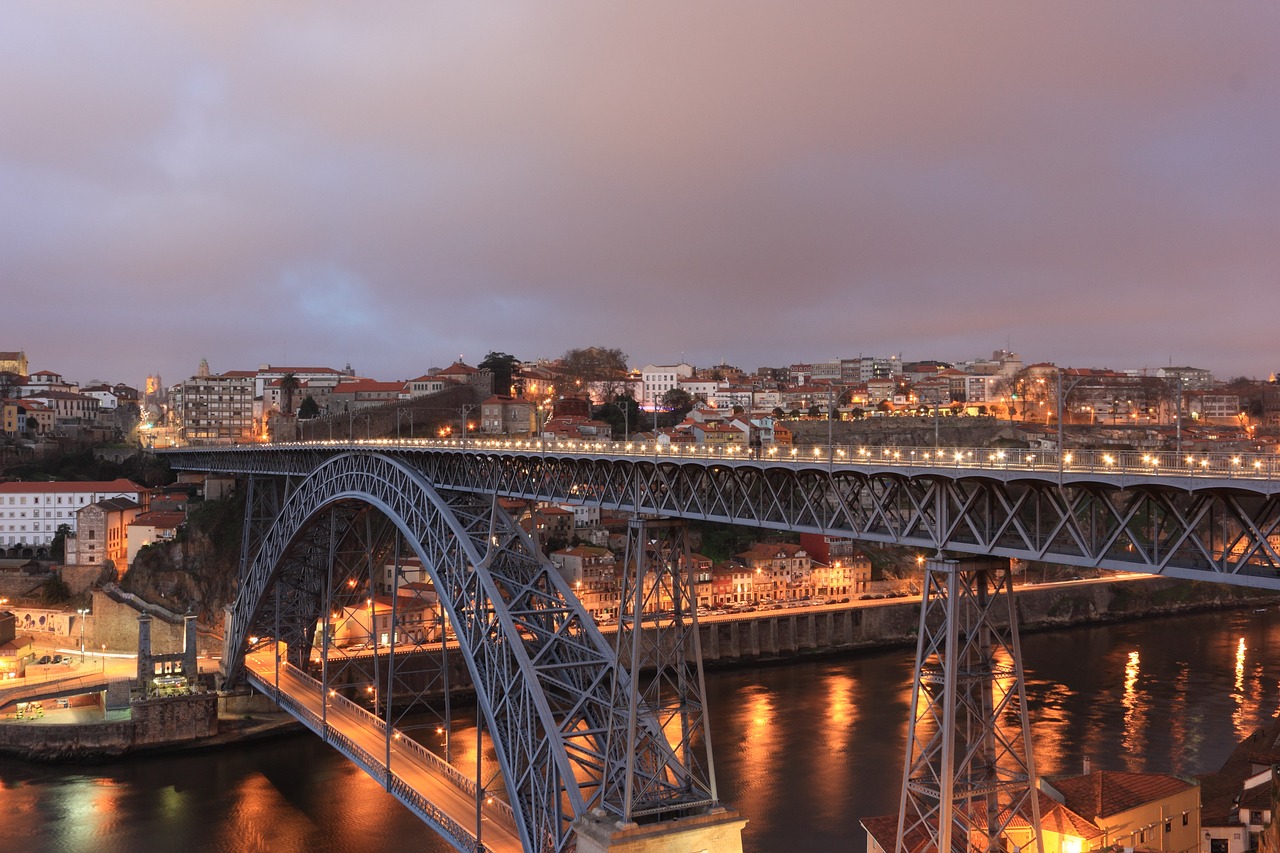
The double-deck Luís I Bridge, completed in 1886, was designed by Théophile Seyrig, a former partner of Gustave Eiffel. The lower deck carries cars and pedestrians, while the upper deck is for the metro and pedestrians and offers dramatic views over the river. Walk across the upper deck to the Serra do Pilar monastery terrace for the best panorama of Porto.
A short river cruise, often called the Six Bridges tour, gives a different perspective on the city and its crossings. The Guindais funicular links Ribeira with the upper town near Batalha, saving a steep climb. The rabelo-style boats used for these trips are modern versions of the flat-bottomed vessels that once carried barrels down the Douro.
Churches, tiles and the upper town
São Bento station, opened in 1916, is famous for its entrance hall lined with about twenty thousand azulejo tiles depicting scenes from Portuguese history. Nearby, the Capela das Almas and the Igreja do Carmo are covered with blue-and-white tiles on their exterior walls.
The Sé Cathedral, a fortress-like Romanesque church begun in the twelfth century, stands on a hill above Ribeira with a terrace overlooking the rooftops. The Clérigos Tower, completed in the eighteenth century, can be climbed for one of the best views of the city.
The Palácio da Bolsa, the nineteenth-century stock exchange, is known for its lavish Arab Room, visited on guided tours. The Igreja de São Francisco has an extraordinary gilded Baroque interior. Livraria Lello, a neo-Gothic bookshop with a carved staircase, charges an entry fee that can be deducted from a book purchase; queues are long, so book a time.
Port wine and Vila Nova de Gaia
Port wine is produced in the Douro Valley and traditionally aged in the lodges of Vila Nova de Gaia, across the river from Porto. Many lodges offer tours explaining the difference between ruby, tawny and vintage port, followed by a tasting. Book ahead in high season, and choose a tour that matches your interest, from historic cellars to more modern presentations.
The Gaia waterfront has restaurants with views of Porto, and the Gaia cable car runs above the lodges between the riverside and the upper deck of the bridge. The Port and Douro Wines Institute explains the region and its wine categories.
A day trip to the Douro Valley, about two hours upriver, reveals terraced vineyards and quintas, wine estates. Trains from São Bento to Pinhão follow the river and are a scenic alternative to a coach tour. The Alto Douro wine region is itself a UNESCO World Heritage Site, and a night at a quinta lets you see the terraces at sunrise.
Matosinhos, just north of Foz and reached by metro, is Porto's seafood quarter, where restaurants grill fish and shellfish on charcoal outside their doors. It is also a good place for a beach walk and Atlantic sunsets. Order the catch of the day, priced by weight, and ask before it is cooked.
Getting around Porto
The Porto metro is modern and mostly runs above ground in the centre. Line E, the violet line, connects the airport with the city centre in about half an hour. The Andante card, a rechargeable travel card, works on the metro, buses and some trains; tap it each time you board.
Historic trams, including line 1 along the river to Foz do Douro, are a pleasant way to reach the coast. The Funicular dos Guindais and the Gaia cable car help with the hills. Walking is the best way to see the centre, but plan routes downhill where possible.
Trains to Lisbon leave from Campanhã station and take around three hours on fast services. Metro do Porto provides maps and fare information. Braga and Guimarães, two historic northern cities, are about an hour away by frequent urban trains from São Bento.
What to eat in Porto
The francesinha, a sandwich of bread, ham, sausage and steak covered with melted cheese and a spicy beer-and-tomato sauce, is Porto's famous hearty dish. Tripas à moda do Porto, tripe stew with beans, explains why locals are nicknamed tripeiros. Bacalhau and grilled fish are everyday staples.
The Mercado do Bolhão, a historic market reopened in 2022 after extensive restoration, sells fresh produce, fish and local products. Bifanas, pork sandwiches, and sandes de pernil, roast pork rolls, make quick lunches. Our Porto restaurant guide suggests further places to eat.
As in Lisbon, restaurants may bring bread and starters to the table, which are charged if eaten. Vinho verde, a light wine from northern Portugal, pairs well with seafood. Tipping is modest, usually rounding up or leaving a few euros. Pastelarias serve pastéis de nata and bolas de Berlim, cream-filled doughnuts, all day.
A three-day Porto itinerary
| Day | Area | Main focus |
|---|---|---|
| 1 | Baixa and the upper town | São Bento, Clérigos Tower, Livraria Lello, the Sé |
| 2 | Ribeira and Gaia | Palácio da Bolsa, the bridge, a port lodge tour |
| 3 | Serralves and Foz | Contemporary art museum and park, the coast by tram |
Start in Baixa with São Bento's tiles, the Clérigos Tower and Livraria Lello, then walk to the Sé. On day two, visit the Palácio da Bolsa and São Francisco, cross the Luís I Bridge and finish with a port tasting in Gaia.
Day three takes you west to the Serralves Foundation, whose contemporary art museum and gardens are among the best in Portugal, and then to Foz do Douro, where the river meets the Atlantic. If you are deciding how to split Portugal, our Lisbon–Porto comparison sets the two cities side by side, and our Lisbon guide covers the capital.
Porto budget, seasons and practical tips
Porto is one of Western Europe's better-value cities, with affordable food and transport, though accommodation has become more expensive. Summer is warm but rarely as hot as Lisbon; the coast can be foggy. Spring and autumn are ideal, while winter is mild but often rainy.
Pickpocketing is the main concern in crowded areas such as Ribeira and on trams. Portugal is in the Schengen area, so non-EU travellers pass through the EU Entry/Exit System. Use the visa tool to check your requirements and the currency converter to plan in euros.
If Porto's river views and wine culture appeal, destinations similar to Porto suggests comparable cities, and the destination finder can help choose your next trip. Lisbon is three hours south by train, and Spain's Bilbao and San Sebastián share its love of seafood and Atlantic coast life.
Frequently asked questions
How many days do you need in Porto?
Three days cover the upper town, Ribeira, a port lodge, Serralves and the coast at Foz. Two days are enough for a short break focused on the centre and Gaia. Add a day for the Douro Valley's vineyards.
Is Livraria Lello worth the ticket?
Its carved staircase and stained-glass ceiling are beautiful, but it is small and crowded. Book a timed ticket, which can be deducted from a book purchase, and visit early. If queues put you off, the city's tiled churches are free alternatives.
Can you visit the Douro Valley from Porto?
Yes. Trains from São Bento follow the river to Pinhão in about two and a half hours, and many tours include wine tastings and a boat trip. A full day is needed, and an overnight stay lets you enjoy the valley at a slower pace.
Links & Resources
Official sights, transport and planning
- UNESCO — Historic Centre of Oporto: Heritage background.
- Serralves Foundation: Museum, park and exhibitions.
- Livraria Lello: Tickets and opening hours.
- Palácio da Bolsa: Guided tours of the stock exchange.
- Porto Airport: Arrivals and the metro link.
- CP — Portuguese Railways: Trains to Lisbon and the Douro.
- Casa da Música: Concerts in Porto's landmark music hall.
- UK government — Portugal travel advice: Entry and safety guidance.
On GuesTheCity
- Explore the city map: See how Porto and Gaia face each other across the Douro.
- Play Guess the City: Recognise the Luís I Bridge and Ribeira.