10 Best Cities for Architecture: Buildings, Streets and Design
Architecture becomes easier to understand when you look at how a building meets the street, carries weight, uses light or changes a district. A skyline photograph is only the beginning. These ten cities offer particular buildings and urban questions, from Barcelona's modernisme to Chicago's commercial architecture and Rotterdam's industrial heritage. The aim is to recognise design decisions rather than repeat a list of famous façades.
Choose one route with contrasting examples and, where possible, an interior or guided explanation. The beautiful European cities guide considers visual composition, while the art-and-museum selection concentrates on collections. Architecture can include both, but this article treats buildings and urban form as the principal subjects, with years, designers and neighbourhood relationships that help explain what you are seeing.
Structure and ornament in two very different cities
1. Barcelona: look beyond the label Gaudí
In Barcelona, the Sagrada Família's construction began in 1882, while Park Güell was developed between 1900 and 1914. Casa Batlló and Casa Milà introduce different domestic and urban questions. Choose one interior to understand light, circulation and structure rather than spending the day only photographing façades. The Sagrada Família website provides the building's own explanation and current visitor arrangements. Modernisme extends beyond one architect, with the Hospital de Sant Pau offering another substantial subject. Give the Eixample grid attention too: street layout helps explain how these individual buildings are encountered.
2. Chicago: read the riverfront as a sequence of ideas
Chicago rewards a guided architectural river cruise or a carefully planned street route because buildings from different periods stand in a readable sequence. The Willis Tower was completed in 1973; the Rookery and the work associated with Louis Sullivan introduce other chapters. The Chicago Architecture Center offers interpretation and programmes focused on the city. Look at structural expression, setbacks and the relationship with the river rather than treating every tall building as the same skyscraper type. Leave a separate session for an interior or neighbourhood so the city extends beyond one boat-based panorama.
Ancient engineering and Renaissance form
3. Rome: compare construction systems as well as dates
In Rome, the Pantheon and the Colosseum provide different questions about concrete, enclosure, circulation and public use. The Colosseum opened in AD 80, while the surviving Pantheon building is associated with the Hadrianic period. A guided session can explain structure more usefully than a rapid sequence of exterior stops. Later churches and civic spaces add further periods without making the whole city one preserved ancient settlement. The Rome dining page supports a proper pause between areas, keeping attention for the buildings rather than spending the day in an uninterrupted monumental march.
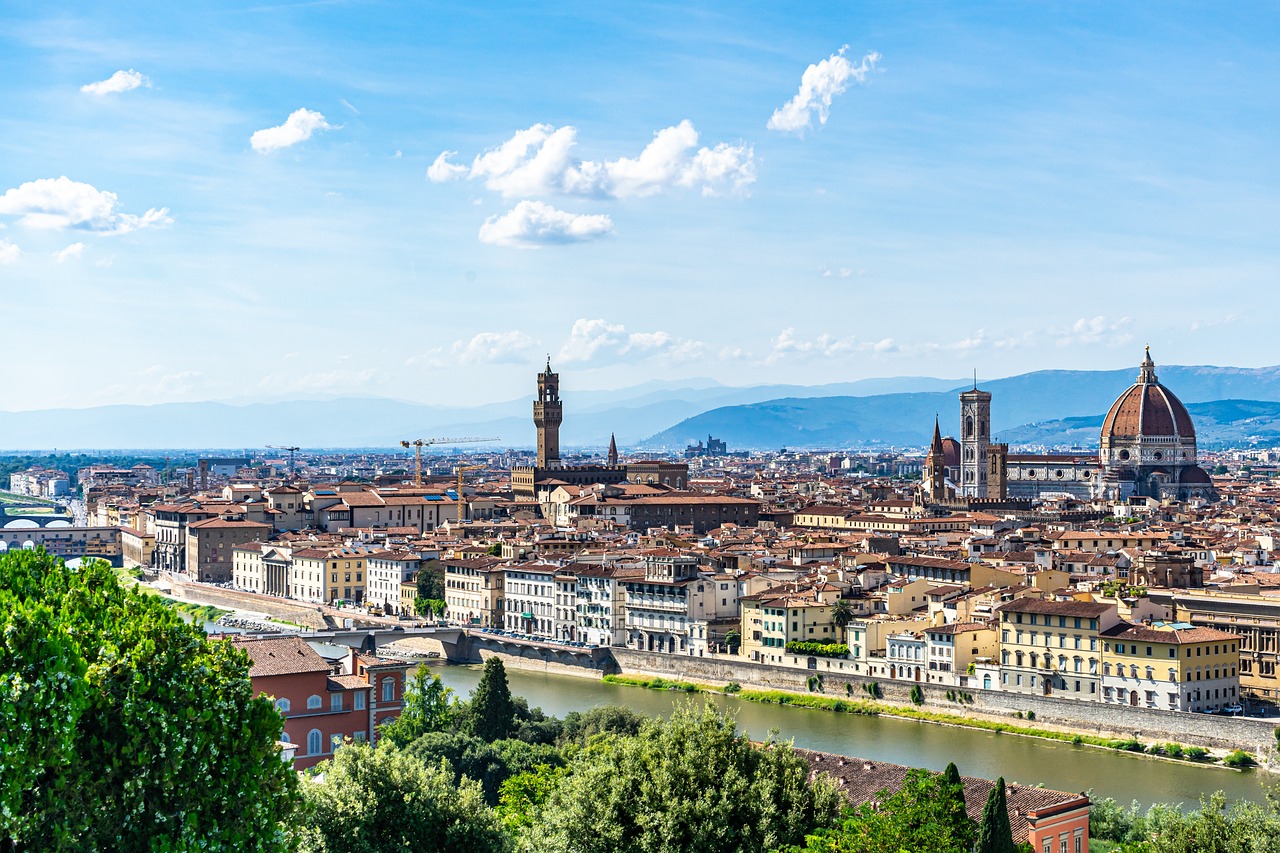
4. Florence: a dome within a tightly woven city
Florence's cathedral dome, completed in 1436, is a specific engineering achievement and an urban landmark above a dense roofscape. Brunelleschi's work can be considered alongside the city's palaces, churches and public squares. Choose a street-level route that compares proportion, material and the edge between a building and its surroundings. A viewpoint helps with orientation, but the architectural interest also lives in a courtyard or façade viewed close up. Three days can give one major interior or climb its own session, with Oltrarno and the river providing another urban perspective.
5. Venice: façades belong to a water-based city
In Venice, the Grand Canal provides a transport corridor along which palaces present their principal façades. The relationship between water, landing and building is part of the architecture. Ca' d'Oro offers a Gothic example, while Santa Maria della Salute, begun in 1631, introduces a different scale and period. Choose one palace interior if available and relevant, then look at ordinary canal edges and bridges. The city is neither an untouched architectural stage nor merely a backdrop for a boat ride: changing uses, maintenance and working movement remain visible parts of its fabric.
High-rise districts and designed tropical landscapes
6. Dubai: distinguish the landmark from its urban setting
Dubai's Burj Khalifa opened in 2010 and reaches 828 metres, while Dubai Creek and Al Fahidi introduce another scale of building and public space. Downtown, the Marina and older trading districts are different areas, requiring planned movement between them. Choose a route that explains the relationship between towers, roads and pedestrian space instead of treating height as the sole architectural subject. The Dubai city guide provides the practical district framework. Current regional conditions also belong in the wider travel decision, with a landmark ticket never substituting for up-to-date country and transport information.
7. Singapore: compare planted architecture and conserved streets
In Singapore, Marina Bay Sands, opened in 2010, and Gardens by the Bay provide one contemporary district, while Joo Chiat's shophouses offer a different architectural history. The useful comparison concerns scale, climate, decoration and public space rather than a simple contest between old and new. Choose a ground-level route as well as an elevated view, noticing shade and how people move between buildings. A conservation district is lived in, so stay on public routes and keep private entrances clear. The colour-city guide adds material and neighbourhood context for the shophouse setting.
Central European movements and a modern industrial city
8. Vienna: the Ringstrasse and the Secession answer different questions
Vienna combines the Ringstrasse's monumental civic buildings with the Secession building of 1898 and other later design movements. Otto Wagner's work supplies another useful thread, including architecture connected with urban transport. Choose a route with contrasting functions rather than a succession of imperial façades. The Vienna restaurant page can provide a midday pause in the area you are actually studying. A museum interior or guided building visit may explain materials and use more clearly than another distant photograph, especially when weather makes an extended street walk less comfortable.
9. Prague: follow one route through several architectural languages
In Prague, Gothic, Baroque, Art Nouveau and Czech Cubist examples can be studied without claiming every building belongs to one fairy-tale style. The House of the Black Madonna offers a named Cubist interest, while the Dancing House, completed in 1996, introduces another period. Give each its design context and actual district. A three-day visit can include a chosen interior and a focused route through the centre, leaving the castle complex for its own session. The Prague city guide provides the practical framework, so this architecture visit can remain about buildings rather than repeating every sightseeing instruction.
10. Rotterdam: industrial modernism and post-war urban form
Rotterdam offers the Van Nelle Factory, recognised by UNESCO in 2014, as a major modern industrial subject. In the city, the Cube Houses and Markthal provide different questions about housing, mixed use and public space. The factory is a separate destination with its own access arrangements, not an interior to assume you can enter at any time. Choose Rotterdam for the relationship between rebuilding, contemporary urban life and surviving modernist ideas. An ordinary street route can be as informative as a landmark stop when it explains how the district works.
Look at the building in use
Notice where people enter, where shade falls, how the ground floor meets the pavement and what the building asks of its surroundings. A spectacular roof may conceal an awkward public route; a modest façade may frame an excellent courtyard. Architectural appreciation is more useful when it includes use and maintenance, not only the designer's name. If interpretation distinguishes original fabric from later work, keep that distinction in your own notes and captions.
The map helps organise a coherent route, and the best-time planner supplies seasonal context for outdoor looking. The budget planner can separate free street study from a paid interior, tower or guided cruise. Confirm the chosen building's current access and hours once, particularly where it remains a workplace, residence or religious institution. An architecturally significant exterior does not make its private spaces freely accessible.
Give a short route enough time
For an illustrative Vienna session, compare a Ringstrasse civic building, an Otto Wagner-related transport structure and the Secession, then finish with a café break. The precise route depends on the sites selected and whether an interior is included. The walking-city selection offers another perspective on urban experience, while the packing tool helps organise comfortable footwear and weather protection. Three carefully understood buildings can provide more insight than a long list seen only while hurrying past.
Frequently asked questions
Do I need architectural training to enjoy these cities?
Basic questions about material, structure, light and use are enough to begin. A good institutional guide or tour can explain specialist ideas through the buildings themselves. Choose one route and a few contrasting examples, then notice how the design affects people and the surrounding streets rather than trying to memorise every style name.
Should I pay for interiors or stay with exterior views?
Street views explain urban setting and façade, while a selected interior can reveal circulation, structure and light that are invisible outside. Choose the paid visit for a specific question rather than assuming every celebrated building needs a ticket. Access may also be limited by the building's working, residential or religious function.
Which city is useful for modern architecture beyond skyscrapers?
Rotterdam offers industrial modernism and varied post-war urban form, while Vienna and Prague provide other movements and building types. Chicago also rewards attention to street-level structures and neighbourhoods beyond its tallest towers. Modern architecture is a broad subject, so select the city for the period and design questions that interest you most.
Links & Resources
Official tourism and planning sources
- Turismo Roma: Explore Rome’s building periods and the districts connecting major monuments.
- Feel Florence: Find Florence architectural landmarks and routes through the historical city.
- Venezia Unica: Understand Venice’s districts and visitor movement through its water-based fabric.
- Visit Dubai: Locate Dubai’s older districts and modern landmark areas before planning transfers.
- Singapore Tourism Board: Explore Singapore’s contemporary districts and conserved urban neighbourhoods.
- Vienna tourism: Find architectural routes spanning Vienna’s Ringstrasse and later design movements.
- Prague tourism: Explore Prague buildings and districts across several architectural periods.
- Rotterdam tourism: Discover Rotterdam’s modern architecture and practical city-visit information.
- UNESCO: Van Nellefabriek: Read why the factory is recognised as modern industrial heritage.