London Travel Guide: Sights, Neighbourhoods & Tips for 2026
London is too large to treat as a single checklist, and it rewards visitors who plan by district instead. Westminster, Bloomsbury, the South Bank and the East End each hold enough for a full day, and the time spent crossing between them is the hidden cost of a badly ordered trip. This London travel guide groups the major sights, explains the transport and payment rules and leaves room for markets, parks and an evening at the theatre.
The city layers Roman foundations, medieval churches, Georgian squares and contemporary towers along a winding river. You do not need to see every famous building to understand that history. Five full days give a first-time visitor a good introduction, especially if two of those days are spent in neighbourhoods rather than queues.
Several of London's national museums offer free general admission to their permanent collections, which changes how you can use the city. Visit London lists current exhibitions and seasonal events, and is a useful way to find a neighbourhood festival or late museum opening beyond the obvious landmarks.
Where to stay in London: pick a line, not just a postcode
Bloomsbury puts the British Museum, several Underground lines and King's Cross within walking distance, which makes it a sensible first base. South Kensington suits a museum-heavy trip and quieter evenings. Southwark, on the south bank of the Thames, places Borough Market, Tate Modern and the riverside walk on your doorstep, and it is often cheaper than equivalent rooms north of the river.
A cheaper hotel in Zone 2 or 3 can work well when it sits close to a fast line. A room near an Elizabeth line station, for example, can reach the West End quickly, while a hotel described as central but ten minutes from the nearest station may cost you more time each day. Look at the walk from the station, not only the station name.
London hotel rooms are often small, and older townhouse properties may have steep stairs and no lift. Ask about the specific room if accessibility or large luggage matters. Check whether VAT and any fees are included in the price shown, and whether the hotel can hold bags on your departure day so the last morning is not wasted.
Comparing two bases side by side in the city-cost comparison tool is a quick way to see whether a cheaper outer-zone room actually saves money once daily fares are included. For packing, the packing planner helps with the one item most visitors forget: a light waterproof layer for showers that arrive without warning.
Westminster, the river and the royal landmarks
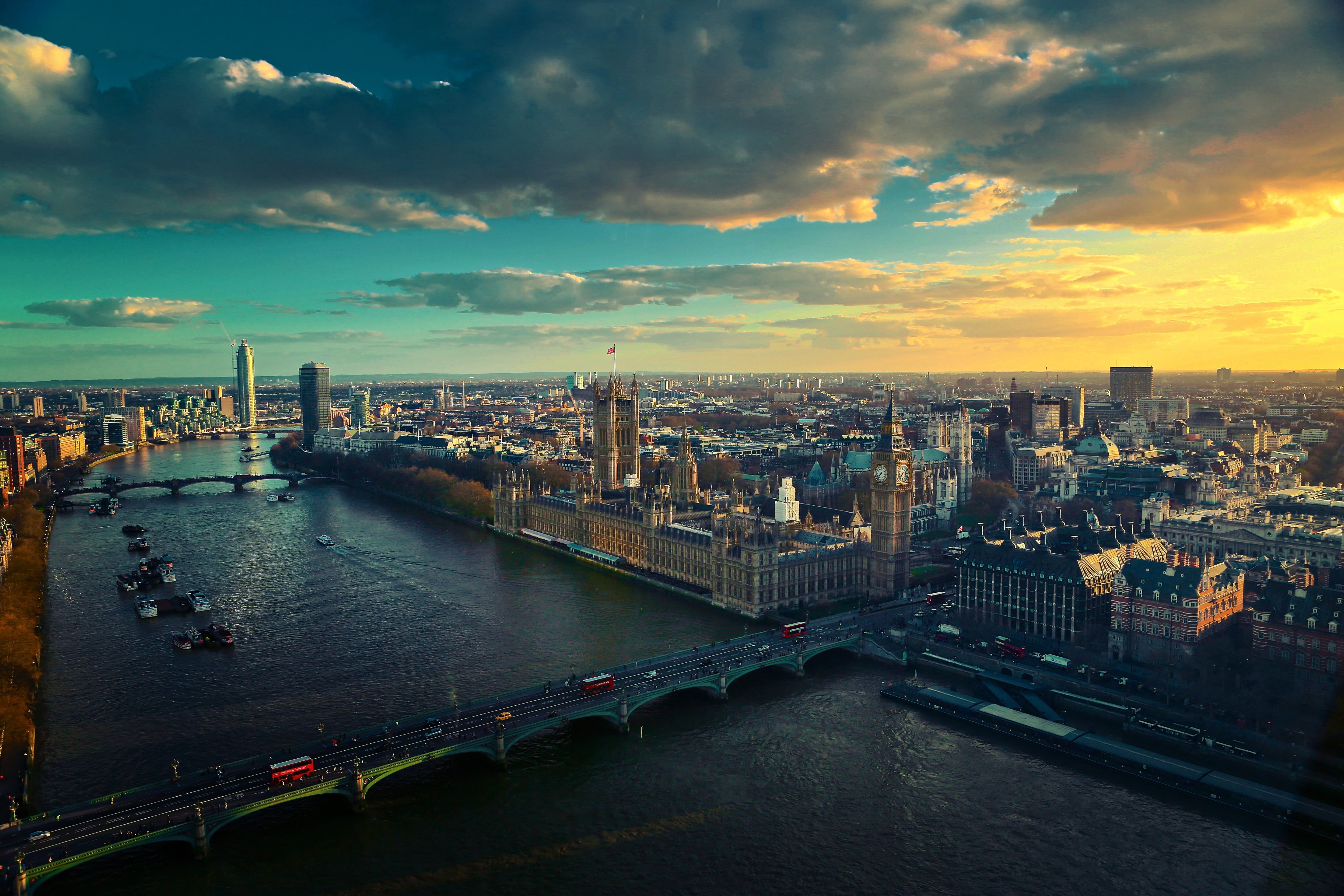
Westminster Abbey has been the coronation church since 1066, and its interior holds the tombs of monarchs, poets and scientists. It is an active church, so services can change visiting arrangements; book a timed ticket rather than queueing on the day. The Houses of Parliament and the Elizabeth Tower, which houses Big Ben, sit across the road and are best appreciated from Westminster Bridge or the opposite riverbank.
The Tower of London, founded by William the Conqueror after 1066, deserves a half-day of its own. The Crown Jewels, the White Tower and the Yeoman Warder tours explain nine centuries of power, imprisonment and ceremony. Arrive near opening time and see the jewels first, before the main queue builds, then walk across Tower Bridge towards Bermondsey.
Buckingham Palace is primarily a working royal residence. The State Rooms open to visitors for a limited period each summer, and the Changing the Guard ceremony runs on a published schedule rather than every day. St James's Park, between the palace and Whitehall, is the more relaxing way to see this area, especially with a picnic.
London museums: free collections and how to use them well
The British Museum, founded in 1753, holds the Rosetta Stone, the Parthenon sculptures and collections from almost every culture. General entry is free, but the building is vast: choose two or three galleries and leave when your attention fades. The National Gallery on Trafalgar Square works the same way, with Van Gogh's Sunflowers and Turner's paintings among dozens of masterpieces.
South Kensington groups the Natural History Museum, the Science Museum and the V&A within a few minutes of each other. That proximity is tempting, but two of them in one day is plenty. Tate Modern, in the former Bankside Power Station, offers modern and contemporary art with a free viewing level over the river, and pairs naturally with a South Bank walk.
Special exhibitions usually carry a charge and can sell out at weekends. Book those in advance, and treat the free permanent collections as the flexible part of your schedule. Donations are welcome but not required, and a short visit to a single room is a perfectly legitimate way to see a free museum.
Getting around London: contactless, caps and the Elizabeth line
The Underground, buses, Overground, DLR and Elizabeth line all accept contactless bank cards and phones. Use the same card or device for every journey so that daily and weekly fare caps apply; switching between a phone and the physical card can mean paying twice. Buses use a single tap with no tap-out, and the Hopper fare allows unlimited bus transfers within an hour.
From Heathrow, the Elizabeth line and Piccadilly line are usually cheaper than the Heathrow Express, though slower to some stations. Gatwick, Stansted and Luton have their own rail links, so compare the full journey from your terminal to your hotel. A late-night arrival may need a different plan, because only some Underground lines run overnight at weekends.
Walking is often faster than a single stop on the Tube in central London, particularly around Covent Garden and Leicester Square. Transport for London publishes step-free access maps and live disruption updates; check them before a journey that relies on lifts, because many older stations have stairs.
What to eat in London: markets, curries and the Sunday roast
Borough Market, near London Bridge, has traded food for centuries and is busiest at weekend lunchtimes. Arrive earlier on a weekday to browse cheese, bakeries and hot food without the crush. Brick Lane and Whitechapel have deep roots in Bangladeshi cooking, while Chinatown, Soho and Southall show how varied the city's food communities are.
A traditional Sunday roast in a neighbourhood pub is one of the best-value ways to try British food, though popular places fill quickly and many take bookings. Fish and chips, pies and a full breakfast are worth trying once, but London's restaurant strength is its range. Use our London restaurant guide to start a shortlist, then check menus and booking terms with the venue.
Service charges of around 12.5% are often added automatically in sit-down restaurants; read the bill before tipping again. Pubs generally take orders at the bar. Tap water is free in restaurants on request, which helps keep the bill under control on a long day.
A five-day London itinerary by district
| Day | Area | Main focus |
|---|---|---|
| 1 | Westminster and St James's | Abbey, Parliament views, a royal park |
| 2 | The City and Tower Hill | Tower of London, Tower Bridge, St Paul's |
| 3 | Bloomsbury and the West End | British Museum, an evening show |
| 4 | South Kensington and Hyde Park | One or two museums, the park |
| 5 | South Bank or Greenwich | Tate Modern and Borough Market, or maritime Greenwich |
Start with Westminster on day one so that orientation and the first famous views happen together. On day two, combine the Tower with St Paul's Cathedral, whose dome by Christopher Wren was completed in the early eighteenth century after the Great Fire of 1666. The walk between them follows the old City of London, now its financial district.
Day three suits a morning at the British Museum and an evening in the West End. Official London Theatre lists current productions and the authorised ticket outlets; avoid resellers on the street. Day four belongs to South Kensington and Hyde Park, with Kensington Palace as an optional extra. On day five, choose either the South Bank and Borough Market or a river boat to Greenwich, home of the Royal Observatory and the Prime Meridian.
If you are weighing London against a transatlantic alternative, our London–New York comparison sets the two cities' museums, theatre and costs side by side. For a broader view of free collections across Europe, our art and museum city guide covers the strongest options.
London budget, seasons and entry requirements
London is expensive mainly because of accommodation. The daily range above assumes a shared modest room, public transport and some paid sights, but excludes flights and premium theatre seats. Free museums and parks make a big difference: a day built around the British Museum and Hyde Park can cost little beyond food and fares.
Summer brings long daylight and outdoor events, as well as higher hotel prices. Spring and early autumn are milder and usually calmer. Winter is cold and dark by late afternoon, but museums, theatre and Christmas lights fill the evenings. Rain is possible in any month, so plan an indoor option for each day.
Most visitors who do not need a UK visa must now obtain an Electronic Travel Authorisation before travelling. Irish citizens are exempt. The rules depend on your nationality, so check the official guidance well before your flight, and use the visa planning tool to organise the questions. For converting a sterling budget into your home currency, use the currency converter.
Travellers who enjoy London's mix of history, theatre and global food can explore destinations similar to London, or narrow down a next trip with the destination finder. If Edinburgh is on the list too, our Edinburgh guide covers the train journey north and how to split the time.
Frequently asked questions
How many days do you need in London?
Five full days allow a first-time visitor to see Westminster, the Tower, a major museum, a park and one neighbourhood without rushing. Three days work if you focus on one area per day. Add time for Greenwich, Windsor or several theatre evenings.
Are London museums really free?
Many national museums, including the British Museum, National Gallery, Tate Modern and the Natural History Museum, offer free general admission to their permanent collections. Special exhibitions usually charge, and some popular slots need booking. Private attractions such as the Tower of London always require a paid ticket.
Do I need an Oyster card in London?
Not usually. A contactless bank card or phone gives the same pay-as-you-go fares and daily caps. Visitors without a contactless card, or those who want to load a railcard discount, may still find an Oyster card useful. Always use one payment method consistently.
Links & Resources
Official sights, transport and planning
- British Museum: Opening times, gallery maps and exhibition tickets.
- National Gallery: Free collection highlights on Trafalgar Square.
- Tower of London: Tickets, Crown Jewels and Yeoman Warder tours.
- Westminster Abbey: Visiting hours and service times.
- Tate: Tate Modern and Tate Britain exhibitions.
- Natural History Museum: South Kensington visit planning.
- The Royal Parks: Hyde Park, St James's Park and Greenwich Park.
- UK government — Electronic Travel Authorisation: Who needs an ETA and how to apply.
On GuesTheCity
- Explore the city map: Place Westminster, the City and the South Bank before you go.
- Play Guess the City: Test yourself on London landmarks.