9 Underrated Capital Cities Worth a Closer Look
Capital cities are often reduced to government buildings or compared unfavourably with a country's biggest leisure destination. That overlooks places where political institutions sit beside markets, rivers, creative districts and distinctive local food. This selection concentrates on nine national capitals across Europe, the Caucasus, the Middle East, South America and Africa, each with enough character for a visit built around more than a ceremonial square.
Underrated is used as an invitation to widen a personal shortlist, not as a statistically verified ranking. Every city below is a capital; Bologna and Porto belong instead in the European alternatives guide. For openings and events tied specifically to the current year, the 2026 inspiration list serves another purpose. Here, the emphasis is on what these capitals reveal about their countries.
Smaller European capitals with distinct public spaces
1. Ljubljana: a capital organised around its river
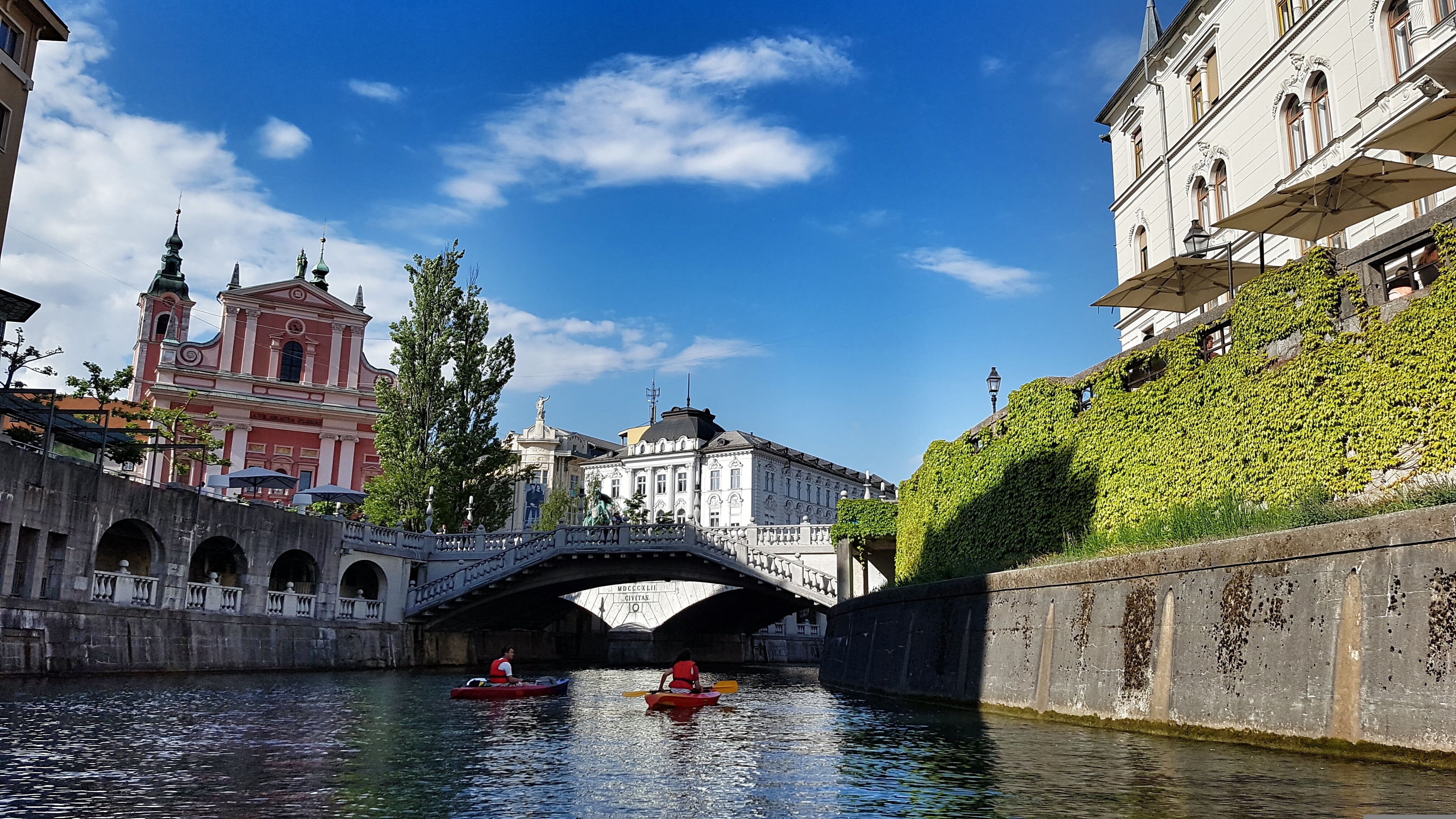
Ljubljana feels coherent because the Ljubljanica links markets, bridges and gathering places. Jože Plečnik's work, recognised by UNESCO in 2021, shaped much of that public landscape. The Triple Bridge is a useful starting point, but the market colonnade and river edges show the larger design idea. Instead of collecting bridges as isolated sights, follow how they connect civic life on either bank.
Allow two full days for an introduction, with a third if museums and park time matter. Tivoli Park gives the centre an outdoor counterpoint, while the castle hill changes the view of the river. For food, look for štruklji and recognise that Slovenian menus reflect several regional traditions. Lake Bled is an excursion outside the capital, so a Ljubljana stay should not be described as if that landscape were part of the city's central streets.
2. Tallinn: medieval fabric alongside a creative present
The historic centre of Tallinn is a UNESCO site inscribed in 1997, with Toompea and the lower town offering different scales of architecture. The capital also has creative and cultural districts beyond its best-known roofscape. Telliskivi is a useful change from medieval streets, while Kadriorg combines parkland with an eighteenth-century palace setting.
Two or three days provide time to connect these areas without assuming one Old Town loop explains the whole place. Estonia's digital reputation is part of the country's story, but visitors need not turn every café into a technology anecdote. Try rye bread or a seasonal fish dish as an ordinary meal rather than searching for a single supposedly definitive national plate. Visit Estonia's Tallinn guidance offers the current district overview.
3. Vilnius: a broad old town rather than one monument
Vilnius was first mentioned in written sources in 1323, and its historic centre became a UNESCO World Heritage Site in 1994. The old town combines churches, courtyards and streets whose variety rewards slow exploration. A viewpoint near the castle area helps orient the city, but its architectural interest is also at ground level, in the changes between large civic spaces and smaller passages.
Give Vilnius three days if you want museums as well as walking. Užupis is a neighbourhood with an artistic identity and a playful self-declared republic, not a separate sovereign state. Cepelinai, potato dumplings commonly served with substantial accompaniments, provide a named Lithuanian food reference. The capital suits visitors who enjoy reading the layers of a city rather than arranging the entire stay around one globally famous landmark.
Balkan capitals with different historical layers
4. Sofia: ancient remains beneath a modern centre
Sofia brings Roman Serdica remains into a contemporary capital's streets and transport setting. The Alexander Nevsky Cathedral, completed in 1912, is a major visual landmark, but the nearby archaeological remains change the historical scale of a central walk. It is useful to separate the city's ancient, Ottoman and modern periods rather than describing them as an undifferentiated collection of influences.
Two or three days allow a focused introduction with a museum and neighbourhood time. Banitsa, a filo pastry often filled with cheese, makes a specific breakfast choice, while shopska salad is another recognisable dish. Vitosha is outside the central walking area and requires its own weather and transport planning. Choose Sofia for the relationship between everyday capital life and historical layers, not because it is promised to be Europe's cheapest city on every date.
5. Belgrade: two rivers and a lived-in urban centre
The meeting of the Sava and Danube gives Belgrade a geographical focus. Kalemegdan and the fortress area make that relationship visible, while Dorćol and Vračar offer different neighbourhood sessions. The Nikola Tesla Museum provides a named indoor interest, with its own visitor arrangements, rather than leaving the city's cultural identity to a vague description of lively nightlife.
Allow three full days to combine the fortress, one collection and unhurried meals. Ćevapi are a useful regional food lead, though recipes and accompaniments vary across the Balkans. Zemun supplies another riverside atmosphere within the wider city, and it deserves a separate outing rather than a hurried stop between central reservations. Belgrade's appeal comes from its urban energy and geography, not a claim that all visitors want the same late-night experience.
A Caucasus capital shaped by springs and slopes
6. Tbilisi: thermal history and contemporary neighbourhoods
Tbilisi has a founding story closely associated with warm springs, and the Abanotubani bath district makes that connection visible. The low domes of the bathhouses sit below an old centre with slopes, balconies and changing street levels. Mtatsminda offers another perspective, but the city is not fully explained by a single panorama from above.
Three days can combine the bath district, a chosen museum and a separate neighbourhood walk around Sololaki. Khinkali are filled dumplings with their own eating conventions; khachapuri refers to a family of cheese breads rather than one identical dish across Georgia. A bath booking is optional and should be chosen for comfort, privacy and the venue's actual facilities. Country travel guidance distinguishes restricted regions from the capital, so do not extend this city suggestion into an unresearched national road trip.
A Gulf capital with an older coastal centre
7. Muscat: mountains, harbour and civic landmarks
Muscat is a different proposition from a dense high-rise skyline. Its coastal districts are spread between rocky terrain, with Mutrah's corniche and souq offering a harbour-centred experience. The Sultan Qaboos Grand Mosque opened in 2001, and the Royal Opera House opened in 2011. These are distinct institutions with different visitor arrangements, not interchangeable photo stops on one waterfront walk.
For a first stay, allow three or four days and expect road transfers between districts. Shuwa, slow-cooked meat traditionally associated with celebratory meals, is a concrete Omani food lead, though not a dish guaranteed on every daily menu. Muscat is included because the current UK country guidance does not impose an all-travel ban on the capital; regional escalation and flight disruption remain material considerations. Read the current Oman travel advice before committing to the trip.
Atlantic and African capitals with substantial cultural context
8. Montevideo: civic history beside the Río de la Plata
Montevideo has a compact historic core in Ciudad Vieja and a long waterfront life along the Rambla. Teatro Solís opened in 1856, providing a concrete cultural anchor near the older centre. Plaza Independencia marks a transition between the historic district and the later city. These places are useful together because they show how the capital developed, rather than forming a disconnected list of photo locations.
Allow three days for an introduction, including a museum or performance and a separate waterfront session. The Río de la Plata is an estuary, so avoid describing every Rambla view as an open Atlantic Ocean beach. A chivito sandwich is a named Uruguayan meal, while mate is a daily cultural presence rather than a performance for visitors. Montevideo pairs geographically with Buenos Aires more naturally than with a distant Andean capital.
9. Kigali: a capital that requires context as well as sightseeing
Kigali deserves a visit that includes the Kigali Genocide Memorial as a place of remembrance and learning. Its subject should not be compressed into an upbeat attraction list. A separate session around Kimironko Market or a contemporary arts venue offers a different aspect of the capital, with time to understand the people and practices behind what is being seen.
Two or three days can support a focused city introduction. Akabanga, a Rwandan chilli condiment, is a specific food detail, but use it according to your preference rather than turning heat tolerance into a travel challenge. Gorilla trekking happens outside Kigali and involves separate permits, transport and planning. Rwanda's border-area advice also needs its own attention; a city recommendation is not a blanket endorsement of all routes through the country.
How to turn a capital into a worthwhile stay
The distinction between a political capital and a visitor's preferred city is not a competition. A capital can provide national museums, government history and cultural institutions that are absent elsewhere, while another city may better suit a beach or food-led trip. The capital geography game offers a light introduction to that geography; the actual visit should follow your interests rather than the obligation to tick off national capitals.
Compare the practical shape of two possible stays with the city-cost tool, then add season and daylight through the best-time planner. Muscat's road-based districts and Tallinn's compact old centre create very different daily transport needs. An illustrative 3-night Vilnius visit can work with a central walking base, while Muscat deserves a plan that accounts for longer transfers between individual neighbourhoods and institutions.
For broader possibilities, the first-trip European selection includes several larger gateways, and the slow-travel city guide examines longer stays. These capitals are useful because each offers a particular story, not because government status automatically makes a city more authentic. Choose one institution or neighbourhood that motivates you, then build enough time around it to understand the place rather than merely identify it.
Frequently asked questions
Are all the cities listed national capitals?
Yes: the selection includes Ljubljana, Tallinn, Vilnius, Sofia, Belgrade, Tbilisi, Muscat, Montevideo and Kigali. It deliberately excludes attractive non-capitals such as Porto and Bologna. The criterion keeps the article focused on cities that combine national institutions with a broader visitor experience.
Does underrated mean these capitals are safer or cheaper?
No safety or price ranking is implied by the word. Accommodation, transport and personal suitability depend on dates, circumstances and current country guidance. A smaller visitor profile does not guarantee a lower bill, and a city stay does not remove the need to understand regional risks or local laws.
Can I use Kigali as a base for gorilla trekking?
Kigali can be an arrival point for a wider Rwanda trip, but the city and trekking experience are separate planning tasks. Permits, accommodation near the relevant park and road transfers need their own arrangements. Give the memorial and city visit dedicated time instead of treating the capital merely as an overnight transit stop.
Links & Resources
Official tourism and planning sources
- Visit Ljubljana: Visitor information for Ljubljana
- Go Vilnius: Visitor information for Vilnius
- Visit Sofia: Visitor information for Sofia
- Tourist Organisation of Belgrade: Visitor information for Belgrade
- Georgia Travel: Visitor information for Tbilisi
- Descubrí Montevideo: Visitor information for Montevideo
- Visit Rwanda: Visitor information for Kigali
- UNESCO: Plečnik in Ljubljana: Public-space design heritage
- UK advice: Rwanda: Regional restrictions around borders