6 Cities to Explore in the Middle East and Nearby Istanbul
A Middle Eastern city trip should begin with a clear cultural interest and a current understanding of the regional context. Dubai and Abu Dhabi offer different urban experiences despite sharing a country; Muscat is spread between mountains and coastal districts; Amman and Jerusalem require attention to historical and religious setting. Istanbul is included in the broader regional comparison as a cross-continental city, while recognising that it is not a geographically Middle Eastern city in the same sense as the others.
This six-city guide balances older districts, contemporary institutions, food and realistic daily movement. It is written against country guidance current on 13 October 2026, which warns of regional escalation and possible flight disruption. It does not recommend travel into named areas covered by all-travel prohibitions. The bucket-list experience guide supplies a wider cultural shortlist, while this article keeps regional geography and present-day travel decisions visible.
Establish the present travel context before choosing the city
The UK foreign travel advice directory is a starting point for country-specific warnings, with travellers also needing the advice relevant to their own nationality and circumstances. The current regional situation includes a risk of escalation and transport disruption. A city outside a mapped exclusion area is not thereby guaranteed safe, and a museum or hotel accepting bookings does not settle the wider travel decision.
The country pages listed in the resources distinguish the relevant areas. For example, Jordan's all-travel warning applies within 3 kilometres of the Syrian border, while Turkey's applies within 10 kilometres of the Syrian border. Those are not Amman or Istanbul. Israel's guidance also separates named restricted areas from other locations, and cross-border excursions need separate assessment. Keep the route to the listed city centres rather than turning this selection into an unresearched regional road trip.
Two UAE cities with different reasons to visit
1. Dubai: combine an older waterway with one modern landmark
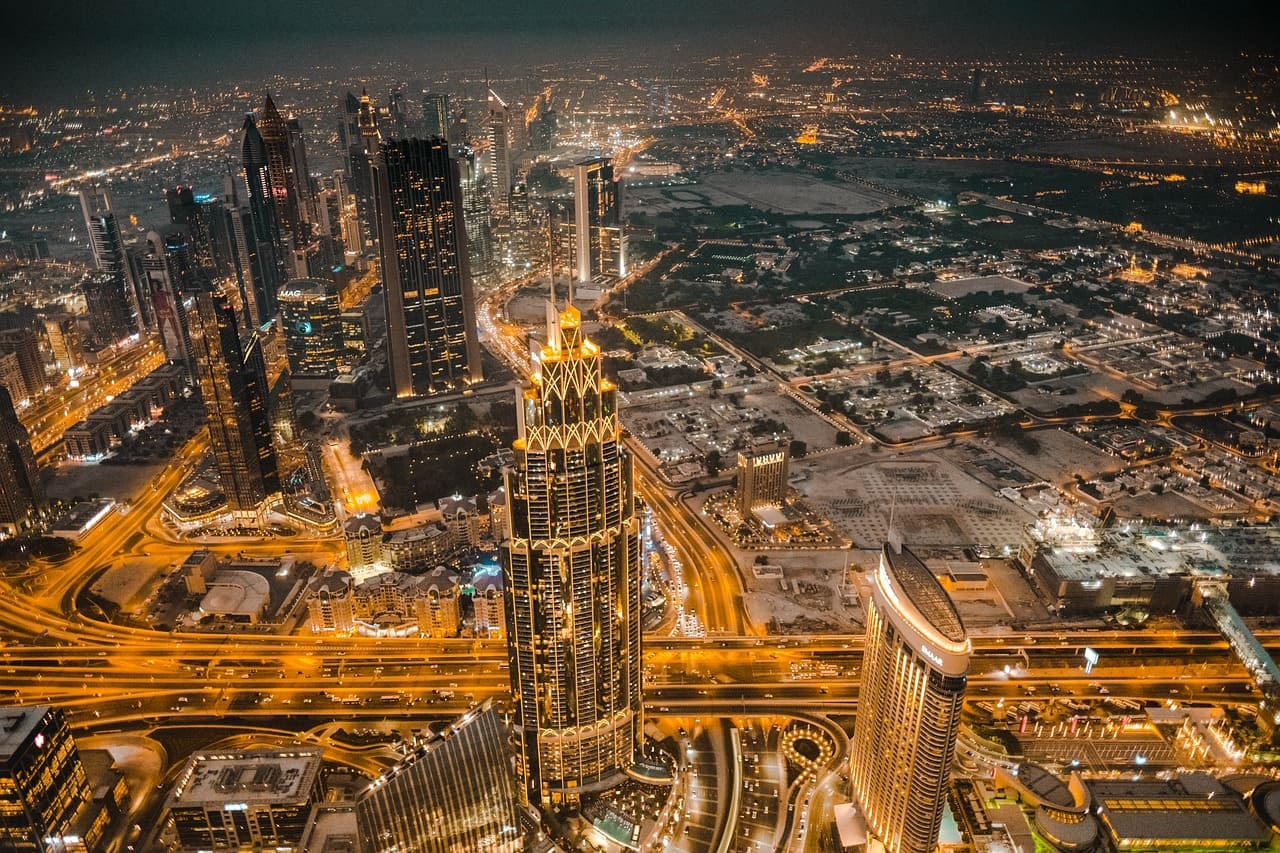
Dubai is easiest to understand through distinct districts rather than a single skyline programme. Dubai Creek, Al Fahidi and the older trading areas provide one session; Downtown and a selected modern landmark provide another. The Burj Khalifa opened in 2010 and is 828 metres high, though its public decks have their own elevations and ticket formats. Dubai Marina is a separate district, not the immediate setting of every Downtown hotel.
Allow three or four full days for a first visit if food and neighbourhood time matter as well as major attractions. Emirati dishes such as machboos offer a concrete culinary interest beyond the city's international dining image. The Dubai city guide goes deeper into the practical clusters. Current UAE guidance warns of regional tensions and possible disruption; choose accommodation and bookings with that context in mind. A short abra crossing on the Creek and a paid observation deck are different experiences, each optional rather than compulsory.
2. Abu Dhabi: art, civic architecture and separate districts
Abu Dhabi offers Louvre Abu Dhabi, opened in 2017, as a substantial cultural reason to visit. Its Saadiyat Island setting is distinct from the Corniche and other city districts. Sheikh Zayed Grand Mosque opened in 2007 and is another important institution with its own religious and visitor context. Give the museum and mosque separate attention rather than treating them as two fast photo stops between shopping appointments.
Two or three full days can suit a focused introduction, with more time if island attractions or performances are priorities. The Louvre Abu Dhabi publishes its collections and visitor programme, so choose the visit for the art as well as the building. Road transfers are part of the daily plan, and Dubai should not be treated as an adjacent walking extension. Current regional warnings apply to the UAE trip as a whole, with transport and personal suitability considered before fixing a multi-city stay.
An Omani capital whose geography shapes the day
3. Muscat: the harbour is one part of a spread-out capital
In Muscat, Mutrah's corniche and souq provide a harbour-centred session, while the Sultan Qaboos Grand Mosque, opened in 2001, belongs to another district. The Royal Opera House opened in 2011 and offers a different cultural interest. The city sits between rocky terrain and the coast, so a list of central-looking landmarks can conceal substantial road movement between them.
Allow three or four days and choose a base for its actual relationship with the intended visits. Shuwa is a named Omani dish traditionally associated with celebratory meals, not a guarantee on every daily menu. A coastal walk, a museum and a performance are useful choices without automatically adding a distant desert or mountain excursion. Oman's current guidance warns of regional escalation even though it does not impose an all-travel prohibition on Muscat. Read the live country context alongside the cultural programme before committing to travel.
Historical cities where interpretation matters
4. Amman: hills, a Roman theatre and contemporary food
Amman combines a hilltop Citadel setting with a Roman theatre dating from the second century AD and a contemporary capital's daily life. These places are close in historical subject but involve changes in level and different visitor spaces. Give downtown and the Citadel a coherent session, then choose another district for a meal or cultural activity rather than assuming all the city is one compact flat walk.
Three full days can provide an introduction with room for a guided historical session. Mansaf, traditionally associated with lamb and a fermented yoghurt preparation, is a named Jordanian food interest. Petra is a separate destination requiring its own transport and time, not a city attraction to squeeze into an Amman afternoon. Current Jordan guidance warns of regional tensions and distinguishes the Syrian border restriction from the capital. That distinction informs the itinerary without making an unrestricted city visit a guarantee of safety or uninterrupted flights.
5. Jerusalem: religious and historical context before a highlights list
Jerusalem requires careful, respectful interpretation of overlapping religious traditions and histories. The Old City is commonly described through Muslim, Christian, Jewish and Armenian quarters, but daily life does not reduce neatly to four visitor routes. The Church of the Holy Sepulchre and the Western Wall are active religious places, while access to other sacred areas has specific arrangements and sensitivities.
A focused visit needs time, an appropriate guide where useful and current local instructions. Do not turn a central-city plan into a casual excursion through areas covered by travel restrictions. The current country guidance distinguishes named all-travel and non-essential-travel areas, while warning of escalation, possible disruption and risks more widely. Confirm the actual route and site access before deciding to travel, and follow religious-site conduct and photography rules. The city's significance is a reason for thoughtful preparation, not for presenting a complicated present-day visit as effortless.
A cross-continental comparison with a major waterway
6. Istanbul: a broader regional link with its own geography
Istanbul spans European and Asian shores around the Bosphorus, which connects the Black Sea and the Sea of Marmara. Hagia Sophia was completed in AD 537, while the Ottoman skyline and later neighbourhoods provide other historical layers. The city's inclusion is a broader cultural comparison, not an attempt to redraw the geographical Middle East or describe every Turkish city as part of the same region.
Allow four full days if the historic peninsula, a public ferry and neighbourhood food all matter. The Istanbul city guide helps separate the daily clusters, and the restaurant selection provides a food-led complement. Simit, meze and different regional dishes give more precise leads than a generic claim about Middle Eastern cuisine. Turkey's current border prohibition concerns the Syrian frontier, while broader regional warnings remain relevant to travel decisions and flight availability. Keep those distinct rather than applying one label to the entire country.
Seasons, food and a route that respects distances
The best-time tool gives broad seasonal context, particularly for Gulf heat and the different conditions around Istanbul. A cooler-season visit may suit outdoor walking better, but current security and transport conditions still come first. The packing planner can organise light layers and clothing appropriate to the sites you actually intend to enter. Religious-site dress expectations are site-specific and should be read from the institution, rather than improvised from a continent-wide stereotype.
For an illustrative six-night UAE route, four nights in Dubai and two in Abu Dhabi can create two clear bases, with a transfer day kept light. This is an itinerary structure rather than a recommendation to buy during uncertain conditions. Muscat deserves a separate country decision, and Amman–Jerusalem involves borders and routes that cannot be treated as an ordinary city-to-city taxi connection. The flight planner can organise possible gateways without certifying that an advertised connection will operate.
Food also needs specificity. Omani shuwa, Jordanian mansaf and Emirati machboos are different dishes with their own traditions. Istanbul's culinary range reflects Turkish regions and the city's wider history. The food-lovers selection supplies a global comparison, while the first-time Istanbul guide supports that city in more depth. Avoid using one generic cuisine label to erase the differences that make the regional visit worthwhile.
The budget tool should include transfers between dispersed districts and room for altered plans, alongside accommodation and admission. For volatile hours, ticket formats and booking prices, confirm the selected institution or operator once using its current information. For security, entry and border conditions, use the relevant government pages and local instructions before booking and departure. Those live decisions deserve repeated attention when conditions change; they are different from hedging stable facts about a building's opening year or a named dish.
Frequently asked questions
Why is Istanbul included in this regional comparison?
Istanbul is a cross-continental city in Turkey, with European and Asian shores and cultural connections relevant to a broader regional discussion. It is not presented as geographically equivalent to a Gulf or Levantine city. The entry explains that distinction so the comparison remains useful without making an inaccurate geographical claim.
Can Dubai and Abu Dhabi be visited from one hotel?
Road travel between the cities is possible, but repeated returns can consume time that could be spent in museums or neighbourhoods. A split-base itinerary may suit a longer cultural visit better. Choose according to the actual attractions and transport plan rather than assuming the shared country makes every district close together.
Does a city outside a restricted area count as safe to visit?
A mapped restriction and a broader risk assessment are different things. Current country guidance can warn of escalation, local security issues and transport disruption beyond a named exclusion zone. Read the full advice relevant to your circumstances and follow local instructions; a city guide or an accepted booking does not guarantee safety.
Links & Resources
Official tourism and planning sources
- Visit Dubai: Visitor information for Dubai
- Visit Abu Dhabi: Visitor information for Abu Dhabi
- Wikivoyage: Muscat: Practical overview of districts, transport and sights
- Jordan Tourism Board: Visitor information for Amman
- UNESCO: Jerusalem Old City and walls: World Heritage listing and background for Jerusalem
- GoTürkiye: Istanbul: Visitor information for Istanbul
- UK advice: UAE: Regional warnings and transport
- UK advice: Oman: Omani travel context
- UK advice: Jordan: Jordanian restrictions and warnings
- UK advice: Israel: Named areas and current warnings
- UK advice: Turkey: Turkish border and regional advice