7 Best Cities in South America: Food, Geography and Routes
South America is too large for a city shortlist to double as one effortless route. Cartagena's Caribbean setting, Lima's Pacific coast and La Paz's high-altitude basin involve different climates, connections and daily rhythms. These seven cities are selected for distinct experiences: food, architecture, landscapes and historical context. The guide explains what each contributes and which combinations make geographical sense, rather than promising that every stop fits into two weeks.
The day suggestions are examples for a first introduction, excluding arrival and departure. They should be adjusted for interests, altitude and transport. For a wider set of signature experiences, the bucket-list city guide takes a global approach. Here, the priority is regional geography and a route that leaves enough time for the actual places you came to see.
Coastal cities with very different settings
1. Rio de Janeiro: beaches, bay and neighbourhood scale
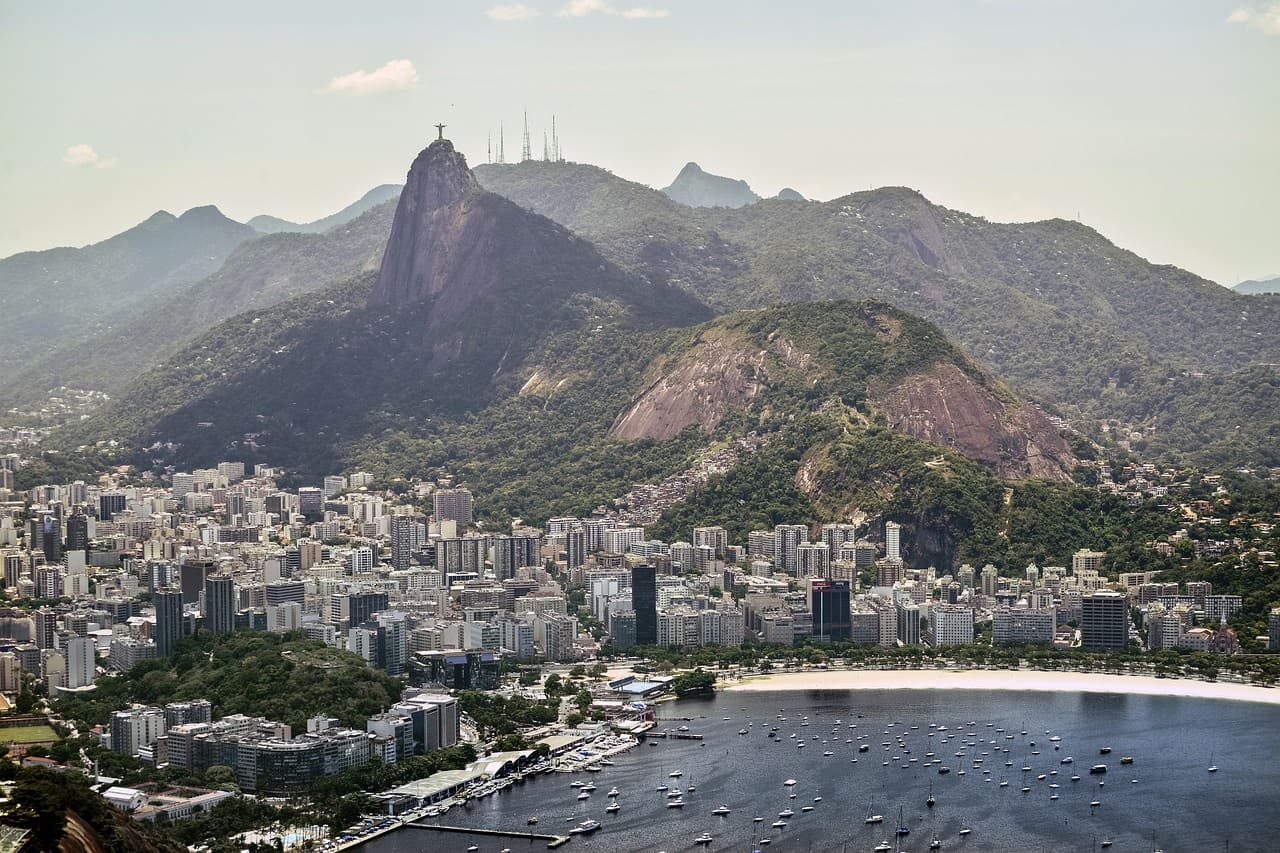
Rio de Janeiro offers Copacabana and Ipanema on the Atlantic side, with Sugarloaf and Guanabara Bay giving another perspective. Sugarloaf reaches 396 metres. Choose four or five full days for an introduction if the coast, a cultural session and a recognised viewpoint all matter. The city is too spread out to make every famous image part of one easy walking day.
Feijoada is a useful named Brazilian food interest, while a neighbourhood meal can provide a more grounded experience than another rushed panorama. Use deliberate transport to named places and current local guidance, especially when considering areas beyond the established visitor routes. Rio combines with other Brazilian stops more naturally than with a rapid overland leap into the Andes. A spectacular view is part of the visit, but it does not remove the need to understand the route used to reach it.
2. Cartagena: a Caribbean city with a substantial historical core
Cartagena combines its walled historic centre with neighbourhood life in Getsemaní and the wider Caribbean coastal setting. UNESCO recognised Cartagena’s port, fortresses and monuments in 1984, giving the historical session a clearly defined focus. Three or four full days allow a historical walk, a chosen interior and time for meals without treating midday heat as an invitation to push harder through the itinerary.
Arepa de huevo is a concrete Caribbean Colombian snack to look for. Offshore island outings require separate operators, transport and return arrangements; the old city itself should not be described as a quiet island resort. Cartagena pairs with Bogotá through a planned domestic flight sequence, not as an overnight road connection casually added to a city break. Select the city for its streets and historical context, then decide separately whether coastal excursions are worth the extra day.
A River Plate capital with performance and neighbourhood life
3. Buenos Aires: districts and tango beside an estuary
Buenos Aires sits beside the Río de la Plata estuary, a geography different from an open-ocean beach city. San Telmo, Recoleta and Palermo provide distinct walking sessions, while a selected theatre or tango evening gives the visit a cultural focus. Tango was recognised by UNESCO in 2009 as intangible heritage shared by Argentina and Uruguay.
Four or five full days let the neighbourhoods remain separate rather than sending you across the city repeatedly for individual stops. Empanadas and a chosen parrilla meal are named food interests, but they need not dominate every evening. Buenos Aires combines more naturally with Montevideo or another Argentine stop than with a hurried itinerary that also includes Colombia and Bolivia. For tango, distinguish a staged performance, a lesson and a community milonga; each creates a different experience and has different expectations of visitors.
A Peruvian pair with a major change in elevation
4. Lima: a food-led Pacific base
Lima is a useful low-elevation base before or after the Andes, with Miraflores and Barranco offering different coastal and cultural sessions. Its historic centre became a UNESCO site in 1988, with an extension in 1991. Allow three full days if food and a collection such as the Larco Museum are priorities. Do not reduce the city to an airport overnight on the way to Cusco.
Ceviche is a specific culinary interest, and causa provides another named dish beyond the most internationally familiar plate. Choose restaurants for their actual menus and format rather than assuming every acclaimed meal requires a long tasting menu. Coastal cloud is part of Lima's seasonal character, so a grey day does not prevent a worthwhile food or museum visit. Lima and Cusco form a logical same-country pair, but their elevation difference needs to be treated as a real planning consideration.
5. Cusco: understand the city before adding every excursion
Cusco stands at approx. 3,400 metres and became a UNESCO World Heritage Site in 1983. Its Inca and later colonial fabric makes a substantial city visit in its own right. San Blas, the central streets and a chosen archaeological interpretation session deserve time before the trip expands into the Sacred Valley or a more distant rail itinerary.
Three or four city-focused days are a starting example, with excursions counted separately and the pace adjusted to personal health advice. Machu Picchu is not a sight inside Cusco; its admission, onward transport and accommodation arrangements form another planning task. The Machu Picchu heritage description supplies historical context without replacing current entry information. Do not make a strenuous first-day programme simply because the city looks walkable on a map or because a longer trip has a tight timetable.
High-altitude capitals with different histories
6. Bogotá: museums and neighbourhoods on a high plateau
Bogotá is at approx. 2,640 metres, so its weather and elevation differ substantially from Cartagena. La Candelaria supplies a historical walking setting, while the Gold Museum provides a focused collection. Ajiaco, a potato-based chicken soup associated with the city and region, is a concrete food lead. Three or four full days allow a museum session, neighbourhood time and a flexible choice about an elevated viewpoint.
Use current local transport and access information for places such as Monserrate, whose visit should not be treated as mandatory immediately after arrival. Bogotá–Cartagena is a useful contrast within Colombia, but it involves air travel or a much longer land journey, not adjacent city districts. Country advice differentiates regions, so do not extend a capital stay into a general recommendation for all rural routes. Choose the city for collections and urban history, with pace appropriate to the elevation and the traveller.
7. La Paz: a city whose levels are part of the experience
La Paz occupies steep terrain with central areas around approx. 3,650 metres; the wider urban area varies significantly in elevation. Bolivia's constitutional capital is Sucre, while La Paz is the seat of government. That distinction matters more than repeating the inaccurate claim that La Paz is simply the country's only capital. The Mi Teleférico network offers a way to understand the city's topography through ordinary urban transport.
Allow several days for a measured introduction, with personal altitude planning rather than a fixed promise that one rest day solves everything. Salteñas are a named Bolivian food interest. El Alto and the airport sit higher than many central La Paz locations, so arrival and onward journeys can involve further elevation change. A visit to Uyuni is a separate route and is not a casual local excursion to be inserted between city meals. The city's appeal lies partly in its levels, markets and civic life, not in proving endurance at altitude.
Choose a regional route rather than collecting distant names
For an illustrative 10-night Peru route, use Lima for 3 nights, a properly paced Cusco base for 4 and the remaining time for a separately planned Sacred Valley or Machu Picchu sequence. This is a structure to discuss with suitable operators and, where relevant, a clinician; it is not an acclimatisation prescription. A Colombia version might divide time between Bogotá and Cartagena, with travel days left visible rather than hidden between full sightseeing programmes.
The map helps reveal continental distances, while the flight planner can organise possible connections. The timezone tool is useful for arrival and booking times across countries. Do not assume that a route sensible within Peru is equally practical across five national borders. Every additional base adds airport or station time, accommodation changes and another arrival day that may be unsuitable for ambitious sightseeing.
The South America city-cost comparison can help structure spending, but live fares and hotel prices belong to the dates you intend to buy. Food interests also differ across the region: ceviche in Lima, ajiaco in Bogotá and salteñas in La Paz are not one interchangeable continental cuisine. The food-lovers city guide offers a broader culinary angle without replacing the geographical decisions needed here.
Altitude and current conditions need their own attention
The CDC high-altitude guidance explains why rapid ascent and strenuous early activity can increase risk, and why personal medical advice may be needed. A suggested number of sightseeing days does not guarantee safe adaptation. If symptoms occur, do not treat them as a travel inconvenience to push through; follow medical guidance, avoid further ascent when unwell and seek appropriate help. Discuss a planned high-elevation route before departure, particularly with relevant health conditions.
Current country guidance also matters for protests, regional restrictions and transport disruption. Peru's restrictions include specified border and VRAEM areas, while Colombia and Bolivia have their own regional advice. These are not identical to the city centres discussed above, but they affect wider route decisions. The slow-travel selection provides another reason to reduce the number of bases: a measured stay can improve both understanding and practical flexibility.
Frequently asked questions
Can all seven cities fit into a two-week trip?
Doing so would involve repeated long transfers and leave little usable time in each place. Choose a regional pair or a small number of bases instead, such as Lima and Cusco or Bogotá and Cartagena. Count flight, arrival and departure days explicitly before assigning the remaining calendar to sightseeing.
Is La Paz Bolivia's constitutional capital?
Sucre is Bolivia's constitutional capital, while La Paz is the seat of government. La Paz therefore has substantial governmental importance without making the constitutional distinction disappear. Describing the roles accurately is more useful than repeating a simplified capital label that obscures the country's political geography.
Does spending three days in Cusco guarantee acclimatisation?
No fixed city-stay length guarantees adaptation to altitude for every traveller. Individual health, ascent pattern and planned activity all matter. Use established high-altitude guidance and appropriate medical advice to shape the route, and do not interpret an editorial sightseeing allocation as permission to undertake strenuous activity immediately after arrival.
Links & Resources
Official tourism and planning sources
- Visit Brasil: Brazil's official tourism portal, including Rio de Janeiro
- Colombia Travel: Cartagena: Visitor information for Cartagena
- Buenos Aires tourism: Visitor information for Buenos Aires
- UNESCO: Historic Centre of Lima: Lima historical setting
- UNESCO: City of Cuzco: World Heritage listing and background for Cusco
- Colombia Travel: Bogotá: Visitor information for Bogotá
- Mi Teleférico: Visitor information for La Paz
- UK advice: Peru: Regional restrictions and disruption
- UK advice: Colombia: Country and regional context
- UK advice: Bolivia: Route and local conditions
- UK advice: Brazil: Brazilian travel considerations
- Larco Museum: Lima collection and interpretation