Lisbon vs Porto: Which Portuguese City Suits Your Trip?
Portugal's two largest cities are often compared, yet they offer different trips. Lisbon is the capital: larger, sunnier, with a wide estuary, grand squares, Belém's monuments and easy access to beaches and Sintra. Porto is more compact and atmospheric, stacked above the Douro River, with port wine lodges, tiled churches and the vineyards of the Douro Valley upstream.
This Lisbon vs Porto comparison helps you decide which to choose for a short break, or how to divide time between them on a week in Portugal. It covers sights, food, costs, transport and the kind of days you will spend in each, rather than declaring one city better. Both are hilly, both reward walking and both are linked by a fast train.
Lisbon vs Porto at a glance
| Decision | Lisbon | Porto |
|---|---|---|
| Daily allowance, approximate 2026 | €90–170 | €80–150 |
| Best fit | Monuments, viewpoints, nightlife, beach day trips | Riverside walks, port wine, tiles, the Douro Valley |
| Scale | Larger, spread over seven hills and Belém | Compact centre, steep but walkable |
| Signature food | Pastéis de nata, bacalhau, grilled sardines | Francesinha, tripas, port wine |
| Climate | Warmer and sunnier | Milder, wetter, often foggy by the sea |
| Suggested stay | 3–4 days | 2–3 days |
The daily ranges are approximate 2026 planning allowances for one person sharing a modest room, with simple meals, public transport and some admissions. Porto is generally slightly cheaper, but popular weekends and festivals can narrow the gap. Use the budget estimator with real quotes for your dates.
Sights: monuments and viewpoints or tiles and the river
Lisbon's highlights are spread out: the Moorish São Jorge Castle above Alfama, the rebuilt grid of Baixa after the 1755 earthquake, and Belém's Jerónimos Monastery and Tower, a UNESCO World Heritage Site. Its many miradouros, or viewpoints, give sweeping views over terracotta roofs to the Tagus. There is also contemporary culture, from the Gulbenkian Museum to MAAT.
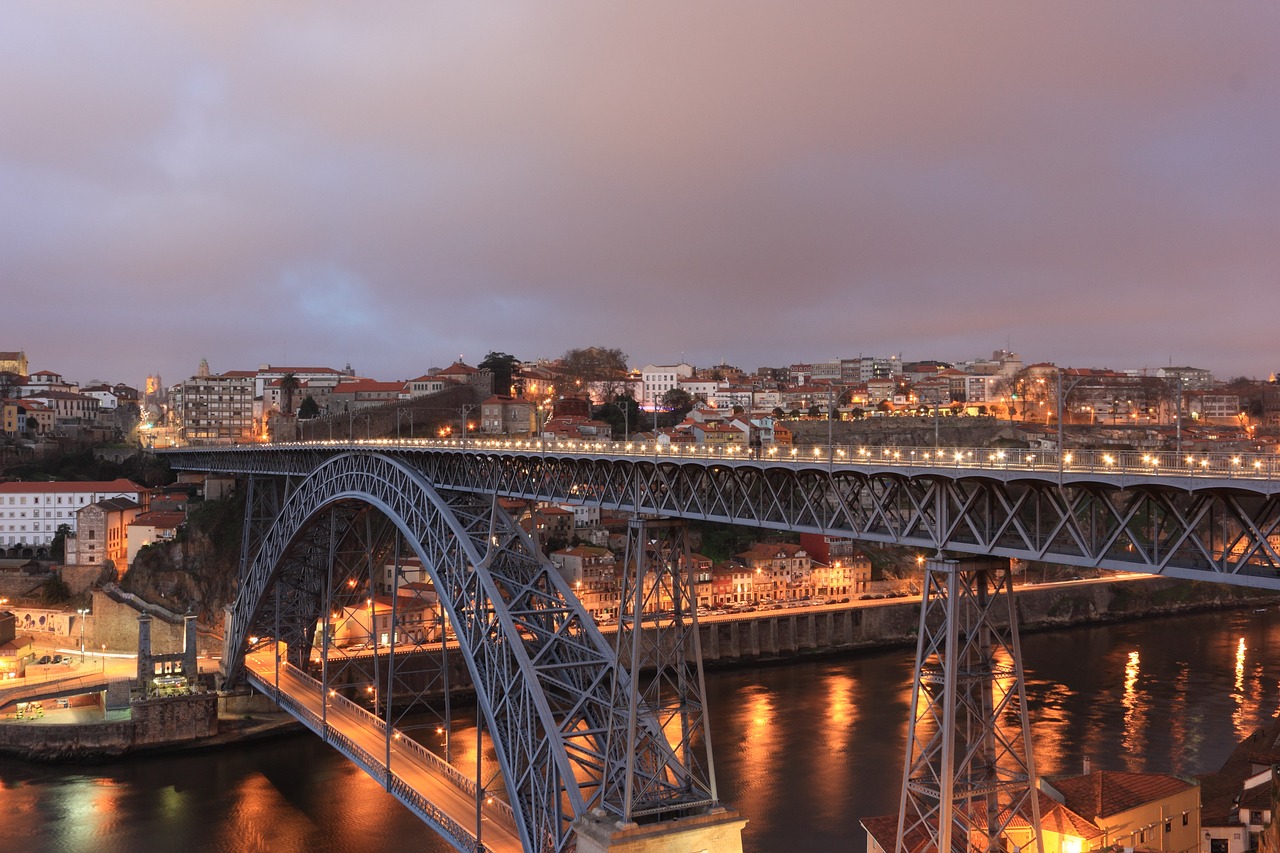
Porto's sights are more concentrated. The azulejo-covered São Bento station, the Clérigos Tower, the Sé Cathedral and the Palácio da Bolsa sit within a short walk, and the Ribeira riverfront and the double-deck Luís I Bridge form one of Europe's most memorable urban scenes. Across the river, the port lodges of Vila Nova de Gaia offer tours and tastings.
If you want variety and grand monuments, Lisbon offers more. If you prefer a single atmospheric district you can absorb slowly, Porto's riverfront is hard to beat. Our Lisbon guide and our Porto guide give full itineraries for each. Lisbon also has more museums, including the Gulbenkian's outstanding art collection and the Oceanário, one of Europe's largest aquariums.
The atmosphere differs too. Lisbon feels like a capital, with grand squares such as Praça do Comércio, busy avenues and a cosmopolitan crowd. Porto is more intimate and down-to-earth, with granite buildings, laundry hanging over narrow lanes and a strong sense of neighbourhood life, particularly in Ribeira and Miragaia.
Food and drink: two distinct traditions
Lisbon is the home of the pastel de nata, especially the original version from Belém, and of a seafood tradition that includes grilled sardines in summer, clams and many ways of cooking bacalhau. The Time Out Market gathers chefs under one roof, while traditional tascas serve good-value lunches.
Porto's cooking is heartier. The francesinha, a layered sandwich in spicy sauce, is the city's emblem, and tripas à moda do Porto explains why locals are called tripeiros. Port wine is the obvious draw, with cellar tours in Gaia, and vinho verde from the north pairs well with seafood. The restored Mercado do Bolhão is a pleasant place to browse.
Both cities offer excellent value compared with much of Western Europe. Browse Lisbon restaurant ideas and Porto restaurant ideas to shortlist places, and remember that bread and starters placed on the table are charged if eaten. Lisbon has more international restaurants and a bigger nightlife scene in Bairro Alto and Cais do Sodré, while Porto's evenings centre on the riverside and the bars around Rua Galeria de Paris.
For culture beyond the monuments, Lisbon's fado tradition, recognised by UNESCO as intangible heritage in 2011, is heard nightly in Alfama and Mouraria, while Porto's Casa da Música and the Serralves Foundation give the northern city a strong contemporary music and art scene of its own.
Day trips and the wider region
Lisbon's day trips are a major reason to stay longer. Sintra's palaces and forested hills are less than an hour away by train, and Cascais and the beaches of the Estoril coast are reached easily from Cais do Sodré. Across the river, the Costa da Caparica offers long Atlantic beaches.
From Porto, the Douro Valley is the classic excursion, with terraced vineyards and wine estates reached by a scenic train along the river or on organised tours. Guimarães, the birthplace of Portugal, and Braga, with its hillside sanctuary, are both easy day trips by train.
If day trips matter most, choose Lisbon for coast and palaces or Porto for wine country and historic northern towns. Using the seasonal planner helps match each region to the weather you prefer. Coimbra, home to one of Europe's oldest universities, sits roughly halfway between the two and is an easy stop on the train.
Getting around and getting between them
Both cities are hilly, so comfortable shoes are essential. Lisbon has a metro, trams, funiculars and the Santa Justa lift, with the airport on the metro's red line. Porto's metro runs largely above ground in the centre and reaches the airport on line E, while the Guindais funicular and the Gaia cable car help with the slopes.
Fast Alfa Pendular and Intercidades trains run between Lisbon's Santa Apolónia and Oriente stations and Porto's Campanhã in around three hours. Book ahead for the best fares. Buses are cheaper but slower, and domestic flights rarely save time once airport transfers are included.
A practical one-week route flies into one city and out of the other, avoiding a return journey. Plan the arrival and departure airports with the flight planner. In Porto, the Metro do Porto network links the airport, the centre and Gaia, so a car is unnecessary in either city.
Where to stay in Lisbon and Porto
In Lisbon, the flat streets of Baixa and Chiado make the easiest base, with the metro, trams and the river close by. Alfama is atmospheric but steep and hard to reach by car, while Príncipe Real is greener and quieter on its hilltop. For longer stays, the Avenidas Novas area is flatter and often better value, a few metro stops from the old centre.
In Porto, Baixa around São Bento and Avenida dos Aliados is the most practical choice, with level streets and quick metro links. Ribeira on the waterfront is beautiful but busy and steep, and Vila Nova de Gaia across the river gives views of Porto and short walks to the port lodges. Both cities charge a modest municipal tourist tax per night.
Wherever you stay, ask how you will arrive with luggage: old buildings in both cities often have stairs and no lift. Visit Portugal, the national tourism site, also helps if you plan to add the Algarve, Coimbra or the Alentejo to the route.
The verdict: which city should you choose?
Choose Lisbon if you want a varied capital with monuments, nightlife, viewpoints and day trips to Sintra or the coast, and if sunshine is a priority. Choose Porto if you prefer a compact, atmospheric city with a stunning riverfront, hearty food and port wine, and if you would like to add the Douro Valley.
With a week, do both: four days in Lisbon and three in Porto works well, linked by train. With a long weekend, pick one. If you are still undecided, the city comparison tool lets you weigh your own priorities, and our underrated European cities guide explains why Porto often works as an alternative to Lisbon.
Families may find Lisbon easier, with the Oceanário, beaches within reach and flat areas such as Parque das Nações, while couples and food lovers often fall for Porto's riverfront evenings and wine tastings. Travellers with limited mobility should note that both cities are steep, although Lisbon's lifts, funiculars and metro make it slightly easier to avoid the climbs.
Costs, seasons and practical notes
Both cities use the euro and are part of the Schengen area, so non-EU travellers pass through the EU Entry/Exit System on arrival. Check your own requirements with the visa tool and plan prices with the currency converter. Both charge a modest municipal tourist tax per night.
Spring and early autumn suit both cities. Lisbon summers can be hot, while Porto stays milder but gets more rain in winter. In June, Lisbon celebrates Santo António and Porto celebrates São João, two of the liveliest street festivals in Portugal.
Frequently asked questions
Is Lisbon or Porto better for a first trip to Portugal?
Lisbon is better for variety, monuments and day trips, while Porto is ideal for a compact, food-and-wine-focused stay. Many first-time visitors combine both on a week-long trip, travelling between them by train.
Which is cheaper, Lisbon or Porto?
Porto is usually slightly cheaper for accommodation and food, though prices depend on dates and location. Both are good value compared with most Western European capitals. Compare real quotes for your dates rather than relying on general reputation.
How long is the train from Lisbon to Porto?
Fast trains take about three hours between the two cities' main stations. Intercidades services take slightly longer and are often cheaper. Booking ahead can secure lower fares, and the journey passes through Coimbra, which can make an interesting stop.
Links & Resources
Tourism, transport and planning
- Visit Lisboa: Lisbon events, neighbourhoods and attractions.
- Visit Porto: Porto sights and seasonal events.
- CP — Portuguese Railways: Trains between Lisbon and Porto.
- Lisbon Metro: Lines and airport access.
- Port and Douro Wines Institute: Port wine and the Douro region.
- UNESCO — Jerónimos Monastery and Belém Tower: Lisbon's Manueline monuments.
- UNESCO — Historic Centre of Oporto: Porto's heritage area.
- UK government — Portugal travel advice: Entry and safety guidance.
On GuesTheCity
- Explore the map for Lisbon and Porto: See both cities and the route between them.
- Play Guess the City: Test yourself on both cities' landmarks.