Rome vs Florence: Ancient Capital or Renaissance City?
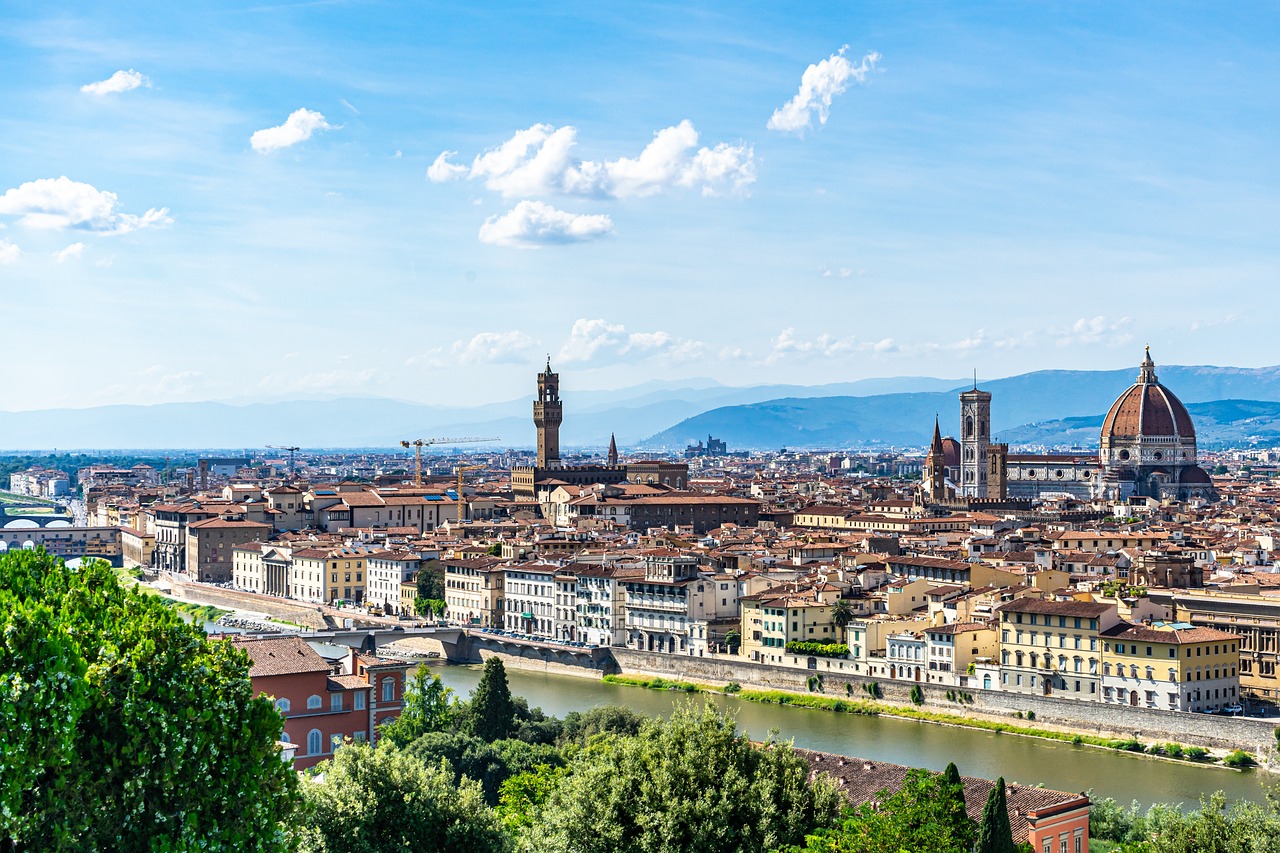
Rome and Florence are the two cities most first-time visitors to Italy want to see, and they are only about an hour and a half apart by high-speed train. Yet they feel very different. Rome is a sprawling capital where ancient ruins, Baroque squares and the Vatican sit among busy everyday streets. Florence is a compact Renaissance city where almost everything worth seeing lies within a short walk of the cathedral.
This Rome vs Florence comparison helps you choose one city for a short break, or decide how to split a week between them. It compares sights, museums, food, costs and the pace of each city, so you can match the trip to your interests rather than to a general reputation.
Rome vs Florence at a glance
| Decision | Rome | Florence |
|---|---|---|
| Daily allowance, approximate 2026 | €110–210 | €110–210 |
| Best fit | Ancient sites, the Vatican, Baroque squares | Renaissance art, architecture, Tuscan food |
| Scale | Large, spread out; walking plus metro and buses | Compact; almost everything on foot |
| Signature food | Carbonara, cacio e pepe, supplì | Bistecca alla fiorentina, lampredotto, ribollita |
| Day trips | Ostia Antica, Tivoli | Siena, Pisa, Chianti |
| Suggested stay | 4 days | 3 days |
The daily ranges are approximate 2026 planning allowances for one person sharing a modest room, with ordinary meals, local transport and several paid sights. Both cities can be expensive in peak season; the hotel price for your dates matters more than the city's general reputation. Model your plan in the budget estimator.
Sights: ancient ruins or the Renaissance
Rome's great draw is the ancient city. The Colosseum, which opened in AD 80, the Roman Forum and the Palatine Hill form one archaeological area and deserve a full morning. The Pantheon, with its unreinforced concrete dome, is still in use nearly two thousand years after it was rebuilt. Baroque fountains and squares such as Piazza Navona and the Trevi Fountain fill the historic centre.
Florence's sights are concentrated around the Duomo, whose dome by Brunelleschi was completed in 1436, Piazza della Signoria and the Ponte Vecchio. The city's beauty lies in the coherence of its Renaissance architecture, and you can walk from one end of the historic centre to the other in about half an hour.
Choose Rome for layers of history from antiquity to the Baroque, and Florence for an intensely concentrated Renaissance experience. Our Rome guide and our Florence guide give detailed itineraries. Rome also has more green space, from the Villa Borghese gardens to the Appian Way, while Florence's countryside begins just beyond its hills.
Museums: the Vatican or the Uffizi
The Vatican Museums, in the independent Vatican City, hold one of the world's greatest collections, culminating in the Sistine Chapel with Michelangelo's ceiling and Last Judgement. St Peter's Basilica, next door, is free to enter. Rome also has the Galleria Borghese, with Bernini's sculptures and Caravaggio's paintings, which requires advance booking.
Florence's Uffizi Gallery holds the finest collection of Italian Renaissance painting, including Botticelli's Birth of Venus. The Galleria dell'Accademia displays Michelangelo's David, completed in 1504. Palazzo Pitti, the Bargello and the Museo di San Marco add further depth. The Uffizi also connects to the Vasari Corridor, reopened in December 2024 for booked visits.
Both cities require timed bookings for their top museums. If Michelangelo is your priority, you can see the Sistine Chapel in Rome and David in Florence; that alone is a reason many travellers visit both. Many Italian state museums are free on the first Sunday of the month, but expect long queues.
Churches in both cities are free museums in their own right. In Rome, Caravaggio's paintings hang in San Luigi dei Francesi and Santa Maria del Popolo, and Michelangelo's Moses sits in San Pietro in Vincoli. In Florence, Santa Croce holds the tombs of Michelangelo and Galileo, and the former convent of San Marco is decorated with Fra Angelico's frescoes.
Food: Roman classics or Tuscan heartiness
Roman cooking is built on a few strong dishes: carbonara, cacio e pepe, amatriciana and gricia, along with supplì, fried rice balls, and pizza al taglio, sold by weight. Testaccio and Trastevere are good neighbourhoods for traditional trattorias. Explore Rome restaurant ideas for further suggestions.
Florentine food is hearty and Tuscan: bistecca alla fiorentina, a thick T-bone steak to share, lampredotto tripe sandwiches from street carts, and bread soups such as ribollita. Chianti and other Tuscan wines are the natural pairing. Florence restaurant ideas lists places by area.
In both cities, eat a few streets away from the main monuments for better value, and expect a coperto, a cover charge, on many bills. Lunch usually starts around half past twelve and dinner from half past seven, later in summer.
Shopping also differs. Florence is known for leather goods, artisan paper and goldsmiths around the Ponte Vecchio, while Rome offers designer streets near the Spanish Steps, the vintage shops of Monti and the Porta Portese flea market on Sunday mornings. In both cities, compare quality carefully before buying leather from street stalls.
Pace, crowds and getting around
Rome is a big, busy capital with traffic and distances that require planning. You will walk a great deal, but the metro, buses and trams help link areas such as the Vatican and the ancient centre. It can feel chaotic, which is part of its energy.
Florence is small and walkable, and most visitors never need public transport in the centre. Its compactness means crowds concentrate around a handful of sights, particularly in summer. Early mornings and evenings are much calmer. Rome's metro has only three lines, so buses and trams do much of the work; ATAC sets out the ticket options.
From Fiumicino airport, the Leonardo Express reaches Roma Termini in about half an hour; Florence's small airport is linked to the centre by tram, while Pisa airport is about an hour away by train. Plan your arrival and departure airports with the flight planner.
Crowds follow the same pattern in both cities: queues are longest from late morning to mid-afternoon, and the area around the Vatican is especially busy on Wednesdays and Sundays, when the papal audience and the Angelus draw large numbers. Early starts, evening openings where museums offer them and booked time slots make the biggest difference to a summer trip.
Where to stay in Rome and Florence
In Rome, the historic centre around the Pantheon and Piazza Navona puts many sights within walking distance, though rooms are small and expensive. Monti is convenient for the Colosseum, Prati for the Vatican and Trastevere for evening atmosphere. Staying near Termini is practical for trains but less charming, so look at the exact street before booking.
In Florence, nearly everywhere inside the historic centre is walkable, so choose by atmosphere. The Duomo area is central and busy, Santa Croce has good restaurants and Oltrarno, across the river, is quieter with artisans' workshops. Cars cannot enter much of the centre, which is a restricted traffic zone.
In both cities, St Peter's Basilica and many churches enforce dress codes, so pack a layer that covers shoulders and knees. St Peter's Basilica explains its visiting arrangements, which are separate from the Vatican Museums. A light scarf or shawl that can be put on quickly solves most problems.
Florence is also the better base for the Tuscan countryside. Siena, San Gimignano and the Chianti hills are reachable in a day, whereas Rome's classic excursions, such as Ostia Antica's excavated Roman port or the gardens of Tivoli, keep the focus on antiquity and Renaissance villas. Decide which kind of day trip appeals before fixing the number of nights in each city.
The verdict: one city or both?
Choose Rome if ancient history, the Vatican and a big-city atmosphere excite you most, and you have at least four days. Choose Florence if Renaissance art and architecture are your priority and you want a compact, walkable city with Tuscan countryside nearby.
With a week, combine them: four days in Rome and three in Florence, linked by a short train ride, gives a rich introduction to Italy. If you have more time, add Venice, two hours from Florence by train; our Venice guide covers it. To weigh your own priorities, try the city comparison tool.
Costs, seasons and practical notes
Both cities are busiest from spring to autumn, with intense heat and crowds in July and August. April, May, September and October are the most comfortable months. Winter is quieter and cheaper, though some days are wet; check conditions with the seasonal planner.
Italy is in the Schengen area, so non-EU visitors are registered under the EU Entry/Exit System at the external border. Use the visa tool to check your own requirements and the currency converter to plan in euros. Both cities charge a tourist tax per night, added to the hotel bill.
Frequently asked questions
Is Rome or Florence better for a first trip to Italy?
Rome is better for ancient history, the Vatican and big-city energy, while Florence is ideal for Renaissance art in a compact setting. Many first-time visitors combine both, as the high-speed train makes the journey short and easy.
How many days do you need in Rome and Florence?
Plan at least four days for Rome and three for Florence. A week allows a comfortable introduction to both. With less time, choose one city rather than rushing between them and spending much of your trip in transit.
Can you visit Florence as a day trip from Rome?
It is possible by high-speed train, but a single day allows only a quick look at the Duomo and one museum. Florence rewards at least two nights, especially for the Uffizi, the Accademia and the evening atmosphere along the river.
Links & Resources
Tourism, museums and transport
- Turismo Roma: Rome attractions and events.
- Feel Florence: Florence visitor information.
- Colosseum Archaeological Park: Official tickets for the Colosseum and Forum.
- Vatican Museums: Sistine Chapel reservations.
- Uffizi Galleries: Uffizi, Palazzo Pitti and Boboli tickets.
- Trenitalia: High-speed trains between Rome and Florence.
- Italo: An alternative high-speed operator.
- UK government — Italy travel advice: Entry and safety guidance.
On GuesTheCity
- Explore the map for Rome and Florence: See both cities and the rail route between them.
- Play Guess the City: Test yourself on both cities' landmarks.