Venice Travel Guide: Sights, Neighbourhoods & Tips for 2026
Venice is built on more than a hundred small islands in a lagoon, linked by around four hundred bridges, and there are no cars in its historic centre. Every journey is made on foot or by boat, which changes the rhythm of a visit completely. This Venice travel guide explains how to use the water buses, which districts to explore beyond San Marco, how the day-visitor access fee works and why staying overnight transforms the experience.
For more than a thousand years Venice was an independent maritime republic, and its palaces, churches and art collections reflect the wealth of trade between Europe and the East. The city and its lagoon have been a UNESCO World Heritage Site since 1987, and the pressure of visitor numbers on a small, fragile place is part of every conversation about its future.
The difference between Venice at midday and Venice at dawn or after dark is dramatic. Venezia Unica, the city's official portal, sells transport passes and museum tickets and explains current rules for visitors, including the access fee on designated days.
Where to stay in Venice: historic centre or mainland
Staying in the historic centre lets you see Venice early and late, when day-trippers have left. Cannaregio, north of the Grand Canal, is residential, with canal-side bars along the Fondamenta della Misericordia and good links to the station. Dorsoduro, south of the canal, has the Accademia and Guggenheim collections and a young atmosphere thanks to the university.
Castello, east of San Marco, is quieter beyond the busy waterfront and near the Biennale gardens. San Marco itself is central but expensive and crowded. Hotels in Mestre, on the mainland, are much cheaper and only a short train or bus ride away, but you lose the evenings in the lagoon city.
Consider how you will reach your hotel with luggage: many involve several bridges with steps, and porters or a water bus stop nearby make a big difference. Venice charges an overnight tourist tax. Overnight guests are exempt from the day-visitor access fee but may need to register their exemption. Comparing a historic-centre stay with Mestre in the city-cost tool shows what the evenings are worth to you.
San Marco and the Grand Canal
Piazza San Marco is surrounded by St Mark's Basilica, the Doge's Palace and the Campanile. The basilica, with its golden mosaics, is free for the main areas but has a timed booking option and charges for the museum and treasury. The Doge's Palace, seat of the Venetian Republic's government, leads across the Bridge of Sighs to the old prisons; allow two hours.
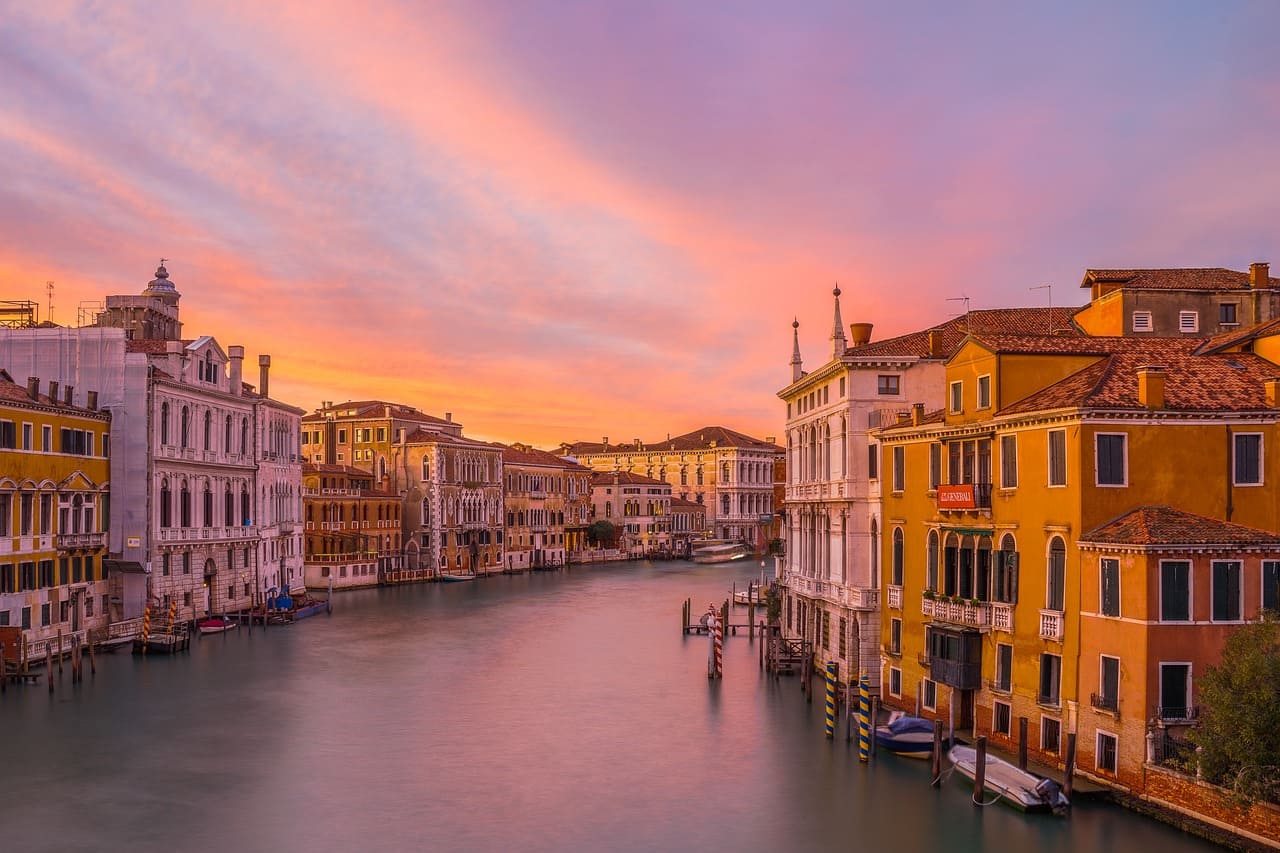
The Campanile, rebuilt after it collapsed in 1902, gives a view over the lagoon. The Grand Canal winds for nearly four kilometres through the city, lined with palaces. Riding vaporetto line 1 from Piazzale Roma or the station to San Marco is the best introduction, passing the Rialto Bridge and Ca' d'Oro.
The Rialto Bridge, completed in 1591, was the only fixed crossing of the Grand Canal for centuries. The nearby Rialto Market has sold fish and produce since the Middle Ages and is liveliest in the morning; the fish market closes on Sundays and Mondays.
Beyond San Marco: districts and lagoon islands
Dorsoduro's Gallerie dell'Accademia holds Venetian painting by Bellini, Titian and Tintoretto, while the Peggy Guggenheim Collection, in an unfinished palace on the Grand Canal, focuses on twentieth-century art. Santa Maria della Salute, the domed church at the canal's mouth, was built after the plague of 1630.
The Venice Biennale alternates between art and architecture exhibitions, using the Giardini and the Arsenale, the former shipyards, as its main venues. In Cannaregio, the Jewish Ghetto, established in 1516, gave the word ghetto to other languages; its museum and synagogue tours explain its history.
Murano is known for glassmaking, Burano for brightly painted houses and lace, and Torcello for a cathedral with Byzantine mosaics that predates much of Venice. Each can be reached by vaporetto; visiting Burano and Torcello together makes a calm half-day away from the crowds.
The Lido, a long barrier island facing the Adriatic, offers sandy beaches and hosts the Venice Film Festival each late summer; it is a short vaporetto ride from San Marco. In summer, its public and private beach areas make a calm break from the crowds in the historic centre.
Getting around Venice: vaporetti, traghetti and walking
ACTV runs the vaporetto water buses. Single tickets are expensive, so 1-, 2-, 3- or 7-day passes are usually better value for visitors who use boats more than a couple of times. Validate your card at the stop before boarding. Lines 1 and 2 cover the Grand Canal, while others serve the islands and the Lido.
Traghetti are gondolas that ferry people across the Grand Canal at a few points for a small fare, a short and authentic experience. A private gondola ride is a different product with a set official rate; agree the duration and price before starting. Walking is often quicker than the boat for short distances, though signs and maps can be confusing.
From Marco Polo Airport, the Alilaguna boat, buses to Piazzale Roma and water taxis connect to the city. ACTV publishes routes and timetables. Arriving by train at Santa Lucia station puts you directly on the Grand Canal, with vaporetto stops outside. Large suitcases are hard work on the bridges, so pack light where you can.
What to eat in Venice
Cicchetti, small snacks served in bàcari, traditional wine bars, are the most Venetian way to eat. Try baccalà mantecato, whipped salt cod on polenta, sarde in saor, sweet-and-sour sardines, and a small glass of wine, an ombra. Cannaregio and the Rialto area have many bàcari; standing at the counter is part of the ritual.
Risi e bisi, rice with peas, and seafood risotto are local classics. Restaurants close to San Marco are often overpriced; walk a few streets away for better value. Our Venice restaurant guide suggests places by district. Check whether a coperto or service charge is included before paying.
The spritz, made with Aperol or Select, is the classic aperitivo. Tiramisù's origins are claimed by the nearby Veneto region, and good versions are easy to find. Fill a water bottle at the public fountains, which provide safe drinking water.
Venice festivals: Carnival, Redentore and the Regata Storica
Carnival, in the weeks before Lent, fills Venice with masks, costumes and events in Piazza San Marco and the campi. Its dates follow Easter and change each year, and it is one of the busiest periods, so book accommodation early. Mask workshops in the city make papier-mâché masks by hand, a far better souvenir than mass-produced versions.
The Festa del Redentore, in mid-July, gives thanks for the end of the plague of 1575–77 with a pontoon bridge across the Giudecca Canal and a night of fireworks watched from boats. On the first Sunday of September, the Regata Storica opens with a parade of historic boats along the Grand Canal, followed by rowing races.
A three-day Venice itinerary
| Day | Area | Main focus |
|---|---|---|
| 1 | Grand Canal and San Marco | Vaporetto line 1, the basilica, Doge's Palace |
| 2 | Dorsoduro and the Rialto | Accademia, Guggenheim, Rialto Market, a bàcaro evening |
| 3 | Cannaregio and the islands | The Ghetto, Burano and Torcello |
Arrive and ride vaporetto line 1 along the Grand Canal, then visit St Mark's Basilica and the Doge's Palace with booked slots. Early the next morning, walk through the Rialto Market before it gets busy, then cross to Dorsoduro for the Accademia and the Guggenheim.
On day three, explore Cannaregio and the Ghetto, then take a vaporetto to Burano and Torcello for the afternoon. Return to watch the evening light on the Fondamenta della Misericordia. If you are pairing Venice with other Italian cities, our Rome–Florence comparison helps plan the rest of the trip, and our Florence guide covers the high-speed train stop two hours away.
Venice budget, access fee and responsible visiting
Venice is one of Italy's most expensive cities, particularly for accommodation in the historic centre. Transport passes and cicchetti help control costs. Spring and autumn are pleasant; summer is hot and crowded. Winter is quiet and atmospheric, though acqua alta, seasonal high water, can flood low-lying areas such as Piazza San Marco.
On designated peak days, day visitors to the historic centre must pay an access fee and carry a QR code; overnight guests and several other categories are exempt but may need to register. Check the current calendar before travelling. Respect local rules: do not sit on bridges or monuments, swim in canals or picnic in St Mark's Square.
Italy is in the Schengen area; use the visa tool to check your entry requirements and the currency converter to plan in euros. If Venice's canals appeal, destinations similar to Venice suggests other water cities, and the destination finder can help choose the next trip.
Frequently asked questions
Is one day enough for Venice?
One day allows the Grand Canal and San Marco but feels rushed, and it may require the access fee on designated days. Two or three nights let you see the city early and late, explore districts beyond San Marco and visit the lagoon islands.
Who has to pay the Venice access fee?
Day visitors entering the historic centre on designated peak days must pay and obtain a QR code. Overnight guests in the municipality, residents, children under a set age and several other groups are exempt. Rules and dates are published each year on the official portal.
Is a gondola ride worth it?
It can be memorable, especially on quieter canals, but it is expensive. Rates are set officially and rise in the evening; agree the duration first. A traghetto crossing of the Grand Canal gives a short gondola experience for a fraction of the price.
Links & Resources
Official sights, transport and planning
- Doge's Palace: Tickets and the Secret Itineraries tour.
- St Mark's Basilica: Visiting hours and booking.
- Gallerie dell'Accademia: Venetian painting collection.
- Peggy Guggenheim Collection: Modern art on the Grand Canal.
- La Biennale di Venezia: Art and architecture exhibitions.
- UNESCO — Venice and its Lagoon: Heritage listing and conservation context.
- Venice Marco Polo Airport: Boat and bus transfers.
- UK government — Italy travel advice: Entry and safety guidance.
On GuesTheCity
- Explore the city map: Locate the sestieri and lagoon islands.
- Play Guess the City: Recognise the Rialto and San Marco.