Singapore Travel Guide: Sights, Neighbourhoods & Tips for 2026
Singapore is a city-state where rainforest gardens, colonial-era buildings, historic shophouse districts and futuristic architecture sit within a short MRT ride of each other. Its reputation for efficiency is deserved, but the real pleasure lies in its food and its neighbourhoods, each shaped by Chinese, Malay, Indian and Peranakan communities. This Singapore travel guide organises a four-day visit around districts, explains the transport and arrival rules and shows how to eat well without overspending.
Founded as a British trading post in 1819, Singapore became fully independent in 1965 and grew rapidly into a global port and financial centre. That history is visible in the civic district around the Padang, in the conserved streets of Chinatown and Kampong Gelam and in the reclaimed land of Marina Bay.
The tropical climate is hot and humid all year, with frequent afternoon downpours. Visit Singapore, the national tourism board's site, lists events such as Chinese New Year in Chinatown, Deepavali in Little India and the Formula One night race around Marina Bay.
Where to stay in Singapore
Chinatown and Tanjong Pagar offer shophouse hotels, hawker centres and good MRT connections, making them a practical first base. Bugis and Kampong Gelam, near the Sultan Mosque, are central and lively, with a mix of boutique hotels and hostels. The Civic District and Marina Bay hold the grand hotels and the skyline views, at a higher price.
Little India is colourful, energetic and often cheaper, with excellent vegetarian food. Orchard Road suits shoppers. Because the city is compact and the MRT reaches almost everywhere, the main decision is between atmosphere and budget rather than location. Rooms here are often noticeably cheaper than around Marina Bay.
Rooms are often small and expensive by regional standards. Check whether the price includes goods and services tax and the service charge, which are often shown separately. The city-cost tool helps compare a Marina Bay hotel with a Chinatown shophouse stay, and the packing planner is a reminder to bring light clothing, an umbrella and a layer for the strong air conditioning indoors.
Marina Bay and the Gardens by the Bay
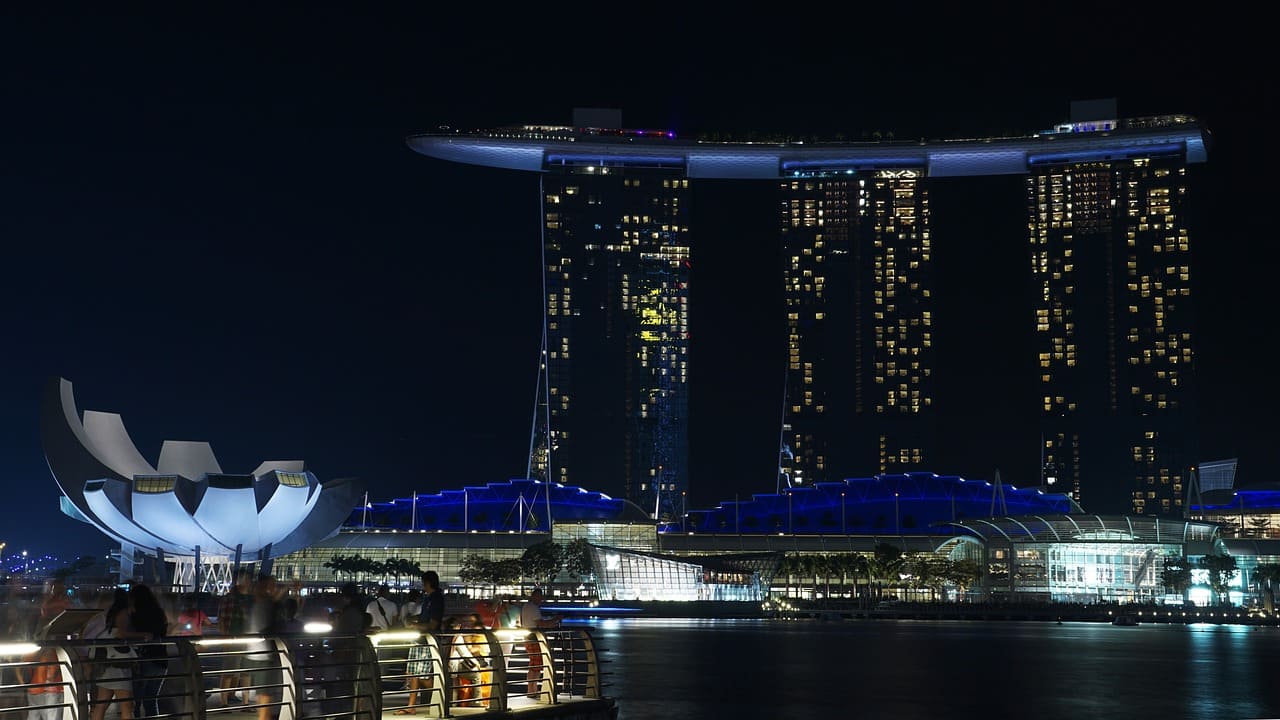
Marina Bay Sands, opened in 2010, dominates the waterfront with its three towers and rooftop SkyPark. Its observation deck is open to non-guests for a fee, while the infinity pool is reserved for hotel guests. The free Spectra light and water show runs most evenings along the promenade.
Gardens by the Bay, next door, opened in 2012. Its outdoor gardens and Supertree Grove are free to walk, while the Flower Dome and Cloud Forest conservatories require tickets and offer a cool break from the heat. The evening Garden Rhapsody light show among the Supertrees is free and spectacular.
The Merlion, the city's half-lion, half-fish symbol, faces the bay at Merlion Park. A walk around the bay from the Merlion to the Helix Bridge and the ArtScience Museum gives a good overview of modern Singapore, best done in the cooler evening.
Heritage districts: Chinatown, Little India and Kampong Gelam
Chinatown's conserved shophouses house temples, shops and some of the city's best hawker food. The Buddha Tooth Relic Temple and the Sri Mariamman Temple, Singapore's oldest Hindu temple, stand a short walk apart. The Chinatown Heritage Centre recreates the cramped living conditions of early immigrants.
Little India centres on Serangoon Road, with the Sri Veeramakaliamman Temple, flower-garland stalls and the Tekka Centre market. Kampong Gelam, the historic Malay-Muslim quarter, is anchored by the golden-domed Sultan Mosque and the boutiques of Arab Street and Haji Lane.
Respect dress codes at places of worship: cover shoulders and knees and remove shoes where indicated. Many temples and the mosque welcome visitors outside prayer times. Joo Chiat and Katong, in the east, offer another heritage district with colourful Peranakan shophouses.
Gardens, museums and Sentosa
The Singapore Botanic Gardens, founded in 1859, became the country's first UNESCO World Heritage Site in 2015. Entry is free, and the National Orchid Garden inside charges a small fee. Mornings are cooler and quieter, and the gardens are reached easily by MRT.
The National Gallery Singapore, housed in the former Supreme Court and City Hall, holds the world's largest public collection of Southeast Asian modern art. The National Museum and the Asian Civilisations Museum offer complementary perspectives on history and culture. Its rooftop terrace looks across the Padang towards Marina Bay.
Sentosa island has beaches, Universal Studios Singapore and other attractions; it suits families and makes a separate day. The Singapore Zoo and Night Safari, in the north, are well regarded and need their own half-day or evening. It is linked to the mainland by the Sentosa Express monorail from VivoCity, a cable car and a boardwalk.
For a quieter green escape, the Southern Ridges trail links Mount Faber, Telok Blangah Hill and Kent Ridge Park via elevated walkways, including the wave-shaped Henderson Waves bridge. MacRitchie Reservoir, in the centre of the island, has rainforest trails and a treetop walk; go early to avoid the heat and keep food away from the macaques.
Getting around and arriving in Singapore
The MRT is clean, punctual and air-conditioned. Contactless bank cards work directly at the gates on the MRT and buses, and fares are capped daily for adults. Eating and drinking are not allowed on trains, and fines are enforced. Buses fill gaps in the network and are also contactless.
All visitors must submit the SG Arrival Card online within three days before arrival. It is free on the official Immigration and Checkpoints Authority website; avoid third-party sites that charge a fee. From Changi Airport, the MRT reaches the city in about half an hour, and taxis and ride-hailing are readily available.
Changi's Jewel complex, opened in 2019, has an indoor waterfall and gardens and is worth a visit even if you are only in transit. The Land Transport Authority publishes fares and routes. Its Rain Vortex, about forty metres high, is the world's tallest indoor waterfall, and the complex is open without a boarding pass.
What to eat in Singapore: hawker centres and beyond
Singapore's hawker culture was added to UNESCO's list of intangible cultural heritage in 2020. Hawker centres such as Maxwell, Lau Pa Sat, Tiong Bahru and Old Airport Road serve dishes from many traditions at low prices. Try Hainanese chicken rice, laksa, char kway teow, satay and roti prata.
Chilli crab and black pepper crab are celebratory seafood dishes best shared at a restaurant. Kaya toast with soft-boiled eggs and kopi, local coffee, makes a classic breakfast. To reserve a table at a hawker centre, locals often leave a packet of tissues on the seat.
Tipping is not customary, and a service charge is often added in restaurants. Tap water is safe to drink. Hawker stalls may close on certain days of the week, so have a second choice in mind. Hawker centres are also good for vegetarian and halal food, with stalls clearly labelled.
A four-day Singapore itinerary
| Day | Area | Main focus |
|---|---|---|
| 1 | Marina Bay | Gardens by the Bay, the bay walk, Spectra show |
| 2 | Chinatown and the Civic District | Temples, hawker lunch, National Gallery |
| 3 | Little India and Kampong Gelam | Temples, Sultan Mosque, Haji Lane |
| 4 | Botanic Gardens and Orchard or Sentosa | Orchid garden, shopping or the island |
Start with Marina Bay and the Gardens, ending with the evening light shows. Spend day two in Chinatown and the Civic District, with a hawker lunch at Maxwell. Day three explores Little India and Kampong Gelam, while day four begins early at the Botanic Gardens and continues on Orchard Road or Sentosa.
If you are deciding between two Asian hubs, our Bangkok–Singapore comparison covers the trade-offs, and our Bangkok guide explains the Thai capital in detail. For more food ideas, our street food city guide includes Singapore's hawker classics. Both make good stopovers on long-haul routes between Europe and Australia.
Singapore budget, weather and practical tips
Singapore is one of Asia's more expensive cities for accommodation and alcohol, but hawker food and public transport keep daily costs manageable. It is warm all year; the northeast monsoon from December to early March brings more rain, though storms are usually short. Carry water and plan indoor visits for the hottest part of the day.
Singapore has strict laws on littering, smoking in restricted areas, chewing gum and drugs, with heavy penalties. Use the visa tool to check entry rules for your nationality, and the currency converter to plan in Singapore dollars. Vapes and e-cigarettes are banned too.
If Singapore's mix of gardens and food appeals, destinations similar to Singapore suggests comparable cities, and the destination finder can help choose the next trip. Kuala Lumpur is a short flight or bus ride away, and Hong Kong offers a similar mix of skyline, food and green hills.
Frequently asked questions
How many days do you need in Singapore?
Three or four days cover Marina Bay, the heritage districts, the Botanic Gardens and plenty of hawker meals. A stopover of one or two days works if you focus on the bay and one neighbourhood. Add a day for Sentosa or the zoo.
Do I need to fill in the SG Arrival Card?
Yes. All travellers must submit the SG Arrival Card online within three days before arriving, apart from a few exempt categories such as those transiting without passing immigration. It is free on the official ICA website.
Can I pay for the MRT with a bank card?
Yes. Contactless Visa and Mastercard cards, and mobile wallets, can be tapped directly at MRT gates and on buses, with fares capped daily. Overseas cards may incur a small fee, so check with your bank before travelling.
Links & Resources
Official sights, transport and planning
- Gardens by the Bay: Conservatory tickets and light-show times.
- Singapore Botanic Gardens: Visitor information and the orchid garden.
- UNESCO — Singapore Botanic Gardens: Heritage listing.
- National Gallery Singapore: Southeast Asian art collections.
- National Heritage Board: Museums and heritage trails.
- Changi Airport: Terminals, Jewel and city transfers.
- ICA — SG Arrival Card: The official free arrival form.
- UK government — Singapore travel advice: Laws and entry guidance.
On GuesTheCity
- Explore the city map: See how Marina Bay and the heritage districts connect.
- Play Guess the City: Recognise Singapore's skyline and Supertrees.