Copenhagen Travel Guide: Sights, Neighbourhoods & Tips for 2026
Copenhagen is a waterfront capital where harbour swimming, design museums, royal palaces and world-famous restaurants all fit within a city small enough to cross by bike in twenty minutes. Its appeal lies as much in everyday life as in its sights: people cycling to work in all weather, cafés lit by candles and long summer evenings on the quaysides. This Copenhagen travel guide organises a four-day stay by district and explains how to manage one of Europe's more expensive cities.
Copenhagen grew from a twelfth-century fishing village into the capital of a Danish kingdom that once ruled Norway and parts of Sweden. Christian IV, who reigned from 1588 to 1648, gave it many of its landmarks, including Rosenborg Castle and the Round Tower. In April 2024, a fire badly damaged his seventeenth-century Børsen, the old stock exchange, and its restoration is under way.
Its compact centre, clean harbour and calm pace make it a good choice for a first Scandinavian city break, even in winter. The city is easy to explore on foot, by metro or by bike. Visit Copenhagen lists current exhibitions, festivals such as the summer jazz festival and practical advice for a first visit.
Where to stay in Copenhagen
Indre By, the old city, puts Nyhavn, Strøget and the palaces on your doorstep and is the most convenient first base. Vesterbro, near the central station and Tivoli, has a mix of hotels, the trendy Meatpacking District and good-value restaurants. Nørrebro, north-west of the lakes, is multicultural and lively, with independent shops along Jægersborggade.
Christianshavn, across the harbour, has canals, houseboats and Our Saviour's Church, and sits on the metro. Østerbro is calm and residential, close to the Little Mermaid and the Kastellet fortress. With the compact centre and a reliable metro, almost any of these districts works.
Accommodation is expensive, especially in summer. Many hotels offer bike rental, which can replace public transport for most of your stay. Comparing a central hotel with a Nørrebro apartment in the city-cost tool helps control the budget, and the packing planner covers waterproofs for the frequent showers.
Nyhavn, palaces and the royal city
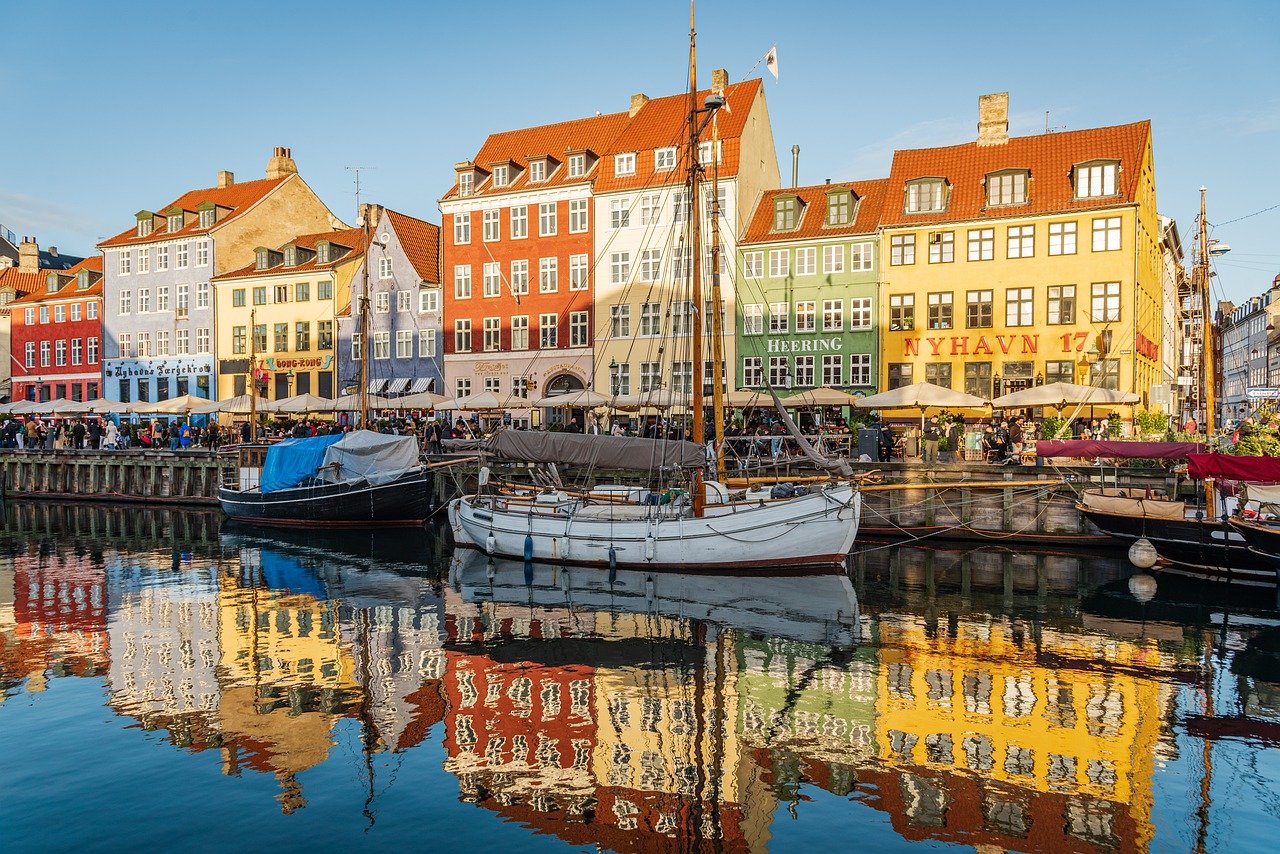
Nyhavn, the seventeenth-century canal lined with brightly painted townhouses, is the city's most famous view. The quayside restaurants are pricey, but sitting on the edge of the canal with a drink from a kiosk is a local habit. Canal boat tours leave from here and from Gammel Strand.
Amalienborg, a group of four eighteenth-century palaces around an octagonal square, is the winter residence of the Danish royal family. The changing of the guard takes place daily at noon. Rosenborg Castle, built by Christian IV as a summer house, displays the crown jewels and sits in the King's Garden, the oldest royal garden in the city.
Christiansborg Palace, on the island of Slotsholmen, houses the Danish Parliament, the Supreme Court and royal reception rooms. Its tower offers a free viewpoint over the city. The Round Tower, a seventeenth-century observatory, is climbed by a spiral ramp rather than stairs.
Copenhagen museums and Tivoli
The National Museum covers Danish history from the Stone Age to the Vikings and beyond. The Ny Carlsberg Glyptotek pairs ancient sculpture with French impressionists around a glass-roofed winter garden. The National Gallery of Denmark, SMK, holds Danish and European art from seven centuries.
Design lovers should visit Designmuseum Danmark, which traces Danish furniture and industrial design. Louisiana Museum of Modern Art, on the coast north of the city, is reached by train in under an hour and combines art with sea views; it suits a half-day trip.
Tivoli Gardens, opened in 1843, is one of the oldest amusement parks in the world. It has rides, gardens, concerts and restaurants and is especially atmospheric at night and during its Halloween and Christmas seasons. It is closed between seasons, so check dates before planning a visit.
Getting around Copenhagen
The metro runs around the clock, linking the airport, the city centre, Christianshavn and the circular City Ring line. The airport is only about fifteen minutes from Kongens Nytorv by metro. S-trains and buses cover the wider region, all on the same fare system.
Copenhagen is one of the world's best cities for cycling, with wide, separated bike lanes. Follow local rules: keep to the right, signal before stopping and use lights after dark. If you are not confident cycling in traffic, walking and the metro work perfectly well.
Harbour buses, which are boats run as part of public transport, offer a cheap way to see the waterfront. The Copenhagen Card combines transport with entry to many museums, and the City Pass covers transport only. Copenhagen Metro provides routes and timetables.
Copenhagen is also a city of neighbourhood life worth slowing down for. Vesterbro's Istedgade and the Meatpacking District mix galleries, cafés and bars, while Nørrebro's Assistens Cemetery, where Hans Christian Andersen and Søren Kierkegaard are buried, doubles as a quiet park. Freetown Christiania, a self-governing community founded in 1971 in former military barracks, has its own rules: follow the signs and residents' requests, including those about photography. Christianshavn's canals and houseboats make a peaceful walk nearby.
What to eat in Copenhagen
Smørrebrød, open-faced sandwiches on dense rye bread, is the classic Danish lunch, topped with herring, roast beef, egg and shrimp or potatoes. Many traditional restaurants serve it only at midday. Danish pastries, called wienerbrød locally, and cinnamon swirls are best fresh from a bakery in the morning.
The city's restaurant scene became internationally known through New Nordic cuisine, focused on local and seasonal ingredients. Fine dining is expensive and often booked weeks ahead, but street food halls such as Reffen, on Refshaleøen, offer affordable options. Torvehallerne, two glass market halls near Nørreport, sells produce and ready-made food.
Service is included in restaurant prices, so tipping is not expected. Tap water is excellent and free in most places. Hot dog stands, pølsevogne, serve a cheap and traditional snack. Kitchens close earlier than in southern Europe, so plan dinner for around seven and book popular places ahead at weekends.
Day trips from Copenhagen: castles, Vikings and Sweden
Kronborg Castle in Helsingør, about forty-five minutes north by train, guards the narrow strait between Denmark and Sweden and is famous as the setting of Shakespeare's Hamlet. It became a UNESCO World Heritage Site in 2000. The coastal line to Helsingør also stops at Humlebæk, the station for the Louisiana Museum, so the two can be combined in one long day.
Frederiksborg Castle in Hillerød, a Renaissance palace set on islands in a lake, houses the Museum of National History. Roskilde, west of the city, has a cathedral where Danish monarchs are buried, itself on the UNESCO list, and the Viking Ship Museum with five original vessels raised from the fjord.
Malmö, in Sweden, is roughly forty minutes away by train across the Øresund Bridge, which opened in 2000. Carry your passport or ID card, as border checks can apply. The city's old town squares, the twisting Turning Torso tower and the long Ribersborg beach make a relaxed half-day.
A four-day Copenhagen itinerary
| Day | Area | Main focus |
|---|---|---|
| 1 | Indre By | Nyhavn, a canal tour, Amalienborg, Strøget |
| 2 | Slotsholmen and museums | Christiansborg tower, National Museum, Glyptotek |
| 3 | Christianshavn and Refshaleøen | Our Saviour's Church, harbour swimming, Reffen |
| 4 | Rosenborg and Tivoli, or Louisiana | Crown jewels and an evening at Tivoli, or the coast |
Start with Nyhavn and a canal tour, then walk to Amalienborg for the guard change and along Strøget. Day two covers Slotsholmen and the great museums. On day three, climb the spiral spire of Our Saviour's Church in Christianshavn, swim at a harbour bath in summer and eat at Reffen.
Spend day four at Rosenborg and the King's Garden, ending at Tivoli, or take the train to Louisiana. If you are comparing two northern cities, our Amsterdam–Copenhagen comparison explains the differences, and our walking city guide covers Copenhagen's best routes.
Copenhagen budget, seasons and practical tips
Copenhagen is among Europe's most expensive cities, especially for eating out and alcohol. Bakeries, food halls and cycling keep costs down. Summer brings long light evenings and festivals; winter is dark and cold but cosy, with Christmas markets in December.
Denmark uses the krone, not the euro, and many places are card-only. Denmark is part of the Schengen area; non-EU visitors pass through the EU Entry/Exit System. Use the visa tool to check your entry rules and the currency converter to plan in kroner.
If Copenhagen's design and harbour life appeal, destinations similar to Copenhagen suggests comparable cities, and the destination finder can help choose the next trip. Stockholm and Oslo offer a similar mix of water, design and museums, while Amsterdam shares the canal-side cycling culture.
Frequently asked questions
How many days do you need in Copenhagen?
Three or four days cover Nyhavn, the palaces, the main museums, Christianshavn and Tivoli at a relaxed pace. Two days work for a short break. Add a day for Louisiana, Kronborg Castle in Helsingør or a trip across the bridge to Malmö.
Is the Copenhagen Card worth it?
It includes public transport and entry to many museums and attractions, including Tivoli in some versions. It saves money if you plan several paid visits a day. If you mainly walk and visit free sights, a transport pass or single tickets may be cheaper.
Can you swim in Copenhagen harbour?
Yes. The city runs several harbour baths and swimming zones, such as Islands Brygge, where water quality is monitored. Swim only in designated areas, follow posted signs and check current water quality notices, particularly after heavy rain.
Links & Resources
Official sights, transport and planning
- Tivoli Gardens: Seasons, opening hours and tickets.
- National Museum of Denmark: Danish history and the Vikings.
- Ny Carlsberg Glyptotek: Sculpture and the winter garden.
- Designmuseum Danmark: Danish design collections.
- SMK — National Gallery of Denmark: Danish and European art.
- Rosenborg Castle: Crown jewels and visiting hours.
- Copenhagen Airport: Arrivals and the metro link.
- UK government — Denmark travel advice: Entry and safety guidance.
On GuesTheCity
- Explore the city map: Locate Nyhavn, Christianshavn and Nørrebro.
- Play Guess the City: Recognise Copenhagen's harbour and spires.