Dog-Friendly Cities in Europe: 10 City Breaks to Take With Your Dog
A city break with your dog in Europe is easier than many owners expect. In most of the cities below, dogs ride the tram, wait under café tables and walk through the same parks as the locals. A dog-friendly city is rarely about special dog facilities, though. What matters is whether the public transport lets a dog on, whether it needs its own ticket and whether it must wear a muzzle. These rules change from one city to the next, and visitors usually find out at the ticket barrier.
This guide covers ten dog-friendly cities in Europe and groups them by how much preparation they need. We checked each transport rule against the operator's own conditions of carriage or tariff in November 2026 and link to that source, so you can confirm it before you travel. The guide also covers the documents your dog needs to cross a border, how to get there, and what to pack.
Before you go: documents for travelling with a dog in Europe
Every country in this guide follows the EU pet-travel rules or, in the UK's case, its own close equivalent. According to the European Commission, a dog must be identified by a microchip and vaccinated against rabies. The vaccination only becomes valid at least 21 days after the vaccination protocol is completed. Within the EU, a dog travels on a valid EU pet passport issued by a vet. Plan for Paw's explainer what a pet passport contains and what officials check shows what each page should look like before you leave.
Owners living in Great Britain need a different document. GOV.UK states that residents of England, Scotland or Wales cannot use a pet passport to enter the EU, even one issued in the EU. They need an animal health certificate, which is valid for 10 days for entry into the EU. Dogs coming into Great Britain also need tapeworm treatment from a vet no less than 24 hours and no more than 5 days before arrival. The EU applies a similar treatment rule for dogs entering Finland, Ireland, Malta, Northern Ireland and Norway.
The order of the steps matters more than the paperwork itself: microchip first, vaccination second, then the waiting period. Plan for Paw's guide to travelling abroad with your pet walks through that sequence with a worked example. Some countries also restrict or ban certain breeds, which can affect the whole trip, not just one city. Check your destination in Plan for Paw's European pet laws by country before booking anything non-refundable.
The easiest dog-friendly cities: no muzzle, little or no fare
These four cities suit a first trip abroad with a dog. Their transport rules ask for little beyond a lead and good manners.
London, United Kingdom
London is one of the simplest big cities for a dog. TfL's conditions of carriage allow "any other dog or inoffensive animal" on buses, the Tube, trams, the DLR, the London Overground and the Elizabeth line. The dog must be kept under control on a lead or in a suitable container and must not be allowed on a seat. TfL also states that it does not charge for the things it allows on board, so the dog rides free. The catch is the escalators: you must use stairs or a lift where they exist and carry your dog on a moving escalator otherwise. With a large dog, staff can stop the escalator, generally outside rush hour. Our London travel guide covers the parks and neighbourhoods worth building a walk around.
Edinburgh, Scotland
Edinburgh pairs a compact old town with plenty of green space, from Holyrood Park to the Water of Leith walkway. Edinburgh Trams say that dogs travel free of charge, on a lead at all times and kept off the seats. Lothian Buses' conditions of carriage also require all dogs to be on a lead and never on the seating. They add that dogs must be muzzled if relevant legislation requires it, and small animals are carried at the driver's discretion. Hilly cobbled streets mean long walking days, so plan rest stops. Read our Edinburgh guide for routes that avoid the steepest climbs.
Amsterdam, Netherlands
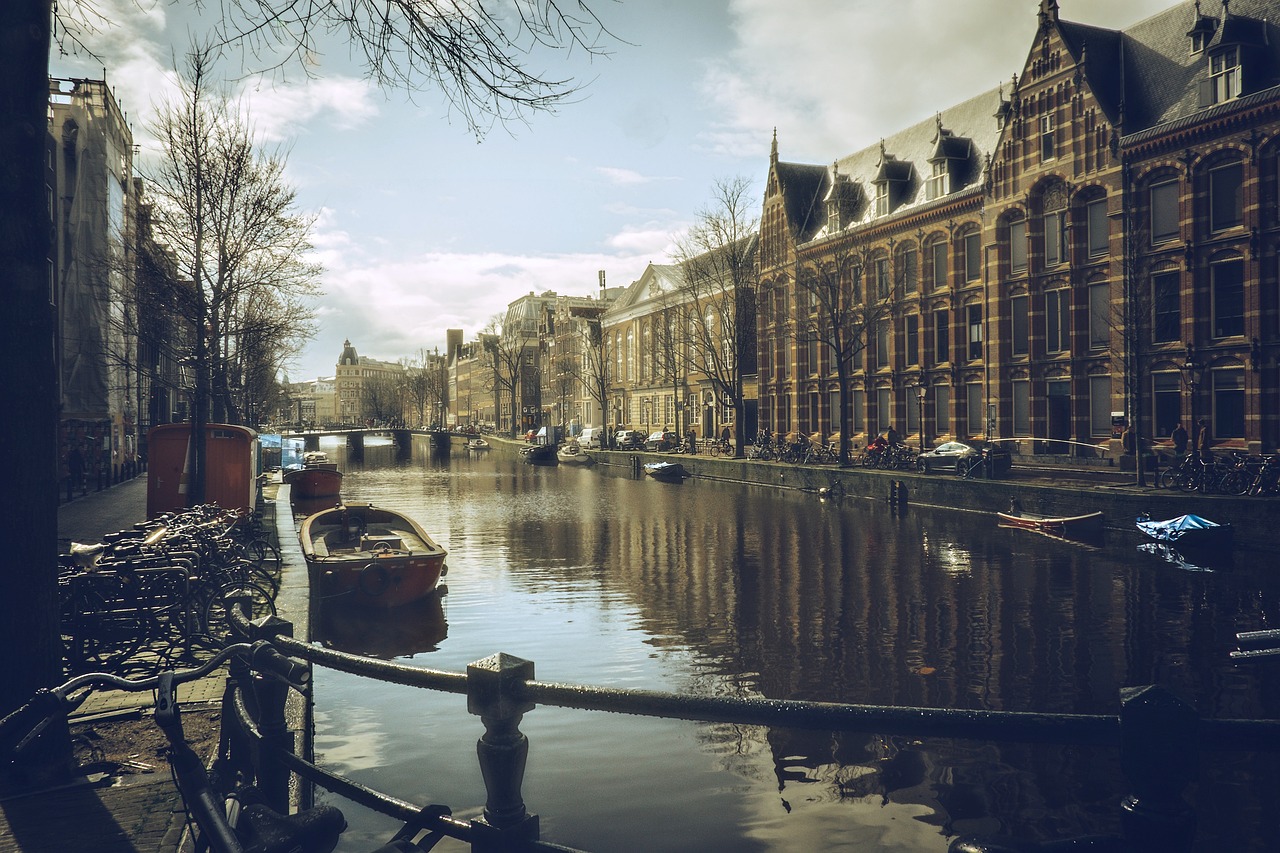
In Amsterdam, GVB's travel rules allow pets on buses, trams, the metro and the ferries if they stay on your lap, in a bag or on a short leash, and the Dutch version of the rules says the pet rides free. In practice, the hardest part is the bikes rather than the trams. Cycle lanes run alongside many pavements, so keep a short lead near junctions and canal bridges. The Vondelpark is the obvious place for a long morning walk before the city fills up.
Munich, Germany
Munich is generous on fares. MVG states that each passenger can take one dog free, and the MVV confirms this applies with a valid MVV ticket or a Deutschlandticket. Each additional dog needs a child's ticket, and small dogs in a basket or bag ride at no charge. All dogs must be kept on a short lead in vehicles and stations, and dogs that could endanger passengers must wear a muzzle. Dogs classed as fighting dogs under Bavarian rules are not allowed in vehicles or stations at all. Munich's beer gardens and the river paths along the Isar make it a relaxed city for a dog on a lead.
Cities where your dog needs its own ticket
In the next three cities the rules are just as clear, but a dog that isn't in a bag usually pays. Buy the dog's ticket at the same time as your own so you aren't caught out at an inspection.
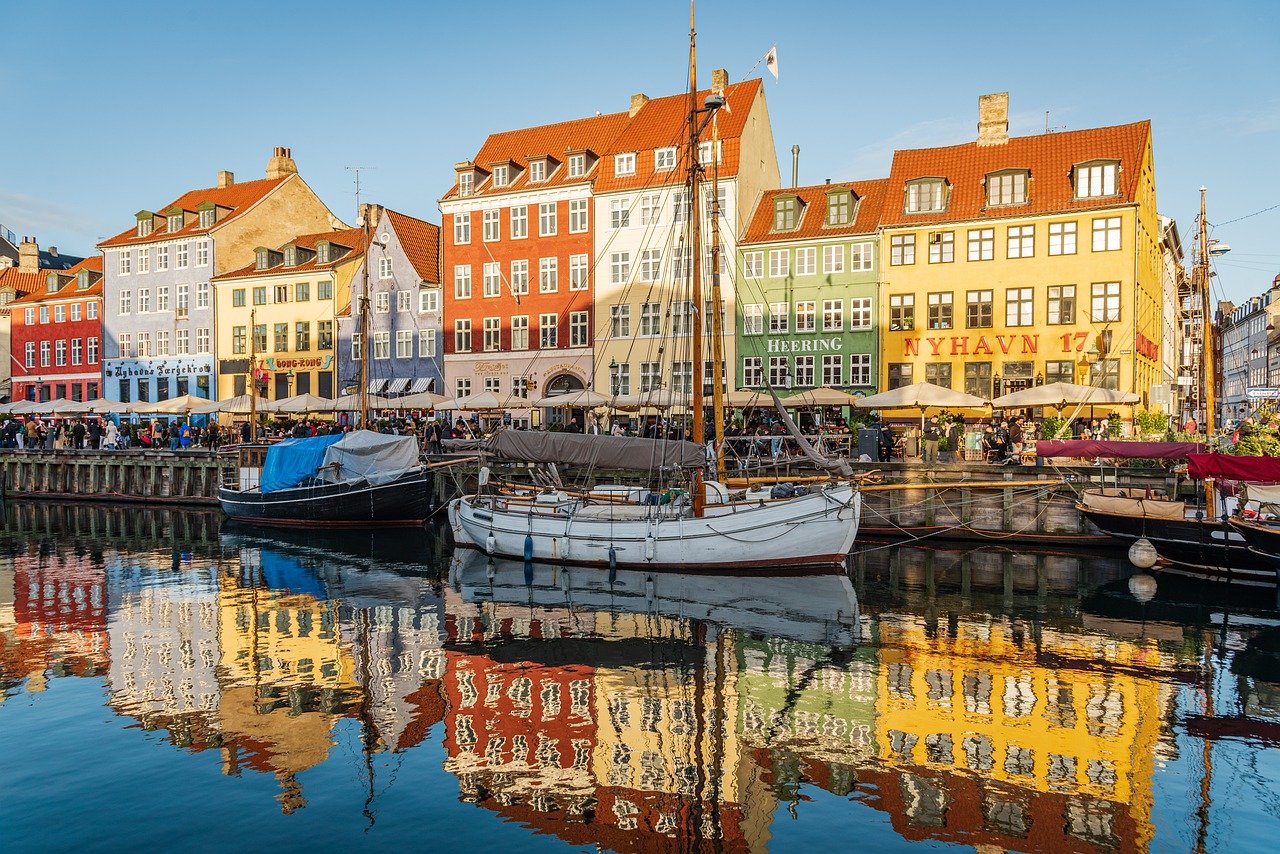
Copenhagen, Denmark
Copenhagen's Metro carries small dogs and other small pets free if they stay in a bag, box or cage for the whole journey. A dog on a lead or in a pram needs its own ticket, priced as a child's ticket. Dogs may not be placed on the seats. The Metro also asks pet owners to avoid the first and last six seats, which are kept for passengers with allergies. Danish trains run by DSB follow a similar rule: free in a carrier, otherwise on a lead with a child's ticket. Family zones, quiet zones and DSB 1' are always animal-free. Our Copenhagen guide lists the harbour walks that work well with a dog.
Zurich, Switzerland
Zurich sits by a lake with long waterfront promenades, which suits a dog well. On the ZVV network, dogs travel at a reduced fare. Small dogs up to 30 centimetres tall travel free in a basket or bag, and larger dogs need a reduced second-class ticket. If you stay a while, the ZVV also sells dog passes. Switzerland is not in the EU but applies equivalent entry rules for pets, so check the requirements for your route before you travel.
Berlin, Germany
Berlin is a city of parks, lakes and dog-friendly cafés, but its tariff has two rules to know. The VBB tariff, which covers BVG services, says that small pets up to the size of a house cat can travel in a closed container like hand luggage. Any dog that doesn't fit in a container must be on a lead and wear a suitable muzzle. On a single ticket, each dog needs its own reduced-fare single ticket. With a 24-hour ticket, a day ticket for the whole network or a time-based pass, one dog travels free. For a stay of a day or more, buying a 24-hour ticket instead of single tickets saves the dog's fare. See our Berlin travel guide for where to stay near the larger parks.
Muzzle cities: dog-friendly, with a stricter rule on board
These three cities welcome dogs, but on public transport they require a muzzle for any dog that isn't in a carrier.
Vienna, Austria
Vienna has a long tradition of dogs in coffeehouses, and its public transport takes them too, with conditions. Wiener Linien states that dogs may only ride with a lead and a muzzle, and that breaking the rule costs a 50 euro fine. The City of Vienna's announcement of the rules adds that annual pass holders take their dog free, while other dogs need a reduced single ticket. It also asks owners not to use escalators with a dog: carry small dogs, and take larger dogs on the stairs or in the lift. Our Vienna travel guide covers the Prater and the Danube Island, both good for a long walk.
Budapest, Hungary
Budapest is strict on board but easy on foot, with the riverside, Margaret Island and the Buda hills for walks. BKK's guidance on travelling with a dog says that any dog not in a closed carrier must wear a lead and a muzzle, whatever its size, age or breed. BKK adds that a soft head halter does not count as a muzzle. A dog in a closed carrier travelling as hand luggage does not need a ticket. Other dogs need their own ticket unless you hold a valid pass, which covers one dog within Budapest. Each passenger may bring one dog. Fares for dogs have been under review, so check BKK's page for the current rule. Our Budapest guide explains the city's districts.
Lisbon, Portugal
Lisbon's Metro allows pets unless there is a good reason to refuse them, and they must be restrained so they cannot bite or cause damage. Dogs that are not in a container must be muzzled and on a short lead. Their owner must also carry the dog's up-to-date vaccination record and municipal licence. Certain breeds classed as dangerous, including the pit bull terrier and the Rottweiler, may not travel on public transport at all. Carris trams and buses take animals only if they are properly contained, in a carrier that counts as hand luggage. Lisbon's steep hills and hot summer pavements make spring and autumn the kindest seasons. Our Lisbon travel guide suggests the flatter riverside areas.
Dog rules on public transport compared
| City | Dog fare (not in a bag) | Muzzle on board | Small dog in a carrier |
|---|---|---|---|
| London | Free | No | Allowed |
| Edinburgh | Free on trams | Only where the law requires | At the driver's discretion on buses |
| Amsterdam | Free | No | Allowed |
| Munich | One dog free with a valid ticket | Only for dogs that could endanger passengers | Free |
| Copenhagen | Child's ticket | No | Free |
| Zurich | Reduced second-class ticket | Not stated by ZVV | Free up to 30 cm |
| Berlin | Reduced single ticket, or free with a 24-hour ticket | Yes | Free (up to cat size) |
| Vienna | Reduced single ticket, or free with an annual pass | Yes | Recommended for small dogs |
| Budapest | Own ticket, or free with a pass | Yes | No ticket needed |
| Lisbon | Not stated | Yes (Metro) | Required on Carris trams and buses |
Fares and conditions change, so treat this table as a starting point and follow the operator links in the resources section before you travel.
Getting there with a dog: car, train or plane
For most owners, driving is the simplest way to reach these cities, because the dog stays with you the whole time. Plan stops every couple of hours and never leave the dog in a parked car on a warm day. If your dog gets anxious or sick in the car, start short practice drives weeks before the trip. Plan for Paw's guide to dog car sickness explains how to set up the car and build up practice step by step.
Trains are a good alternative within Europe, and several of the operators above carry dogs on regional and national services. Rules on long-distance and cross-border trains vary by operator, and some high-speed services take only assistance dogs. Check before you buy. Our guide to travelling Europe by train covers the main routes and passes. Flying is the most complicated option, because cabin size and weight limits, fees and hold rules differ between airlines. Plan for Paw's comparison of airline pet policies sets out cabin and hold options side by side.
What to pack for a city break with your dog
Pack the dog's documents first and keep them in your hand luggage, not in the boot or the hold. Then add a well-fitting basket muzzle if you are visiting any of the muzzle cities, a short lead for crowded transport and a soft carrier if your dog is small enough to qualify for free travel. Bring a collapsible water bowl, waste bags, the usual food (a sudden diet change on holiday rarely goes well) and a familiar blanket for the hotel room.
Update the ID tag with a phone number that works abroad. Plan for Paw's checklist on what to put on a pet ID tag explains the order of the details. For your own luggage, our packing list tool builds a list for the destination and season. Plan for Paw's free pet travel packing list generator does the same for the dog's side of the bag.
Planning a dog-friendly city break day by day
Book accommodation that explicitly accepts dogs and ask whether there is an extra fee. "Pets welcome" can mean anything from a bowl in the room to small dogs only. Many museums, churches and indoor attractions admit assistance dogs only. Plan the indoor sights for a half-day when someone can stay with the dog, or book a local dog sitter for a few hours.
Build each day around a long morning walk in a park, a transport ride outside rush hour and an afternoon on a café terrace rather than a packed sightseeing schedule. Cities that score well in our list of the best cities for walking are usually the easiest with a dog, because you rely less on public transport. Use the budget estimator to add the dog's tickets, pet fees and a sitter to your costs. If you are torn between two places, the city comparison tool puts them side by side. Plan for Paw's pet-friendly holiday planner covers the questions to ask when booking.
Frequently asked questions
What is the most dog-friendly city in Europe for tourists?
For a first trip, London and Amsterdam are among the easiest. In both, a dog on a lead rides public transport without a muzzle and without paying a fare. Munich is similar if you hold a valid ticket, since one dog per passenger rides free. Each city still has its own rules, such as carrying your dog on London's escalators.
Do dogs need a ticket on public transport in Europe?
It depends on the city. London, Amsterdam and Edinburgh's trams carry dogs free. Copenhagen and Zurich charge a reduced or child's fare for dogs that are not in a carrier. Berlin, Vienna and Budapest charge for dogs on single tickets but let one dog ride free with certain day tickets or passes.
Which European cities require a muzzle on public transport?
Vienna requires a lead and a muzzle for dogs on its public transport. Budapest and Berlin require them for any dog that is not in a closed carrier, and Lisbon's Metro requires a muzzle and a short lead for dogs outside a container. Munich requires a muzzle only for dogs that could endanger other passengers.
What documents does my dog need for a city break in the EU?
Your dog needs a microchip, a valid rabies vaccination given at least 21 days before travel after the primary vaccination, and an EU pet passport. Owners resident in Great Britain need an animal health certificate instead, valid for 10 days for entry into the EU. Dogs going to Finland, Ireland, Malta, Northern Ireland or Norway also need tapeworm treatment.
Can I take my dog into museums and restaurants?
Most museums and indoor attractions admit assistance dogs only, so plan those visits for when someone can stay with your dog. Café and restaurant terraces in the cities in this guide often welcome dogs, but it is always the owner's decision. Ask before you sit down.
Links & Resources
Official pet travel rules
- European Commission: travelling with a pet within the EU: the EU pet passport rules.
- European Commission: bringing a pet into the EU: microchip, rabies and tapeworm rules for entry from outside the EU.
- GOV.UK: taking your pet abroad: the animal health certificate for owners living in Great Britain.
- GOV.UK: bringing your pet to Great Britain: tapeworm treatment and documents for the return trip.
Transport operators' dog rules
- TfL conditions of carriage: section 9 covers animals, stations and escalators in London.
- Edinburgh Trams conditions of carriage: dogs on a lead and off the seats.
- Lothian Buses conditions of carriage: rules for dogs on Edinburgh buses.
- GVB travel rules and conditions: pets on Amsterdam's trams, buses, metro and ferries.
- MVG: what you can take with you: dogs, leads and muzzles on Munich's transport (in German).
- Copenhagen Metro: pets in the Metro: carriers, tickets and allergy seats.
- DSB: animals on the train: dogs on Danish trains and animal-free zones (in Danish).
- ZVV: tickets for dogs: Zurich fares, free carriage for small dogs and dog passes.
- BVG tourist FAQ: dog tickets in Berlin, with links to the full tariff.
- City of Vienna: dogs on public transport: lead, muzzle, tickets and escalators (in German).
- BKK: travelling with a dog: Budapest's muzzle, lead and ticket rules (in Hungarian).
- Metro de Lisboa: legal information: the section on transporting animals (in Portuguese).
- Carris: good practice on board: animals on Lisbon's trams and buses (in Portuguese).
Planning help from Plan for Paw
- Printable pet travel checklist: booking, packing and arrival in one list.
- How to travel with a pet: choosing between car, train, ferry and flight.
On GuesTheCity
- The best cities for a weekend getaway in Europe: 48-hour plans you can adapt for a dog.
- The world's best cities for public transport: how the networks compare.
- Best time to visit: month-by-month weather for every city.
- Guess the City: test your European geography before the trip.